Key Points
- €1.3 billion green bond: E.ON covers almost its entire 2026 capital requirement through green bonds, marking one of the most significant issuances in the European energy sector this year.
- London and the SETESG index: The United Kingdom consolidates its position as the world's largest clean energy financing market, while Thailand makes its debut with the first structured instrument linked to the SETESG equity sustainability index.
- Green steel at a standstill: 50% of global green steel projects are blocked by financing gaps and insufficient demand, putting industrial decarbonisation timelines at risk.
The geography of green money: London still sets the rules
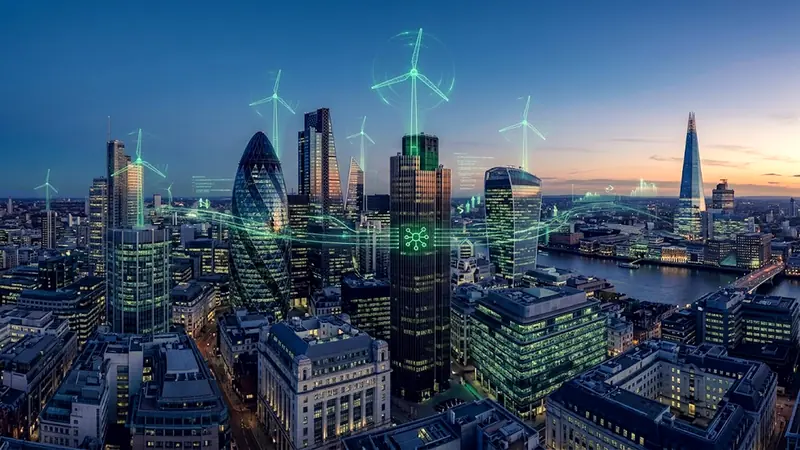
In 2026, climate finance is no longer a niche topic for ethical funds and long-term investors. It has become the fault line along which global economic hierarchies are being redrawn. And at the top of this new map of financial power, in a position that strengthens quarter after quarter, sits London. According to the most recent analyses, the United Kingdom has established itself as the world's largest market for clean energy project financing and the leading European hub for private investment in green technologies. This is not a primacy built on statements of intent, but on measurable capital flows, consolidated regulatory infrastructure and a concentration of financial expertise that no other European centre can currently replicate. The City, in short, has found a new systemic vocation in green finance, and is leveraging it with the same efficiency with which it dominated currency and traditional bond markets for decades.
E.ON leads the way: €1.3 billion in green bonds
The most emblematic case of this season, however, comes from Germany. E.ON, the European energy giant, has successfully placed green bonds worth €1.3 billion, effectively covering almost its entire capital requirement for the current financial year. The operation is not only significant for its scale: it is a precise market signal. Institutional investors responded positively, confirming that demand for sustainable debt instruments remains robust even in a macroeconomic environment that has put pressure on many other asset classes. For E.ON, this is a further demonstration that the energy transition, when structured with financial rigour, can translate into a concrete competitive advantage in the capital markets — not merely a corporate responsibility narrative.
India: growing green deposits and a forum determined to move from words to action

Thousands of miles from the City and the trading floors of Düsseldorf, India is building its own version of the sustainable transition with different tools and at a different pace, but along an increasingly well-defined trajectory. Indian public sector banks recorded marked growth in so-called green deposits during the 2026 financial year — ring-fenced savings exclusively earmarked for financing clean transport and renewable energy. The figure is not merely an accounting detail: it reflects a shift in the orientation of Indian retail and institutional savings, which are actively beginning to seek instruments with a certified end use. In parallel, New Delhi hosted the Net Zero India Forum 2026, which brought together over 250 international leaders with a stated and unusual objective for this type of event: not to produce further vision statements, but to define concrete, measurable operational strategies. A change of tone that, if sustained, could significantly accelerate the implementation of India's climate commitments at an industrial scale.
Thailand: the first structured note on an ESG index
Meanwhile, in South-East Asia, a first worth noting has taken place. K Bank and IRPC have launched in Thailand the first structured investment instrument linked to the SETESG equity sustainability index. The product, named the "Bonus Structured Note", represents a significant innovation for the Thai financial market, which has historically had far less exposure to ESG instruments than Western markets or Singapore. The initiative signals that green finance is now penetrating emerging markets that, until just a few years ago, were largely on the sidelines, broadening the geographical base of capital available for the climate transition.
The unresolved knot: green steel remains stuck
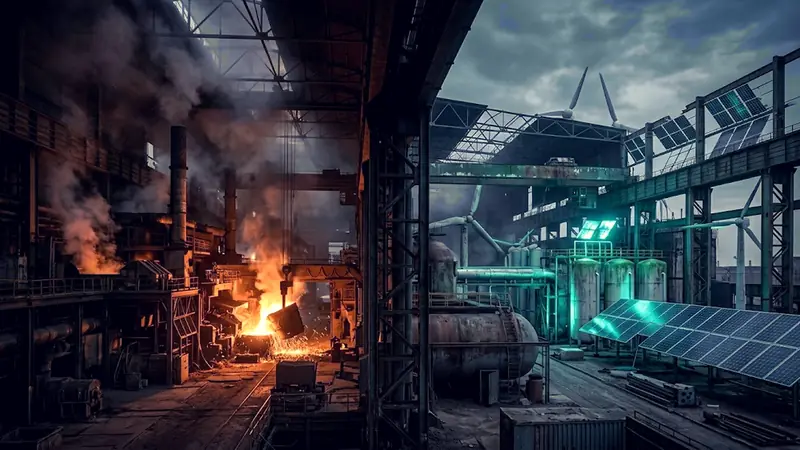
Yet, against this apparently expanding backdrop, there are areas of stagnation that the data make impossible to ignore. The green steel sector is the most critical case. Globally, 50% of planned projects are blocked, trapped between structural financing gaps and market demand that is not growing fast enough to justify the necessary investments. The decarbonisation of the steel industry is one of the most complex challenges of the entire energy transition, as it requires enormous capital, technologies still in the scaling phase, and a price premium that end buyers — from automotive to construction — are not yet consistently willing to pay. The result is a vicious cycle: without certified demand, financiers hesitate; without financing, projects slip; without operational projects, demand fails to materialise. According to current projections, if this pattern is not broken by 2027 through public guarantee mechanisms or long-term contracts with industrial buyers, a significant share of the emissions reduction targets in the heavy manufacturing sector will prove unachievable by 2030.