Global Finance 2026: While the Old World Burns, Southeast Asia Laughs All the Way to the Bank
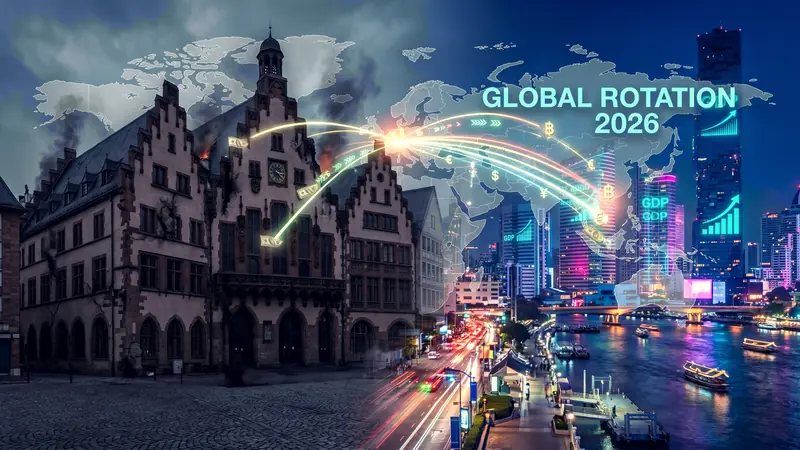
There is something deeply symbolic about looking at the global financial map right now. On one side, the Western economies that wrote the rules of the game for decades — the United States, Germany, France — are stumbling, reinventing themselves, or worse, crumbling under the weight of their own contradictions. On the other, Thailand and Vietnam are sprinting as if someone just released the handbrake. Somewhere in the middle, Italy — true to form — dances on the edge of the cliff with a grace entirely its own. This is not a normal economic cycle. It is a tectonic redistribution of global financial power, and anyone who still cannot see it is simply not paying attention.
Key Takeaways
- The American crisis weighs on everyone: Instability within the US financial system is sending shockwaves through bond and currency markets across the entire planet.
- Southeast Asia is accelerating: Thailand and Vietnam are attracting foreign capital thanks to competitive tax regimes and GDP growth well above the global average.
- A two-speed Europe: Germany and France are facing deep structural transformations, while Italy navigates between unfinished reforms and genuine opportunities in fintech.
America: The Giant with Feet of Clay

Calling it an "unprecedented crisis" is not rhetorical exaggeration — it is an accurate portrait of a system that has coasted on past glories for far too long. American finance is facing systemic pressure (structural, not cyclical) that calls into question decades of dollar hegemony as the world's reserve currency. Credit markets are showing stress signals that traditional risk management (the process of identifying and controlling financial threats) models are struggling to process. The problem is not purely domestic: when Wall Street sneezes, emerging markets catch pneumonia. And this time, the sneezing looks chronic. The most immediate consequence is a selective flight of capital towards alternative assets and geographies that until yesterday were considered "peripheral." The irony of history: the periphery is becoming the centre.
Germany and France: Old Europe Searching for Itself
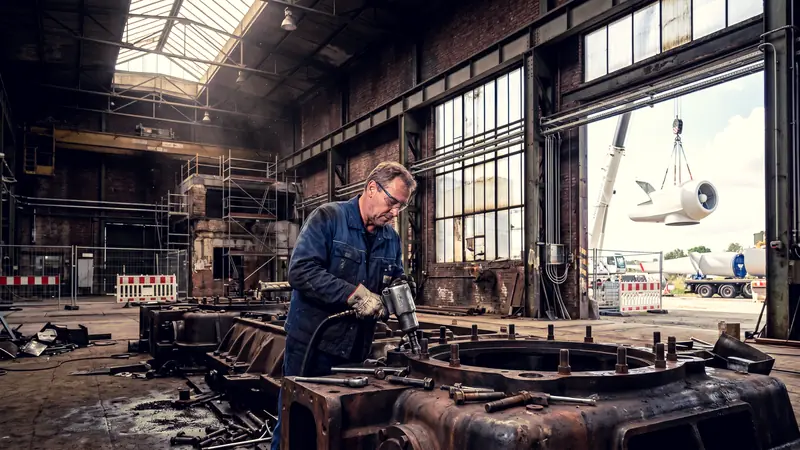
Berlin and Paris share the same headache, but with different symptoms. Germany — Europe's industrial engine — is undergoing a transformation that goes well beyond normal cyclical restructuring. Its export-driven model (based on generating growth through exports) has shown deep cracks, worsened by the energy transition and Asian competition in advanced manufacturing. German banks are rethinking their asset allocation (the distribution of investments across a portfolio) strategies with an urgency that just a few years ago would have seemed like science fiction. France, for its part, lives the paradox of a sophisticated financial system that struggles to translate into real economic growth. Paris wants to be Europe's fintech (technology applied to financial services) capital, but the weight of bureaucracy and a rigid labour market slows every innovative impulse. Both countries are trying to reinvent themselves — and paradoxically, that is already good news.

Italy: The Creative Chaos That Could Surprise Everyone
Italy is the eternal enigma of European finance. A country that somehow manages to be both the chronic patient and the one who never quite dies. The current moment is different from previous ones, however: there is a convergence of factors — European funds yet to be deployed, a generation of digital entrepreneurs that has finally come of age, and a banking system that has painfully completed its deleveraging (the process of reducing debt exposure) process — that is creating a genuine window of opportunity. The risk? That politics, as ever, will find a way to squander it. But for those who know where to look, Italy in 2026 offers investment niches in private equity (private capital invested in unlisted companies) and alternative credit that very few are yet exploring seriously.

Thailand and Vietnam: Where the Money Wants to Go
If you are looking for pure growth, stop looking west. Bangkok and Ho Chi Minh City have become the new favourite destinations for yield-hungry capital. Thailand is building a modern financial ecosystem at an impressive pace, betting on digital banking (a fully online banking operation) and its strategic position as a regional hub. Vietnam, meanwhile, is a story of manufacturing and finance intertwining: a rapidly expanding middle class, a capital market progressively opening up to foreign investors, and a government that — unlike many of its Western counterparts — appears to have a clear vision of where it wants to go. FDI (Foreign Direct Investment) flows into these two countries tell an unambiguous story: the global financial centre of gravity is shifting eastward, and it is not coming back.

The Bottom Line: One Smart Move
Joining the dots is straightforward, even if it is uncomfortable to admit for those who have built their professional identity around Western certainties. We are in the middle of a great global rotation — of capital, of power, of narrative. The economies that can adapt with agility, embracing the digital transformation of financial systems without being paralysed by nostalgia for the old order, will come out on top. The others will foot the bill. The smart move today is to stop looking only at the markets you already know and start understanding the ones that are growing. Everything else is just noise.