
Green Bonds, Greenwashing and Cannons: Is Sustainable Finance Already Dead?
There is something profoundly grotesque about looking at the world of ESG finance (Environmental, Social, Governance — responsible investment criteria) in 2026. On one hand, South Africa announces a $228 billion plan in green bonds, Brazil launches a $10 billion auction to attract foreign capital into ecology, and European sustainable finance associations are screaming at Brussels for wanting to loosen the rules. On the other hand, the global financial industry has pumped over €46.6 billion in a single year into the defence sector. Welcome to the greatest systemic contradiction of contemporary capitalism: green money financing the cannons, and cannons financing the green.
Key Takeaways
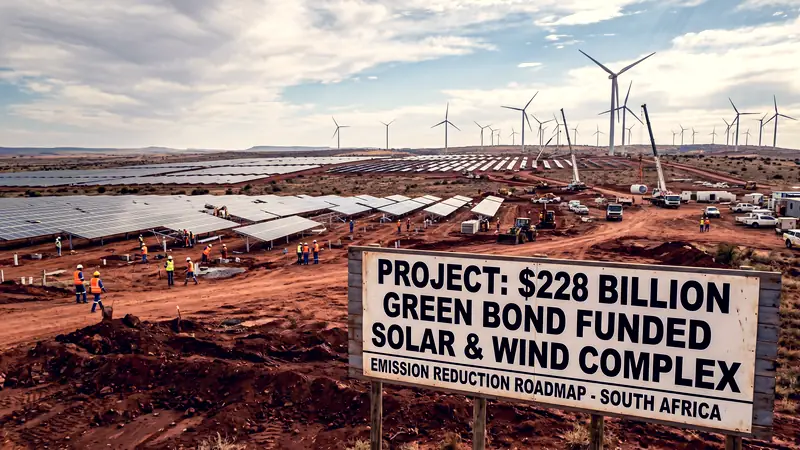
- South African ESG plan: South Africa aims to issue green bonds (bonds for environmental projects) to mobilise $228 billion in emissions reduction projects.
- Brazilian ecological auction: Brazil's Eco Invest programme includes a $10 billion auction explicitly targeting foreign investors.
- European financial rearmament: The financial industry invested over €46.6 billion in one year in the defence sector, reopening the debate on ESG compatibility.
The Global South Is Betting on Green (and Needs Your Money)
Let's start with the hard facts. South Africa wants to become an African hub for green finance (finance directed at environmental projects), and the $228 billion plan is not science fiction: it is a structured roadmap built on issuances of sovereign green bonds (government bonds earmarked for environmental purposes) and on blended finance (a mix of public and private capital designed to reduce risk) mechanisms. The backdrop is that of a country still heavily dependent on coal for energy production, which must manage a brutal transition without blowing up an already fragile economy. Brazil, meanwhile, is playing a different game: the Eco Invest auction targets foreign institutional investors directly, leveraging the enormous natural capital of the Amazon as a negotiating tool. Ten billion dollars is not a symbolic figure — it is a precise political signal: the Global South is no longer waiting for the promises of Glasgow or Paris; it is building its own markets.

The Growth Mantra Has Hollowed Out the Concept of Sustainability

But here is the structural problem — the one no investment bank press release will ever tell you. Sustainable finance, in its current form, has stopped being a tool for change and has become a mechanism of legitimation washing (using ESG language to legitimise the status quo). The point is not whether green bonds work technically — they do. The point is that they are issued within an economic system that continues to reward GDP (Gross Domestic Product) growth as the sole measure of success. Financing a wind farm in South Africa while continuing to subsidise coal is not a transition: it is a performance. And the market knows this perfectly well, which is why greenwashing (false or exaggerated environmental claims) remains endemic despite years of regulation.
€46.6 Billion into Defence: ESG Meets the Military-Industrial Complex
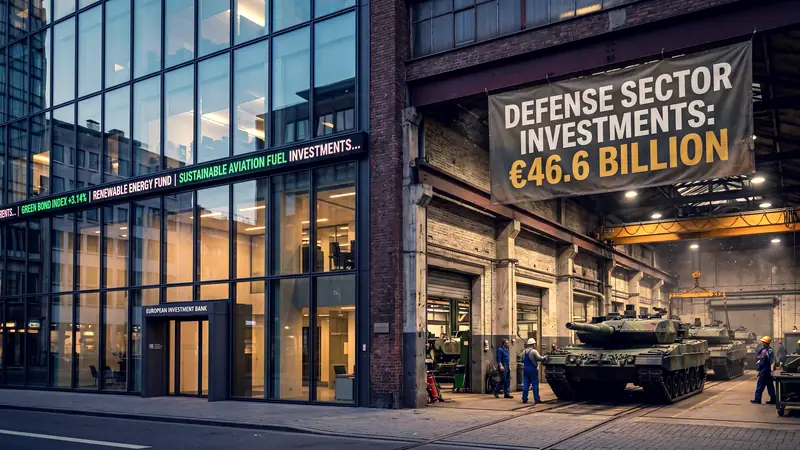
And then there is the elephant in the room. Over €46.6 billion in a single year has flowed from the financial industry into the defence sector. This is not a minor news item: it is proof that European rearmament, accelerated by the new geopolitical context, is quietly rewriting ESG criteria. For years, weapons were excluded from SRI (Socially Responsible Investing — investment guided by social responsibility principles) portfolios. Today, with the narrative of "defence as a European public good", that line has shifted. The sustainable finance associations opposing the loosening of European regulation are fighting on two fronts simultaneously: against Brussels, which wants to simplify the rules, and against a military drift that risks rendering the word "sustainable" entirely meaningless.
Brussels Wants to Deregulate: ESG Associations Push Back
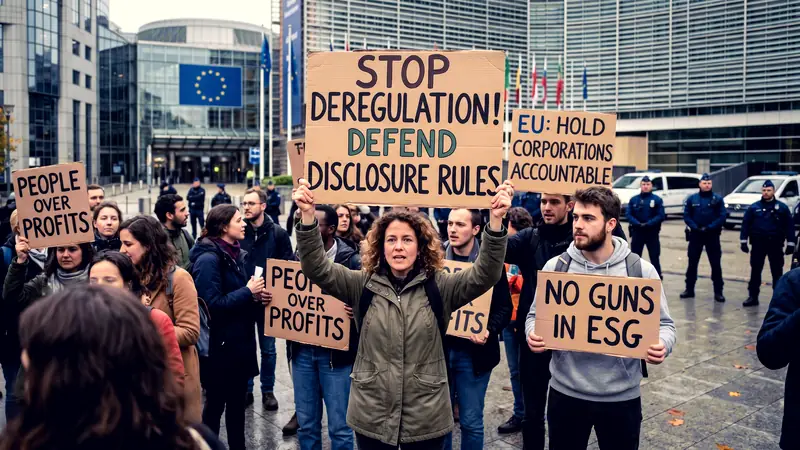
The European proposal to lighten regulation on sustainable asset management (the professional management of investment portfolios) is yet another signal of a policy chasing financial competitiveness at the expense of regulatory coherence. Industry associations are right to protest: every time disclosure (transparency and reporting obligations) requirements are loosened, a space opens up for institutionalised greenwashing. But there is a fierce irony in all of this: the very same associations defending ESG rules operate within a system that has just given the green light to billions for arms manufacturers. Consistency, evidently, is a luxury the market cannot afford.
The Real Picture: A System Contradicting Itself at Industrial Speed
Joining the dots is straightforward, even if uncomfortable. South Africa and Brazil need green capital because wealthy nations have failed to honour their climate financing pledges. Europe is deregulating sustainable finance while funding rearmament. The concept of ESG has been colonised by the very growth logic it was supposed to correct. The result? A global system that issues green bonds with one hand and signs contracts with weapons manufacturers with the other. This is not cynicism: it is an accurate snapshot of where we stand in 2026. Sustainable finance is not dead — but it is surviving as a zombie, and someone should have the courage to say so out loud.