
Key Takeaways
- The SEZ model expands: From China to Eurasia, through Thailand, special economic zones are becoming the defining geopolitical tool of the decade.
- Private Asia on the rise: From Ho Chi Minh City to Sapporo, private capital is reshaping regional growth trajectories in 2026.
Special Economic Zones Are the New Geopolitical Battleground
There is an invisible thread connecting Bangkok, Beijing, Hanoi and Sapporo. It is not made of fibre optics or undersea cables. It is made of economic policy, private capital and an increasingly urgent question: whoever controls the zones where wealth is produced, controls the future. In June 2026, while the world is still debating artificial intelligence and the energy transition, Asia is quietly rewriting the rules of the game through a tool that is forty years old yet more powerful than ever: the Special Economic Zone (a geographic area operating under preferential tax and regulatory rules compared to the rest of the country).
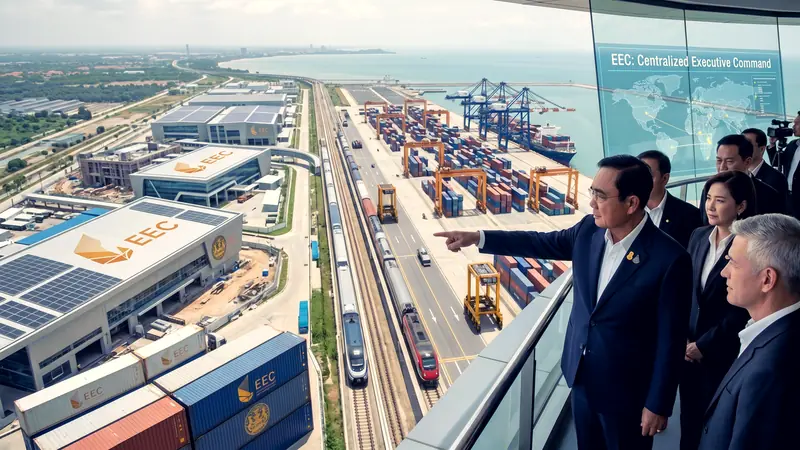
Bangkok Centralises: The Prime Minister Takes Control of the EEC
The news arrives from Thailand with the specific gravity of a strategic move that is hard to ignore. The Thai Prime Minister has decided to take direct personal control of the EEC — the Eastern Economic Corridor (an eastern economic corridor running along the coastal strip of the Gulf of Thailand) — removing it from ordinary ministerial management. This is not a bureaucratic detail. It is a precise political signal: at a moment when competition to attract foreign investment is becoming brutal, Thailand is choosing to verticalise decision-making power. Fewer committees, less mediation, faster execution. The model closely resembles the Singaporean approach of the 1980s, when Lee Kuan Yew understood that structural reforms require a short chain of command that is impervious to internal resistance. The question the market is asking is simple: will this centralisation attract capital or frighten it away? The answer will depend on the transparency with which the government manages the next round of concession tenders.
The Chinese Model Conquers Eurasia
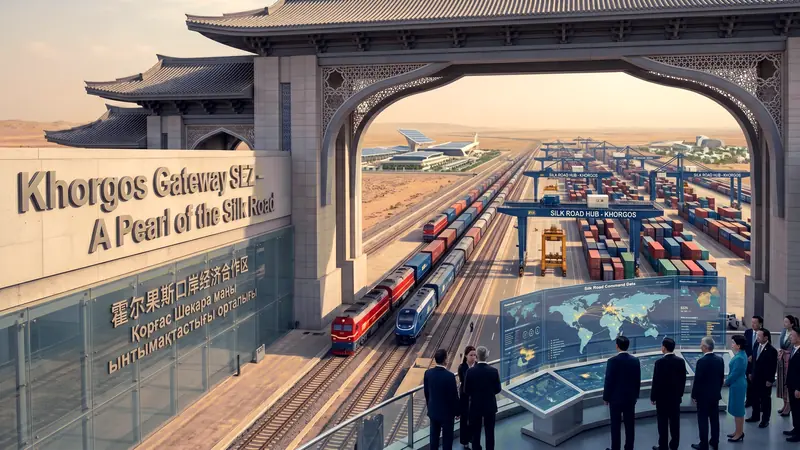
While Bangkok looks to Singapore, Beijing looks to the world. An analysis published in the United States carefully reconstructs how Chinese-inspired SEZs are proliferating along the Eurasian backbone — from Kazakhstan to Pakistan, from Belarus to Ethiopia. The mechanism is well-tested: China exports the Shenzhen model (China's first SEZ, a laboratory of state capitalism since 1980), adapting it to local contexts and bringing with it infrastructure, capital and managerial know-how. The result is a network of economic enclaves that responds, at least in part, to the logic of soft power (political influence exercised through economic and cultural tools) rather than pure market efficiency. The critical point, highlighted by the American analysis, is that these zones risk creating structural dependencies in host countries, replicating neocolonial dynamics with twenty-first-century technological characteristics. This is a debate the West can no longer afford to ignore.
Ho Chi Minh City Bets on the Private Sector
A short geographical distance away but at a considerable ideological remove, Vietnam is choosing a different path. Ho Chi Minh City has identified the private economy as the primary lever for sustaining its growth trajectory. This is no trivial declaration for a single-party state. It means the Vietnamese Communist Party is implicitly acknowledging the limitations of state-owned enterprises as engines of innovation and productivity. Local SMEs (small and medium-sized enterprises, the productive backbone of any advanced economy) are being incentivised with easier access to credit and streamlined bureaucracy. The parallel with China in the 1990s is unavoidable, but Vietnam has the advantage of being able to learn from others' mistakes — along with the awareness that the window of opportunity to position itself in the global value chain for electronics and advanced manufacturing is closing rapidly.

Sapporo and the Memory of Relational Capital
Against this backdrop of major geopolitical manoeuvres, the news from Sapporo might seem out of proportion. A network of local entrepreneurs celebrating twenty years of activity with a special gathering. Yet, read between the lines, it is perhaps the most instructive story of the bunch. Japan has built its economic resilience on networks of relational capital (value generated by trust-based relationships between economic actors over time) that withstand systemic crises precisely because they do not depend on centralised decisions. Sapporo, a city that has weathered decades of demographic and industrial decline, demonstrates that the institutional continuity of the local entrepreneurial fabric is itself a strategic asset. In an era when everyone talks about disruption, organisational longevity is an undervalued form of competitive advantage.
The Point of Convergence
Joining the dots leads to an uncomfortable but necessary conclusion: in 2026, global economic competition is increasingly played out on the ability to design institutions — special zones, entrepreneurial networks, private ecosystems — that attract and retain human and financial capital. Technology is the context, not the cause. Whoever controls the rules of the territory, physical or digital, controls the next growth cycle. Bangkok, Beijing, Hanoi and Sapporo know this. The rest of the world would do well to take notes.