
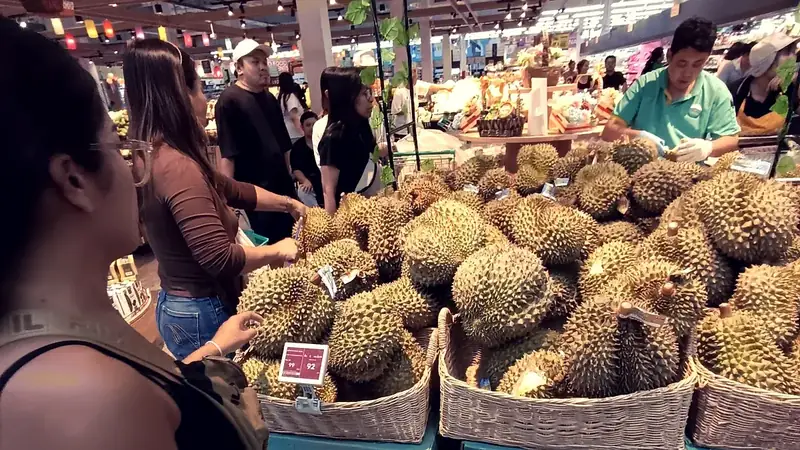
There is a fruit that splits the world in two: those who love it unconditionally and those who flee at the mere whiff of its scent. It's called Durian, and across Asia they call it the King of Fruits. Not without reason.
Key Takeaways
- Durian is the most calorie-dense, nutritionally complex and controversial fruit on the planet: 150 kcal/100g, monounsaturated fats, B vitamins, tryptophan and antioxidants that outperform any Western superfood — with a smell that gets you banned from hotels.
- In Thailand and Malaysia it is literally illegal to carry it on public transport and in airports, and combining it with alcohol blocks liver enzymes causing nausea and palpitations: the King of Fruits plays by its own rules, not yours.
- The Malaysian Musang King variety is the most prized and expensive in the world — phosphorescent yellow, almost alcoholic in flavour — while the Thai Monthong dominates global exports; frozen, it reaches the exact consistency of artisan ice cream and lasts two months.
A Sensory Experience Like No Other
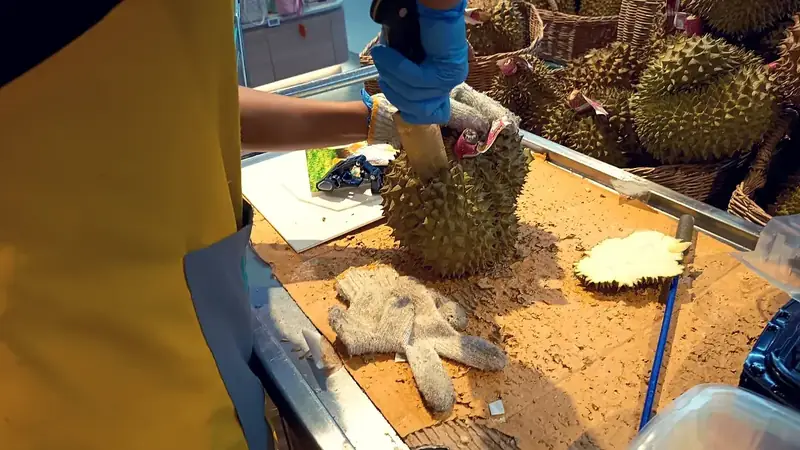
Imagine a football — or a basketball in the most extreme cases — entirely covered in hard, sharp spikes. Opening one requires thick gloves and a sharp knife: you score along the natural lines of the shell, apply leverage, and inside you reveal a pulp that ranges from ivory to deep yellow. The texture is that of a soft, compact boiled potato. The flavour? Sweet with a salty aftertaste, rich, full and lingering. It doesn't refresh your mouth the way a watermelon does: it fills it. It satisfies like a meal. It is probably the strangest and most delicious fruit you will ever put in your mouth.
A Nutritional Powerhouse
Durian is not fruit in the conventional sense. It is dense, caloric — around 150 kcal per 100g — and nutritionally complex in a way few other plant foods can match. It contains monounsaturated fats similar to those found in avocado, an arsenal of B vitamins, vitamin C, potassium, magnesium and manganese. On top of that, it is rich in tryptophan — the amino acid precursor to serotonin and melatonin — with documented effects on mood and sleep quality. Antioxidants, fibre, cardiovascular support: when it comes to health, it is hard to find a more complete fruit.
The Smell: The Question That Divides the World
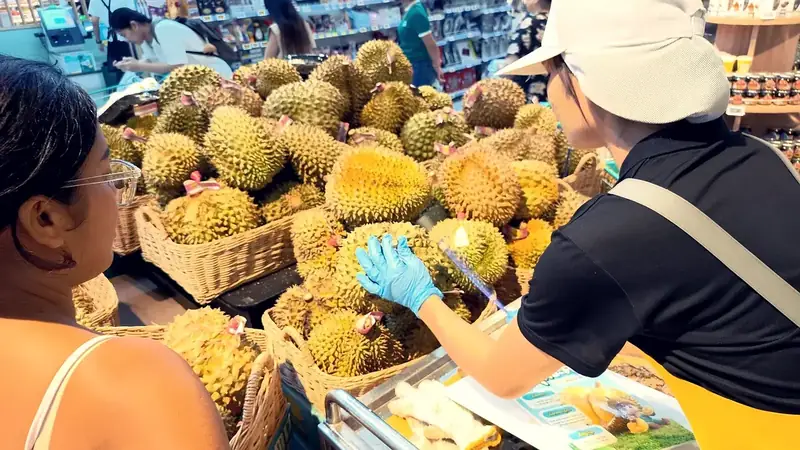
The sulphur compounds present in Durian are responsible for an aroma that many describe as fermented onions, gas or turpentine. That is not a metaphor. It is so penetrating that in Thailand, Malaysia and Singapore it is literally forbidden to bring it onto public transport, into airports and into hotels. The same reason it should never be consumed alongside alcohol: those sulphur compounds block the liver enzyme responsible for metabolising alcohol, with unpleasant consequences — nausea, palpitations, flushing. Keep the two separate, always.
Where the King Is Born
Durian is a strictly equatorial plant: temperatures never below 22°C, very high humidity, well-draining soils. Outside that Asian belt, cultivating it at scale is nearly impossible. Thailand is today the world leader in production and export, with varieties such as the Monthong ('Golden Pillow') — fleshy, sweet, less aggressive. Malaysia, on the other hand, focuses on extreme quality: the Musang King, phosphorescent yellow with a complex, almost alcoholic flavour, is the most prized and expensive variety in the world. Indonesia, Vietnam and the Philippines round out the picture.
When to Buy It and How to Store It
In Thailand the golden season runs from May to June, peaking in the eastern provinces of Chanthaburi and Rayong. In Malaysia there are two seasons: the main one from June to August, and a secondary one between November and January.
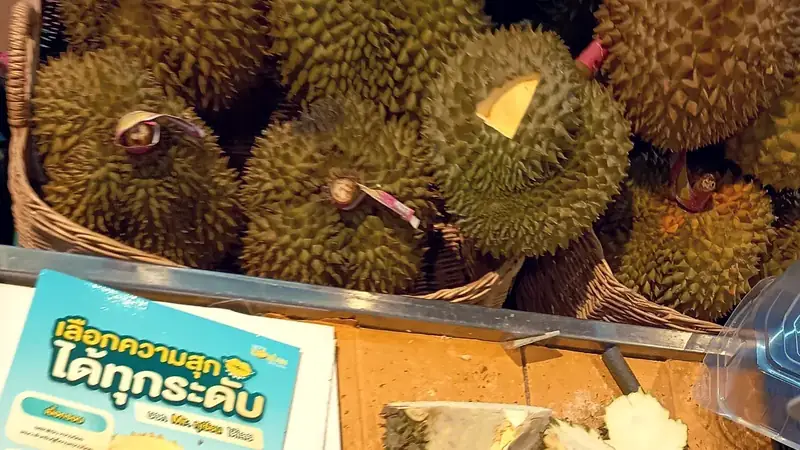
To store it in the fridge without turning your refrigerator into a biological weapon, the procedure is precise: remove the pulp from the shell, seal it in an airtight glass container — never plastic, which permanently absorbs the smell — and wrap it in a double layer of cling film. It keeps perfectly for 3–5 days. An excellent alternative is the freezer. The high natural fat content prevents crystallisation, and frozen Durian takes on the exact consistency of artisan ice cream. It lasts up to two months.
If you are in Thailand or anywhere in Southeast Asia, you will find it everywhere: supermarkets, street stalls, night markets. Try it at least once. Then decide which side you are on.