
Key Points
- Tradition vs Modernity: Authentic Mango Sticky Rice uses coconut cream, not condensed milk, but contemporary street food has adopted the latter for quick sweetness and lower cost.
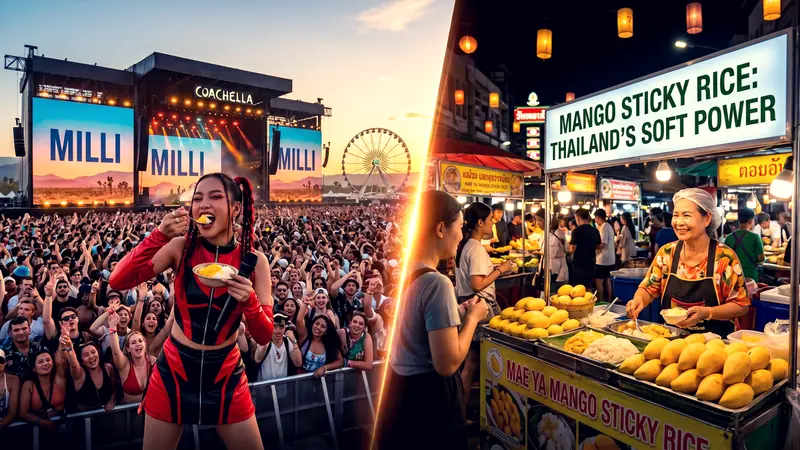
- Gastronomic Soft Power: In 2022, rapper Milli ate it at Coachella, triggering a global surge in searches and accelerating Thailand's UNESCO candidacy.
Mango Sticky Rice: The Thai Dessert Taking the World by Storm
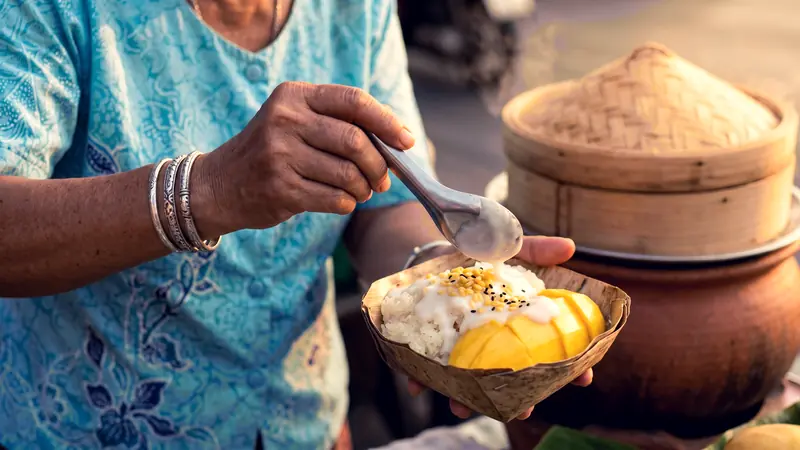
Rice and mango. Two ingredients that seem worlds apart, yet together they create something extraordinary. Khao Niao Mamuang is a masterpiece of culinary engineering: glutinous rice (a grain exceptionally rich in amylopectin, the molecule that makes it sticky) is soaked for up to 12 hours and steamed in conical bamboo baskets — never boiled. The result is a cohesive, warm, enveloping mass. Traditional coconut cream — thick and slightly salty — is poured over the top as a finishing touch, and it is precisely the salt that holds the real secret: it cuts through the sweetness of the mango, creating that complexity so characteristic of the Southeast Asian palate.
The choice of mango is no accident. Purists favour the Nam Dok Mai, an elongated and juicy variety, or the Ok Rhong, less visually striking but boasting an intensely floral aromatic profile. To complete the dish, toasted yellow mung beans (hulled and crispy legumes) break up the uniform softness with an irresistible contrast in texture.
Today, in 2026, this dessert is far more than just a dish: it is cultural diplomacy. Following the Coachella 2022 effect, the Thai government has pushed hard for UNESCO recognition. Mango Sticky Rice has proven that food can be an extraordinarily powerful vehicle for national identity — and that rice and fruit, when all is said and done, need no introduction.