
Pad Kra Pao: the sacred fire of Thai street food
There are certain afternoons when the body craves something alive and sharp, and no cuisine in the world answers that call with the same honesty as Thailand. Pad Kra Pao — stir-fried chicken with holy basil — is not simply a dish: it is an act of will. It is born from a primal desire to feel heat expand from the palate down through the throat, to be awakened from within. It is Bangkok street food meeting the philosophy of wok hei (the soul of the fire transferred to the food), and the result is something extraordinarily direct, almost brutal in its perfection.
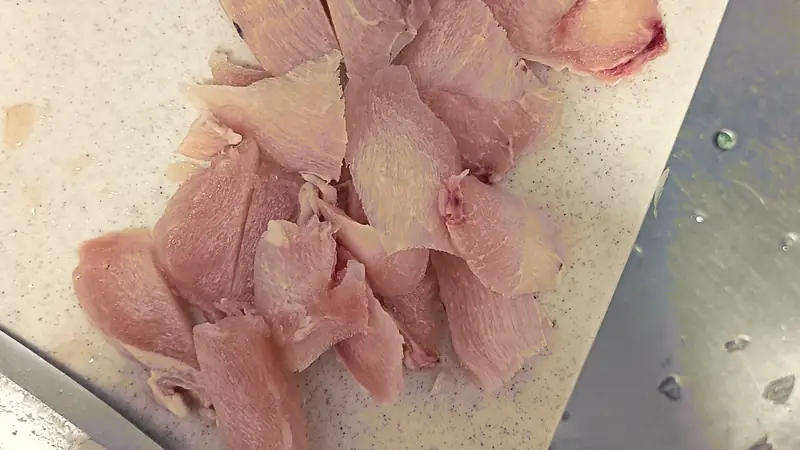
Key Takeaways
- Thailand's signature dish: Pad Kra Pao is widely regarded as the ultimate Thai national comfort food.
- A defining ingredient: Thai holy basil (Ocimum tenuiflorum) is botanically distinct from common Mediterranean basil.
- Complex flavour profile: The dish simultaneously balances saltiness, heat, sweetness and herbaceous aromatic notes.
The ritual of fire: how the aroma is born
Everything begins with oil warming slowly in the pan. This is not a neutral gesture: it is the opening of a ceremony. The moment the surface starts to shimmer, finely chopped chilli and crushed garlic take centre stage — not sliced, crushed, because breaking down the fibres releases essential oils (volatile aromatic compounds) that a clean cut simply cannot unleash with the same intensity. The sauté over a medium flame becomes almost an incense to be burned: pungent, earthy, with that slightly bitter note that foreshadows the heat to come. At this moment the kitchen transforms into something sensorially overwhelming. Anyone in the room already knows: something good is about to happen.
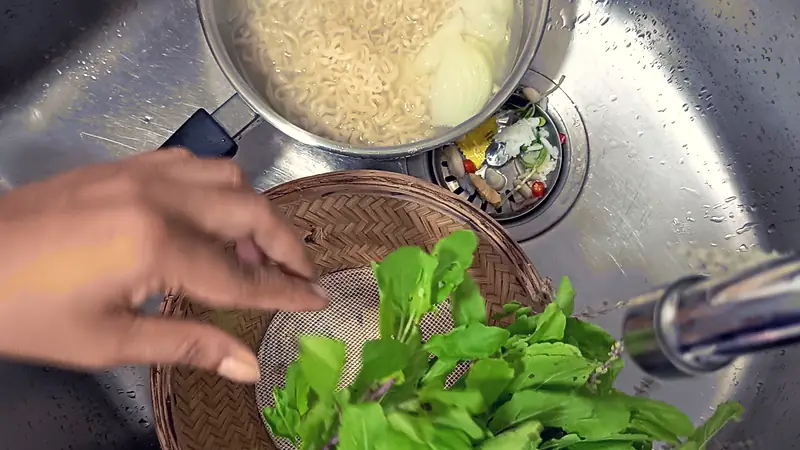
The meat that firms up, the onion that yields
When the chicken hits the pan, the flame rises. This is the moment of the Maillard reaction (the protein caramelisation that creates crust and flavour): the meat seals, firms up, takes on a texture that pushes back against the bite before giving way. This is not slow cooking, not braising — it is a rapid, fierce dialogue between heat and protein. Wedges of onion follow immediately, and here something almost poetic occurs: their cell walls soften, their natural sugars are released and begin to converse with the saltiness already present in the cooking base. The sweetness of the onion does not temper the heat — it frames it, making it more sophisticated, less aggressive and far more layered.
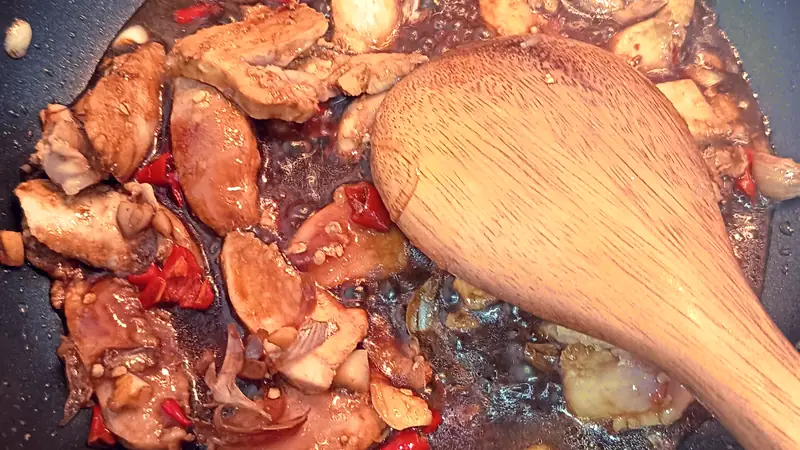
The dark glaze: when sauces become the architecture of flavour
It is in the seasoning stage that Pad Kra Pao reveals its true complexity. Oyster sauce (a thick, sweet-savoury condiment made from fermented molluscs) brings umami (the fifth taste, a deep and rounded savouriness) and an almost imperceptible marine sweetness. Dark soy sauce (long-fermented soy, thicker and less salty than its light counterpart) adds colour and depth. Fish sauce (a fermented liquid derived from anchovies) introduces a sharp, almost metallic saltiness that cuts through and defines. Sugar binds everything together, rounding off the edges. The visual result is a glossy, almost lacquered brown glaze that coats every piece of chicken and onion like a second skin. If the base dries out too much, a splash of water restores the balance — this is not an admission of defeat, it is artisanal precision.
Holy basil: the final gesture, and the most important one
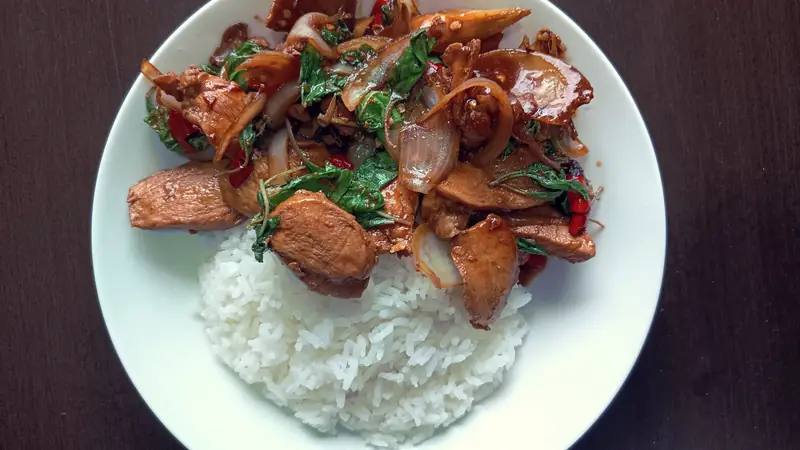
The basil leaves go in last, with the heat off or nearly so. They must not cook: they must just wilt, surrendering their aromatic oils without losing their structure. Thai basil — more peppery, more anise-like, more wild than Genovese basil — is the element that transforms a chicken stir-fry into something unmistakably Thai. Its fragrance is almost medicinal, herbaceous with a hint of clove. Without it, the dish would be technically correct but spiritually hollow.
How it is eaten: the ritual of the table
Pad Kra Pao is never served alone. It calls for steaming hot jasmine white rice (a fragrant Thai variety, long-grained and floral) that soaks up the dark glaze like a silent sponge. And it calls for, crowning everything, a fried egg with a runny yolk — the kai dao (Thai fried egg, crispy edges and liquid centre) — whose crunchy edges contrast with the tenderness of the chicken, and whose yolk, broken with a spoon, folds into the sauce to create a sudden, unexpected creaminess. On the palate, the sequence is precise: first the rounded saltiness of the oyster sauce, then the slow-building warmth of the chilli, then the aroma of the basil that lingers like a green, spiced echo. This is a dish that does not ask for permission. And that is precisely why it is impossible to forget.