
Key Points
- Cooking as active meditation: The preparation of complex dishes is described as an emotionally relaxing and mentally focusing process, capable of neutralizing external stress.
- Key ingredients of aromatic philosophy: Sacred basil (Krapow), lemongrass, and garlic as central sensory elements of a culinary approach founded on natural essential oils.
- Direct emotional impact on the audience: The most significant feedback received does not concern technique, but the food's ability to evoke a sense of home and belonging in those who taste it.
The Aroma That Precedes Everything Else
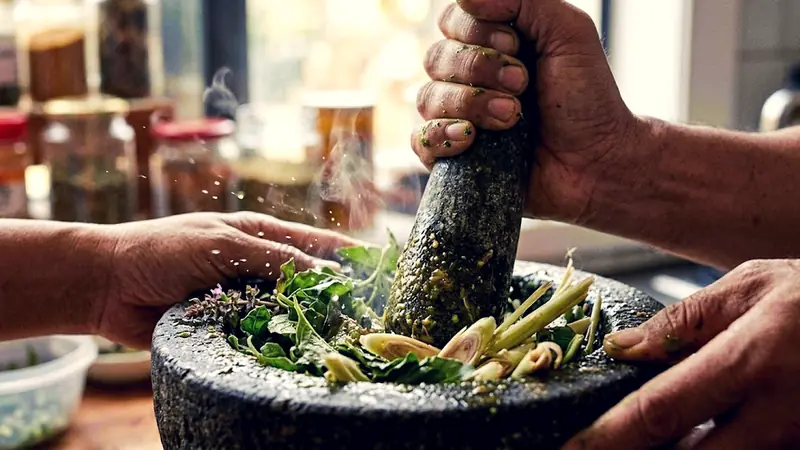
There is a precise moment in the kitchen that arrives even before the dish exists. It's that instant when fresh herbs are crushed, when curry paste touches the hot bottom of the pan and its essential oils explode into the air. It's not yet food: it's a signal. The body recognizes it before the mind has time to process it. It makes you feel awake, present, cared for. It is from that moment — from that precise and involuntary aroma — that one must begin to understand what Prae is truly doing, a Thai content creator and cook who in recent years has built a visual and sensory language around her country's traditional cuisine.
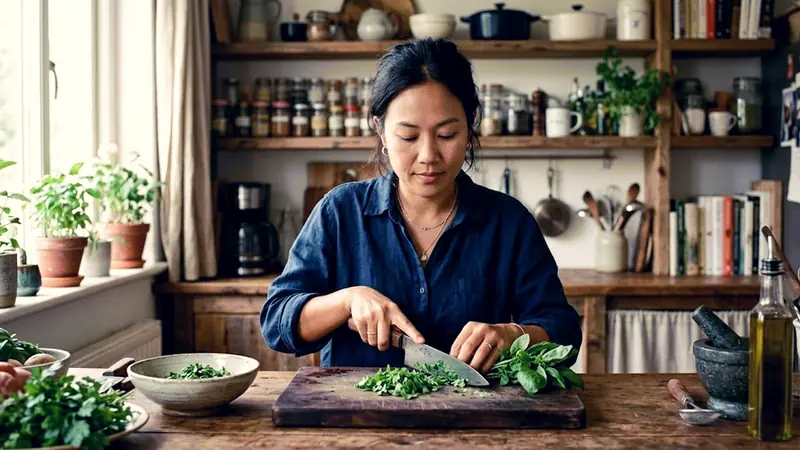
It is not a story of professional ambition in the classical sense. It is a story of attention. The turning point, she recounts, did not arrive with a dramatic twist, but with a progressive awakening: when she began to work seriously in the kitchen and document that work through videos, she discovered that every single detail mattered. The choice of ingredients. The rhythm of the knife. The plating, conceived not to astonish, but to welcome. It was there that she understood she was not chasing a fleeting passion: she was building a devotion.
Meditation With a Knife in Hand
In the landscape of contemporary food creators — often dominated by polished aesthetics, hyper-technical recipes, and Michelin-starred laboratory performances — Prae's approach stands out for an almost countercurrent quality: conscious slowness. Preparing complex dishes, she says, is physically exhausting and requires a patience that not everyone is willing to cultivate. But on an emotional level, that same preparation functions as meditation. The mind empties itself of everything that is not the dish in front of her. Stress disappears. Only concentration on what is in her hands remains.
This contemplative dimension is not a marginal element of her cooking: it is its supporting structure. And it is probably the reason why those who watch her content do not simply perceive a recipe, but a rhythm. A way of existing in time.
Roots, Adapted to Modern Times
The recipes that Prae brings to life do not originate from cookbooks or professional courses. They are born from a much older and much more intimate gesture: silent observation. She learned by watching her mother cook in secret, absorbing the techniques of previous generations the way one absorbs a mother tongue — without anyone formally teaching it to you, but through repetition and presence.
Those traditional Thai flavors, however, are not reproduced in museum form. They are adapted. The spiciness is toned down, the more aggressive aromatic profiles are balanced, the plating follows a natural and minimalist style, consistent with a contemporary aesthetic that does not deny its origins but makes them accessible to a wider audience. It is not an operation of cultural dilution: it is a conscious translation that respects the soul of the dish while modifying its form.
Sacred Basil and Lemongrass as a Compass
If there is one technical element that runs through her entire culinary philosophy, it is the use of fresh aromatic herbs. Sacred basil (Krapow), lemongrass, garlic: ingredients that the moment they are picked, chopped, or crushed immediately release their essential oils. That aroma is not decorative. For Prae it is a refuge. A constant sensory anchor that, every time it repeats, brings her back to a state of calm and presence. It is her anchor, the signal that the work is about to begin and that it is worth it.
The Silence After the First Bite
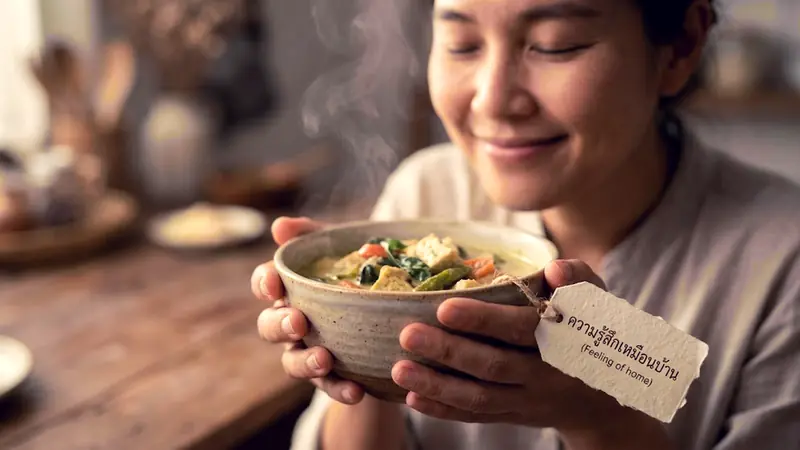
The most powerful compliment she has ever received was not technical. It did not concern perfect cooking, the balance of flavors, or the beauty of the plating. It was a silence. A person, after the first bite, stopped. Took a breath. And then said: "I feel like I've come home". Another time: "It's like receiving a hug".
These reactions — spontaneous, physical, pre-verbal — are the true measure of Prae's work. In a digital ecosystem where cooking is often reduced to content to be consumed visually, she aims for something more difficult to replicate: the emotion that arrives through taste. In a food content market that in 2026 is worth globally over 35 billion dollars, voices capable of generating that type of authentic emotional response still represent a rare niche — and for this reason, structurally resistant to automation and saturation.