Key Points
- 280 horsepower on two wheels: The Veloce Aperion is powered by an 8-cylinder, 1,000cc two-stroke engine, with an estimated price of €90,000 and availability from 2027.
- Full-scale technical rebellion: The Sanrivatti "Apex Position", the Yamaha MOTOROiD Lambda with reinforcement learning, and the Moto3 CP2 689cc prototype are the standout technologies of the week.
- Revolution in the World Championship: From 2028, Yamaha will be the sole supplier in Moto3, definitively burying the 250cc format in favour of larger, more powerful machines.
The Week the Motorsport Industry Lost Its Mind (and Did Absolutely Right)
Late June 2026. While half the industry keeps chasing the perfect kilowatt-hour with all the creativity of a tax return, the other half has decided to do something radically different: be interesting. This week, between hypercars you drive lying down, muscle cars disguised as racing machines, eight-cylinder two-stroke motorcycles and artificial intelligences learning to balance themselves from scratch, the motorsport industry has proven that engineering rebellion is not dead. It has simply been hiding in the right laboratories, waiting for the perfect moment to strike.
You Drive Lying Down, or You Don't Drive at All
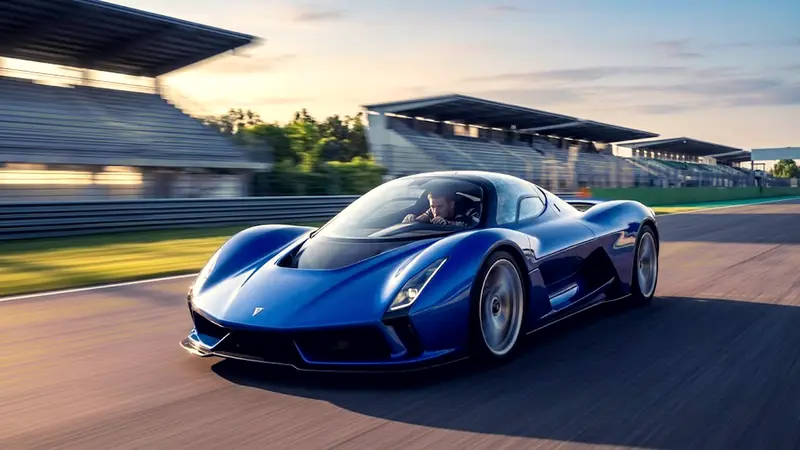
Let's start with four wheels, and let's start with a bang. On 24 June 2026, Dutch startup Sanrivatti unveiled its first hypercar to the world, and it did so with an ergonomic choice that has already split the industry clean in two: geniuses on one side, reckless lunatics on the other. The concept is called "Apex Position" and it works like this: forget the seat. Forget the anatomical shell, the upright position, everything you have ever associated with the cockpit of a supercar. The Sanrivatti driver does not sit — they lie forward, resting their chest against a central column, adopting a posture virtually identical to that of a Superbike rider mid-corner. All the time. Even on a straight. Even at a traffic light, assuming this thing ever gets anywhere near a traffic light.
What makes it fascinating is that this is not a cosmetic gimmick dreamed up for a concept show. There is a concrete, brutally effective physical logic behind the madness: lowering the driver's mass lowers the entire car's centre of gravity, and reducing the frontal cross-section opens the door to Le Mans prototype-level aerodynamics, with a roofline so low it almost looks like a design error. The visual result is something halfway between a fighter jet and a wheeled torpedo. Public opinion, as anticipated, is literally split down the middle — which, for a startup making its global debut, is probably the best possible outcome.
Chevrolet and the Oldest Trick in Detroit
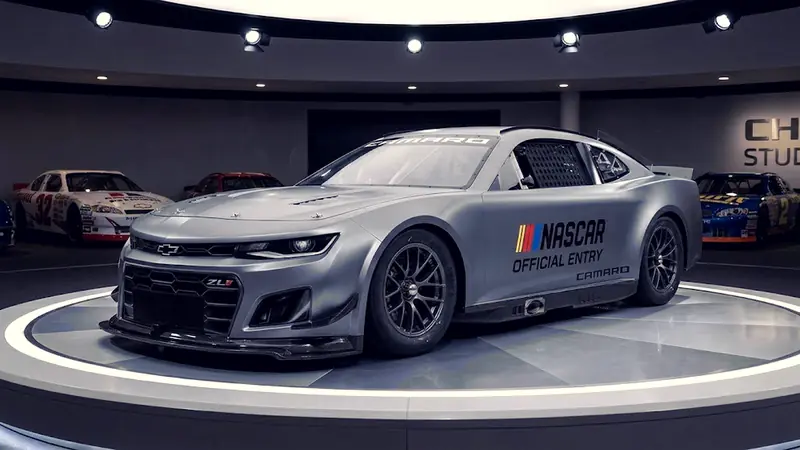
Let's change continents, but stay in the orbit of the car that wants to tell you something without quite telling you. Chevrolet unveiled what is officially a new NASCAR Show Car this week. The trouble is that sharp-eyed journalists immediately spotted the anomaly: the bodywork does not match any existing race car. The bonnet is long and low, the lines are razor-sharp, and the roofline follows an unmistakable fastback profile. This is not the silhouette of a racing machine. It is the silhouette of the next Camaro.
Chevy has pulled one of the oldest and most elegant tricks in Detroit's playbook: hiding the future in plain sight, wrapped in the sporting excuse of a show car. The Camaro had been withdrawn from the market in 2024, leaving an emotional void that a sizeable chunk of American enthusiasts has never quite come to terms with. Now that silhouette reappears, dressed up as a circuit car, with all its classic proportions reinterpreted in a modern key. The rebirth of the quintessential American muscle car no longer feels like a romantic hypothesis — it looks like an industrial plan already set in motion.
Eight-Cylinder Two-Stroke: Welcome Back to Hell
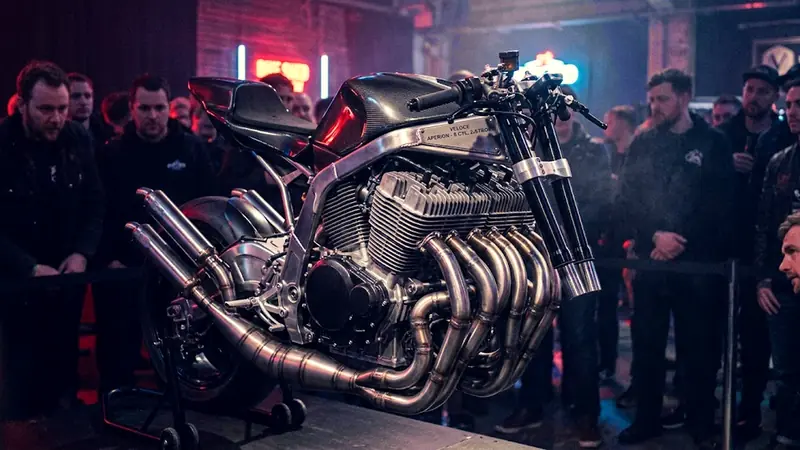
On to two wheels, and let's turn the volume up even further. On 25 June 2026, at the Bike Shed Moto Show in London, British startup Veloce Motorcycles pulled the covers off the Aperion: a naked bike that looks as though it came from a parallel universe where the environmental movement never convinced anyone. While the market gazes at electric power with near-religious devotion, Veloce did the most subversive thing imaginable: it brought the two-stroke engine back to life. Not just any engine. An 8-cylinder, 1,000cc block capable of delivering 280 horsepower, with a sound that, according to early descriptions, resembles nothing currently existing on public roads.
The estimated price hovers around €90,000, with availability expected from 2027. A hyper-elite niche, certainly, but also a statement of principle: there are buyers willing to pay a luxury saloon price for something that has nothing to do with comfort, connectivity or low emissions. It has everything to do with the raw brutality of two-stroke power delivery, multiplied across eight cylinders. It is a provocation on wheels, and it works precisely because of that.
The Motorcycle That Knows You Better Than Your Wife
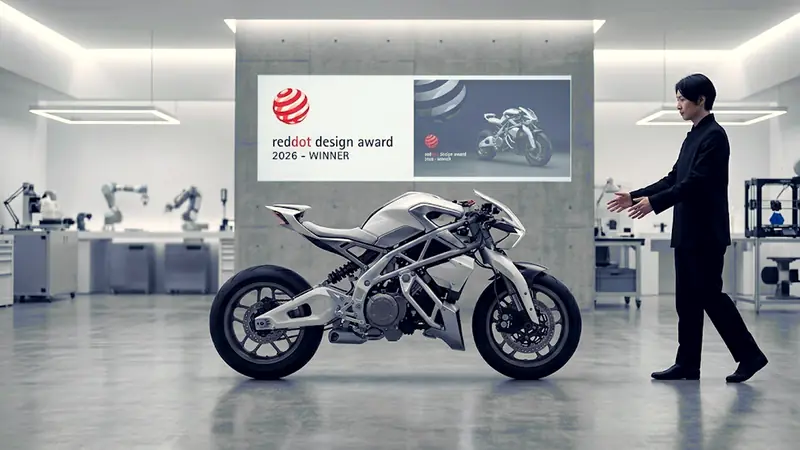
At the opposite end of the technological spectrum, Yamaha collected the Red Dot Design Award for the new incarnation of the MOTOROiD Lambda, and the news has been bouncing around everywhere these past few days for good reason. Because this is not a concept bike in the traditional sense of the term. It is an experiment in artificial intelligence applied to the motorcycle, and the results give pause for thought. Thanks to reinforcement learning, the Lambda autonomously learns to ride and maintain balance, recognises its rider, interacts with them, and stabilises itself in response to inputs from the surrounding environment without any human intervention. Yamaha's stated goal is to build a future in which man and machine develop an almost empathic relationship, effectively eliminating the risk of falling when stationary or at low speed. A vehicle that grows with you. Strange, unsettling and probably inevitable.
The World Championship Changes Its Skin at Assen
The weightiest news on the sporting front comes from the Assen circuit, where Yamaha and Dorna held a press conference that rewrites the entry rules of the World Championship. From 2028, Yamaha will become the sole supplier for the entire Moto3 championship, and the iconic 250cc machines will exit the scene for good. The new prototype, already in intensive development and presented conceptually this week, will be powered by a race-spec version of the parallel-twin CP2 689cc engine — the same block proven on the MT-07. A larger, more powerful motorcycle with a superior power-to-weight ratio, designed to prepare young riders for the physical and technical shock of stepping up to Moto2 and then MotoGP. According to Dorna's projections, the new format should reduce the average adaptation time for rookies in the higher classes by at least one full season.