Key Takeaways
- Power at the limit: The Audi Nuvolari delivers 1,001 combined hp from a 4.0-litre twin-turbo V8 and three electric motors, hitting 0–60 mph in under 2.6 seconds with a top speed exceeding 217 mph.
- Defining technologies: Mercedes SLK R170's electrohydraulic folding hardtop (roof retracts in 25 seconds via actuators), Nuvolari's three-position active rear wing generating 400 kg of downforce, and the Porsche 911 GT4 R's naturally aspirated 4.0-litre flat-six producing 520 hp.
- Commercial footprint: Audi Nuvolari capped at 499 units, market launch set for 2027; Porsche 911 GT4 R built exclusively for customer racing teams competing in the 2027 GT4 championship season.
Stuttgart, the Nineties: The Roof That Changed Everything
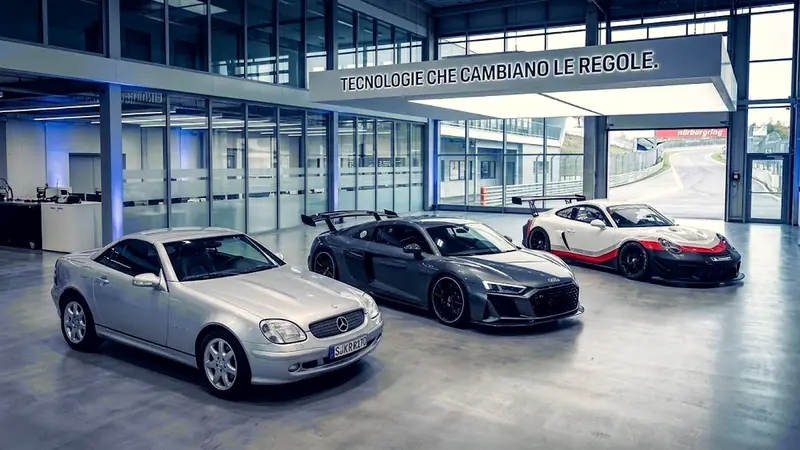
There is a precise moment when Mercedes-Benz stopped being the brand of black chauffeur-driven saloons and decided to play hard on emotion. That moment has a name, an acronym, and a hypnotic mechanism: the SLK R170. "SL Kurz" — compact SL — an almost bureaucratic label for a car that concealed one of the most spectacular engineering feats of the Nineties beneath its bodywork. An electrohydraulic (powered by fluid pressure and electric motors) folding hardtop. Twenty-five seconds. A choreography of sheet metal, linkages, and actuators that transformed a sealed coupé into an open-top roadster in front of the wide eyes of anyone watching.
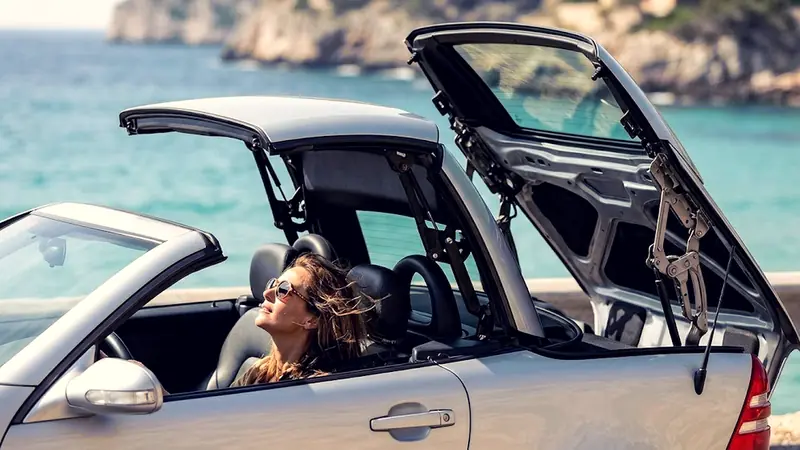
The footprint was compact — under four metres in length — and the engine range fed directly from the C-Class, with Kompressor (supercharged) units forming the sporting backbone. It was not a supercar. It never claimed to be. It was something more insidious: an accessible, broad-appeal roadster capable of carrying sporting credibility into demographic territories Stuttgart had never touched. The SLK R170 did not simply sell well. It rewired the public identity of an entire brand, making it suddenly young, bold, and almost irreverent.
Ingolstadt Unleashes the Beast: Audi Nuvolari, 1,001 hp of Electrified Brutality
Thirty years on, the concept of innovation has shed its skin, its geography, and its unit of measurement. The laboratory is no longer a sun-drenched coastal road where you cruise with the roof down. It is the Nürburgring Nordschleife — the Green Hell — where final development testing is shaping what promises to be the most extreme machine ever to leave Ingolstadt: the Audi Nuvolari.
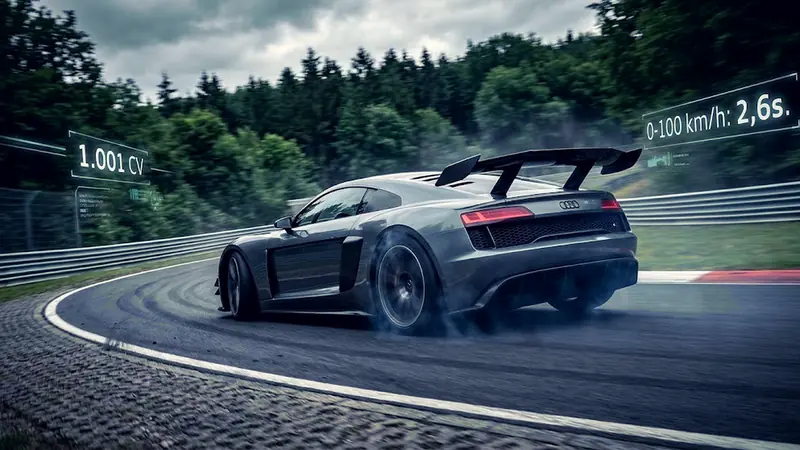
The numbers, taken individually, are already unsettling. Stacked together, they become something the rational mind struggles to process. A 4.0-litre twin-turbo V8 paired with three electric motors. All-wheel drive. One thousand and one combined horsepower transferred to tarmac, launching the car from zero to 62 mph in 2.6 seconds. Top speed beyond 217 mph. These are figures that belong to the domain of extreme physics, not daily transportation.
The Nuvolari is not raw power alone, however. It is also active aerodynamics: a rear wing operating across three distinct positions, capable of generating up to 400 kg of downforce (aerodynamic load pressing car onto road), pinning to the ground a machine that would otherwise have serious intentions of becoming airborne. Production is capped at 499 units, with sales commencing in 2027. Elite by definition. Brutal by vocation.
Zuffenhausen Returns to the Track: Porsche 911 GT4 R Puts the Analogue Back in Charge
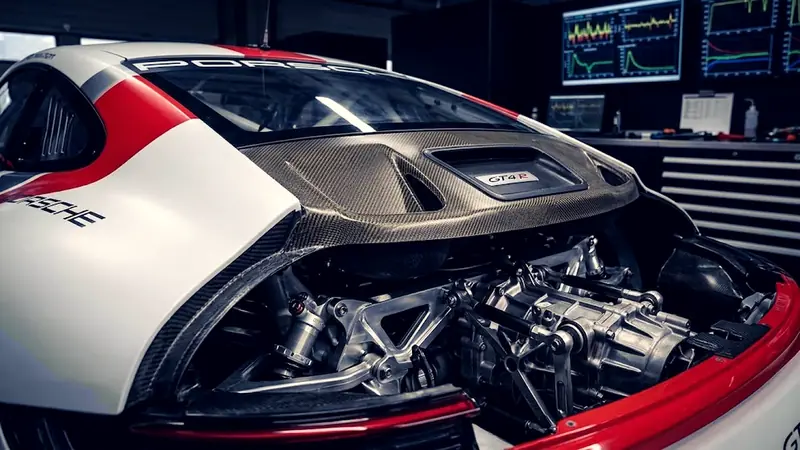
While the hybrid hypercar occupies the apex of the road-car technology pyramid, pure motorsport demands a different language. More direct. Less filtered by electronics. And this is precisely where Porsche places its move for the 2027 racing season: the 911 GT4 R, built on the 992.2 GT3 platform, steps into the role previously held by the Cayman as the official weapon for the GT4 championship.
The heart of the machine is the legendary naturally aspirated 4.0-litre flat-six: 520 hp in unrestricted trim, choked down to 430 hp by the mandatory air restrictors (inlet limiters controlling maximum engine airflow) imposed by championship regulations. An engine that needs no turbochargers and no electrical assistance to tell its story. It tells it through sound, through throttle response, through that raw physical connection between right foot and rear axle that drivers continue to chase desperately in the era of over-electrification.
Around that engine, Zuffenhausen has built a structure engineered for customer teams intent on dominating kerbs without compromise. Panels in natural composite fibre (plant-based structural material reducing overall weight) to slash mass, millimetre-precise adjustable suspension, advanced telemetry (real-time performance data logging) on a 10.3-inch display, and a six-speed sequential gearbox with front-mounted dog-ring engagement (mechanical gear-locking system, no synchromesh) that transmits every input with the bluntness of a professional tool. Nothing is superfluous. Nothing is decorative. The 911 GT4 R is engineered for one purpose: to cross the finish line ahead of the competition.
Three Cars, One Undeviating Trajectory
From the SLK R170 that democratised open-air emotion in the Nineties, through the thousand hybrid horsepower of the Audi Nuvolari set to rewrite the parameters of the road-going hypercar, to the surgical racing purity of the Porsche 911 GT4 R that places the driver back at the centre of the equation: three eras, three philosophies, three distinct answers to the same obsessive question. How do you build a car capable of generating genuine emotion? The answer changes shape with every generation. The question, however, never ages.