Key Takeaways
- Raw power: 1,578 hp (1,600 PS) from the 8.0-litre quad-turbo W16, 0–100 km/h in 2.4 seconds, top speed potential of 439 km/h.
- Functional KPM porcelain: Historic manufacturer Königliche Porzellan-Manufaktur Berlin (Royal Porcelain Manufactory, founded 1763) returns to a Bugatti fifteen years after the 2011 Veyron Grand Sport "L'Or Blanc," delivering hand-crafted structural elements and cabin components in genuine fired porcelain.
- One-off, definitive farewell: The W16 Mistral "Blanc Éternel" is a Sur Mesure (Bugatti's extreme bespoke division) one-off that officially closes the combustion W16 engine era, ahead of the hybrid V16 powertrain debuting in the Tourbillon.
Eternal White: Bugatti Ends an Era in a Single Stroke
This is not a reveal. It is an epitaph. Bugatti has unveiled the W16 Mistral "Blanc Éternel" — a single example, zero replicas, none — produced by the extreme bespoke division Sur Mesure. The message is as clear as the porcelain that sheathes it: the combustion W16 engine no longer exists. This car is its funeral in hypercar form. And what a funeral it is.
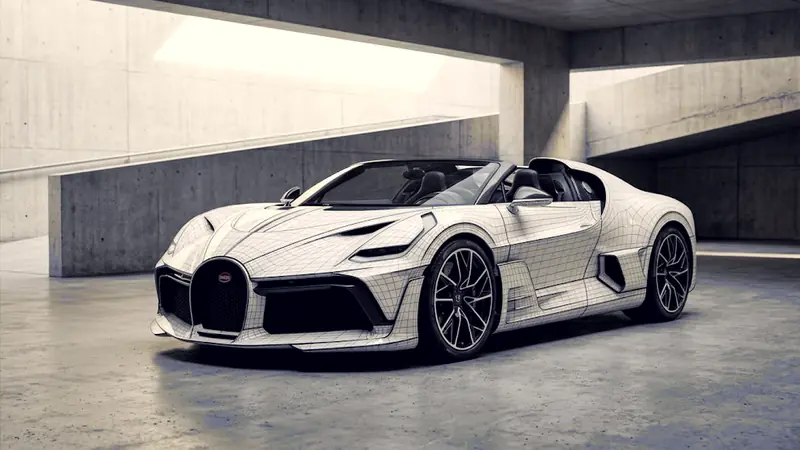
The name chosen by Molsheim is not accidental. "Blanc Éternel" — Eternal White — carries two distinct meanings that overlap without mercy: the incorruptibility of pure porcelain and the immortality of a powertrain that dominated the hyper-performance industry for nearly two decades. A mechanical architecture no other manufacturer ever dared to replicate, now frozen in time by an object that will never have a twin.
The Bodywork That Exposes Its Own Source Code
The aesthetic of the Blanc Éternel is a clean break from any coachbuilding tradition. Forget clay modelling sessions and hand-finished physical prototypes shaped by designers hunched over lit workbenches. The Mistral was born entirely in a digital environment, and its bodywork declares that fact without apology. Against a base of pure white, thin black geometric lines run across every surface — these are not decoration. They are the visual representation of NURBS surfaces (Non-Uniform Rational B-Splines, the mathematical language used to sculpt 3D forms digitally), the precise coordinates with which virtual modellers carved every millimetre of this car inside a computer.
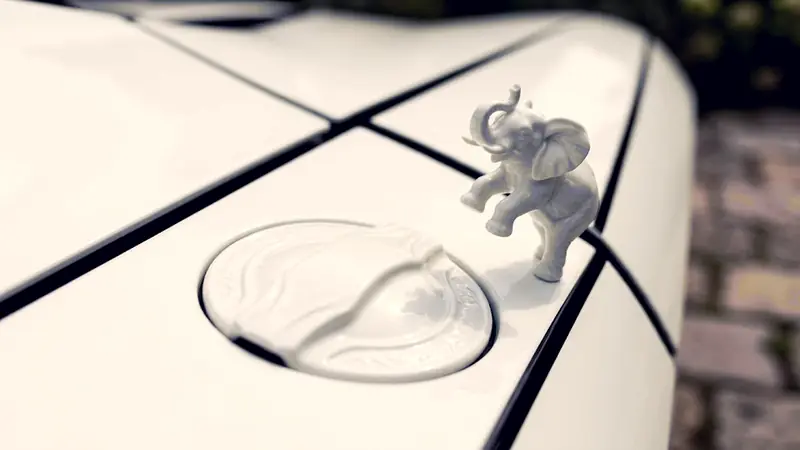
Translating that grid of digital coordinates onto metal required a fully manual masking and painting process executed with zero tolerance for error. One broken line, one edge that bleeds in the wrong place, and the entire visual logic collapses. The chromatic contrast between black and white is not arbitrary: it is engineered to guide the eye through the car's anatomical landmarks — the horseshoe front grille, the lateral air intakes, the X-structure of the rear lights. A mandatory visual route, calculated to the millimetre.
Porcelain: Not Just Aesthetics — Engineering
Fifteen years after the 2011 Veyron Grand Sport "L'Or Blanc," Bugatti calls back into service the Königliche Porzellan-Manufaktur Berlin — KPM — a German manufactory with centuries of history. But this time the porcelain is not simply bonded onto surfaces for visual effect. It is integrated into the functional architecture of the car.
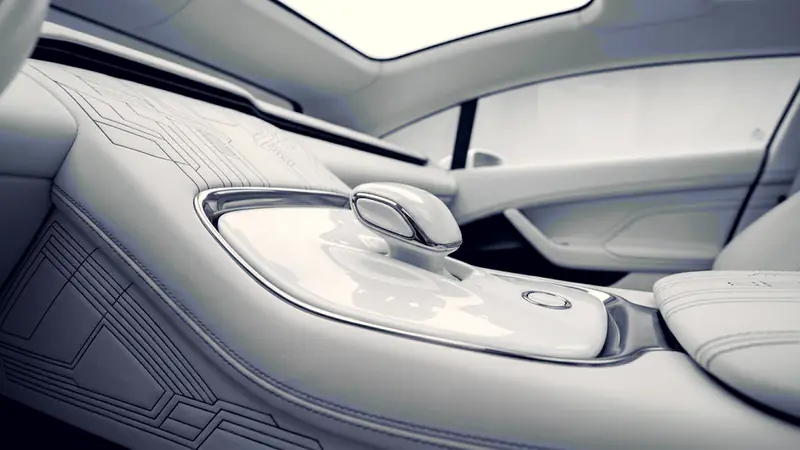
On the exterior, the material covers the EB emblems, the dancing elephant sculpture, the fuel filler cap, the oil filler cap, and the bonnet inlays. Inside the cabin, the application becomes more radical: the window switch surrounds, speaker grilles, structural details of the gear selector, and centre console panels are all in genuine hand-crafted porcelain. These are paired with white leather upholstery carrying the same black lines present on the bodywork, delivering a visual continuity that leaves nothing to chance.
The technical challenge is real and non-trivial: porcelain shrinks by approximately 17% during high-temperature firing. Every single component required pre-calculated dimensions and absolute-precision measurements to ensure that, once out of the kiln, it would fit its designated position in the cabin with no adjustment margin whatsoever. It either works, or the process starts over from scratch.
The Engine: 1,578 hp in Search of an Heir
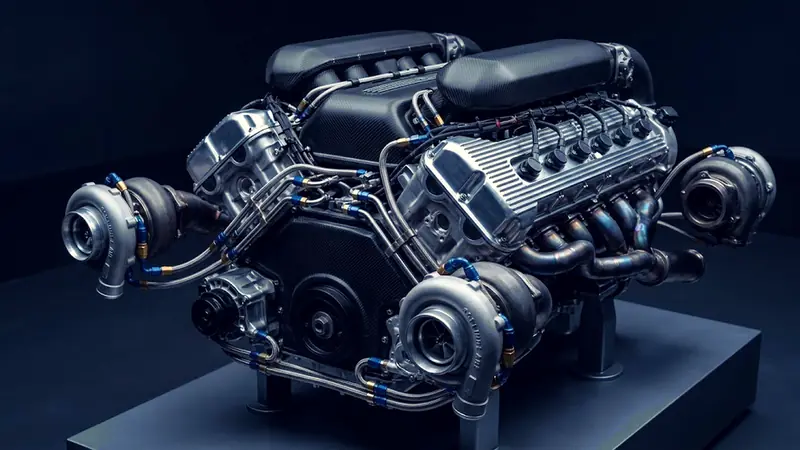
Beneath all this artisanal refinement, the most violent heart ever fitted to a production Bugatti still beats. The 8.0-litre quad-turbo W16 delivers 1,578 hp — 1,600 PS — and drives the Blanc Éternel from zero to 100 km/h in 2.4 seconds. Top speed is electronically limited to approximately 420 km/h, though the declared potential reaches 439 km/h. Figures that in 2026 remain without parallel in open-top roadster configuration.
This is the last time this powertrain appears on a production car. Bugatti has already charted its course toward the future with the Tourbillon (Bugatti's next-generation hypercar platform), which brings a hybrid powertrain built around a naturally aspirated V16 combustion engine. The era of the sixteen cylinders arranged in a W configuration — with its compact architecture and thermal brutality — is closed. The Blanc Éternel is the seal on that chapter.
The Price of Silence and One Thousand Coffee Cups
Bugatti has not disclosed the final price of this one-off commission. The standard W16 Mistral starts at over $5 million. What premium a unique example commands — clad in KPM porcelain, wearing a livery that documents its own design process — is a figure the hypercar collector market calculates entirely on its own terms, independent of any published list price.
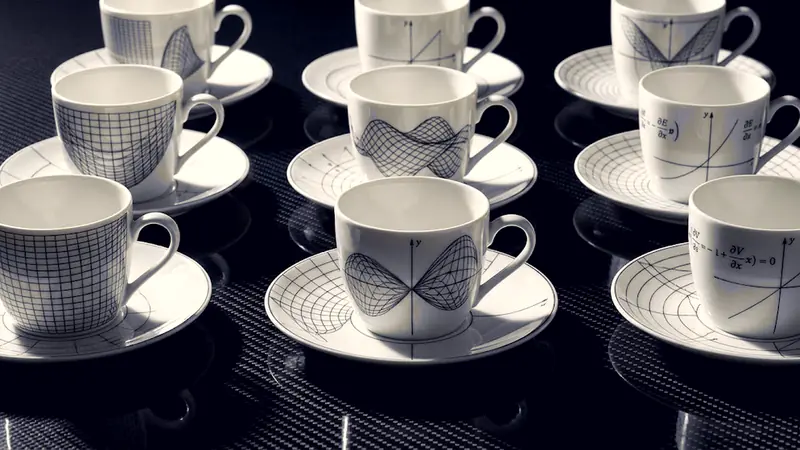
The owner's identity is unknown. What is confirmed is that alongside the car they will receive a matched set of 1,000 porcelain coffee cups, produced by the craftspeople at KPM. The car itself, it should be noted, has no conventional cup holders. Bugatti resolved that problem in its own way.