
Key Points
- Circular design at the forefront: Product design oriented toward waste reduction is emerging as a primary lever in the circular economy, with Vietnam and Asian markets leading the charge.
- IKEA PS Kollektion and KBTG AI Platform: Two distinct initiatives — one in high-end furniture, the other in the integration of design and artificial intelligence — are redefining the boundaries of the sector.
- Design market expansion in Asia: Japan, Thailand, and Vietnam are confirmed as epicenters of a new design sensibility that is cross-pollinating diverse fields, from furniture to personal stationery.
Design is not an aesthetic problem. It is a structural one.
There is a fundamental misconception that continues to persist in debates about contemporary design: the idea that improving an environment — an office, a product, an organizational system — means intervening on its visible surface. Colors, shapes, proportions. The reality emerging from an observation of global trends in this 2026 tells a radically different story. Design, understood as a strategic discipline, has long since ceased to be a matter of taste. It has become a tool of industrial policy, sustainability, and, in some cases, corporate survival.
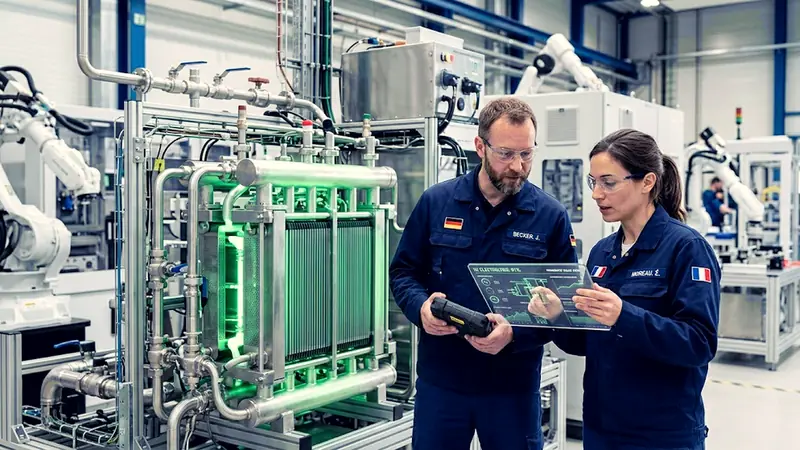
Take the most emblematic case: the subject of workplace design. The obsessive pursuit of the perfect office — open spaces versus private rooms, standing desks versus traditional workstations, ornamental greenery versus neutral surfaces — has produced an enormous body of literature and often disappointing results. The reason is as simple as it is uncomfortable: the problem has never been the office design itself. It is the way organizations think about work before they even furnish it. No ergonomic chair resolves a dysfunctional corporate culture. No circadian lighting compensates for pathological time management. Physical design is the last mile, not the starting point.
IKEA raises the stakes: the PS Kollektion as an industrial manifesto
In this context, IKEA's move with the new PS Kollektion deserves an analysis that goes beyond the press release. The Swedish giant of democratic furniture — the one that built an empire on replicability and accessible pricing — is deliberately choosing to shift toward a positioning more typical of a high-quality design studio. This is not a contradiction: it is a calculated response to a market that is fragmenting. On one side, the lower end is being aggressively targeted by Asian manufacturers with very short supply chains and prices that are impossible to beat. On the other, an increasingly large segment of consumers is seeking objects with a recognizable design signature — not necessarily luxury, but capable of telling a story. The PS Kollektion fits precisely into this gap, with pieces designed to last, to be repaired, to gain value over time. A non-trivial bet for a company that built its identity on the buy-and-replace model.

Vietnam and the circular economy: design as policy
From Southeast Asia comes a signal of a different nature, but equally significant. Vietnam is building with growing determination a narrative around circular design: the idea that waste reduction does not come through separate waste collection or tax incentives, but through the product design phase itself. If an object is conceived to be disassembled, repaired, recycled, or reabsorbed into the production chain, the waste problem is addressed upstream, not downstream. It is a paradigm shift that Europe has been debating for years without implementing it consistently. That it is now arriving with force from Hanoi is a fact that the Western industry would do well not to underestimate.
Thailand and Japan: when design meets artificial intelligence and intimacy
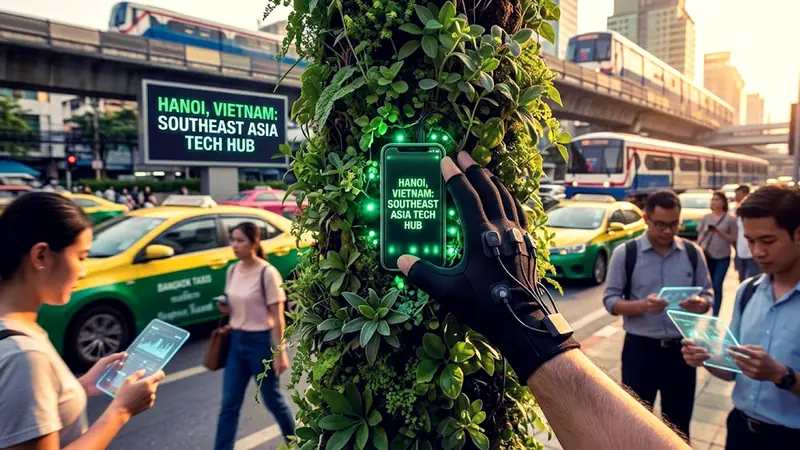
Thailand is playing an even more aggressive game on the technology front. KBTG — the technology arm of one of the country's leading banking groups — has launched a platform that integrates design and artificial intelligence with the stated goal of transforming internal organization. This is not a generic productivity tool: it is an attempt to apply design logic to corporate decision-making processes, using AI as an amplifier. It is a model that could spread rapidly in markets where the pressure toward digital transformation is extremely high and the tolerance for experimentation is greater than in the West.
Japan, finally, offers the most unexpected note. In a country that has always cultivated the culture of the everyday object as a minor art form, the design of personal diaries has become a mass phenomenon with concrete commercial implications. The care with which notebooks, planners, and journals are designed — materials, bindings, paper weight, closure systems — reflects a demand for perceived quality that goes well beyond function. It is the market saying, once again, that people are willing to pay for objects conceived with intention.
The thread running through these geographically distant scenarios is a single one: design is becoming a non-delegable competitive variable. Companies that treat it as a finishing cost will continue to lose ground to those that integrate it as a strategic discipline from the very first stage of development. According to projections from the Global Design Economy Report, by 2028 Asian markets will account for over 41% of global spending on design services, surpassing the European bloc for the first time.