
Key Takeaways
- Global shift to electric: Toyota, GM, Audi and Mercedes-Benz are simultaneously reshaping product strategies and leadership structures to accelerate electrification across the automotive sector.
- Thailand as a new strategic hub: Bangkok is emerging as a pivot market for hybrid and electric vehicle adoption in Southeast Asia, attracting investment from major global manufacturers.
The Great Automotive Realignment: When Detroit, Stuttgart and Bangkok Speak the Same Language
There is a precise moment when the seemingly disconnected movements of the global automotive market stop looking random and begin to tell a coherent story. It is June 2026, and that story is about one thing only: the race to electrification is rewriting not just technologies, but the internal power structures of the world's largest automakers. From Tokyo to Detroit, through Ingolstadt and Stuttgart, all the way to Bangkok, the dots are connecting into a picture that no single press release can capture on its own.
Toyota Changes Guard: The Most Political Signal
Let's start with the most symbolically loaded move. Toyota Motor has officially announced a leadership reorganisation: Akio Toyoda returns to the role of Chairman, while Kenta Kon takes on the position of CEO. On the surface, a matter of org charts. In reality, a precise message to the market. Toyoda — who had already led the company as CEO for over a decade — is not stepping aside; he is repositioning. He retains strategic control while delegating operational execution. It is the move of someone who wants to oversee an epochal transition without losing the thread. Toyota is historically the company that invented mass-market hybrid technology with the Prius, yet also the one that held out longest against pure electric vehicles (battery-only vehicles with no combustion engine). This leadership change suggests the resistance phase is over. The acceleration phase has only just begun.
General Motors and the Battery Bet
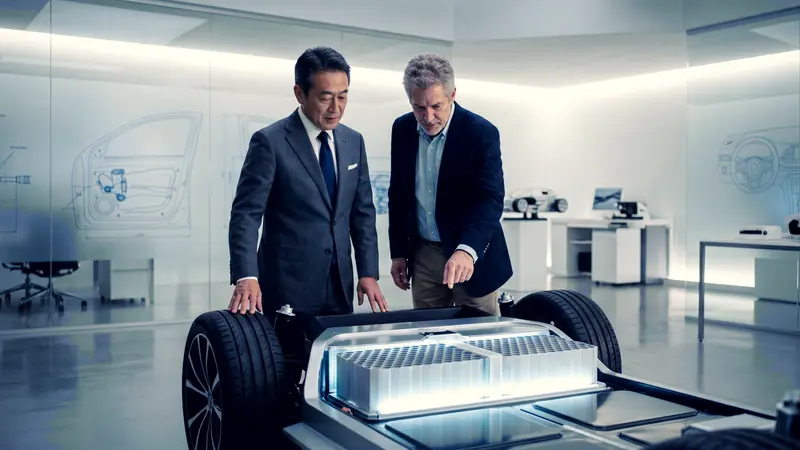
Across the Atlantic, General Motors is working on a new generation of battery technologies for electric vehicles. GM's so-called Battery Pivot (a radical shift in energy cell strategy) is not merely a technical update: it is a direct response to the competitive pressure exerted by Chinese manufacturers, who in 2026 still dominate the global supply chain for lithium and battery components. Detroit knows that without technological independence in cell production, any electric ambition remains structurally fragile. The new battery architecture GM is investing in aims to reduce costs per kWh (kilowatt-hour, the unit of measurement for stored energy) and increase energy density. If the results live up to expectations, it could change the economic equation for electric vehicles in the North American market.
Audi and Mercedes: Europe Plays the Radical Innovation Card
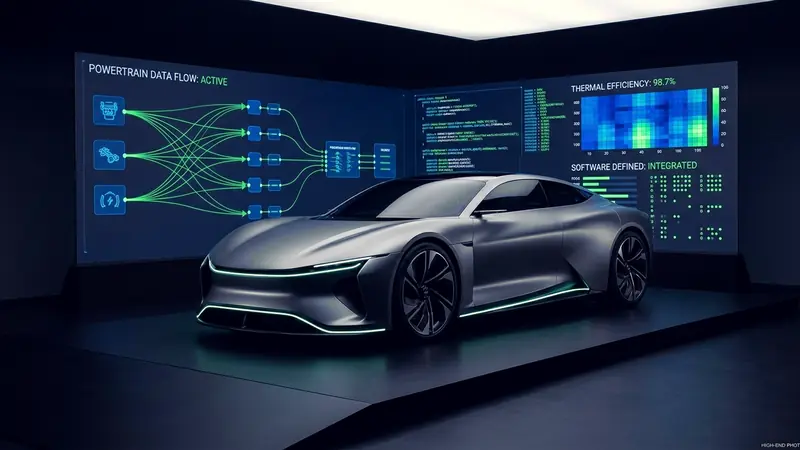
In Germany, the two giants from Ingolstadt and Stuttgart are moving on complementary fronts. Audi has unveiled a prototype vehicle with no conventional engine, based on a propulsion technology still shrouded in secrecy but aimed at redefining the very concept of the powertrain (the system that transmits power to the vehicle). This is not a straightforward battery electric vehicle: reports suggest an integrated system combining energy recuperation, predictive power flow management and a software-defined architecture (a vehicle controlled primarily by updatable software). Mercedes-Benz, for its part, has chosen a more incremental but no less significant approach: the new electric motor unveiled by the Stuttgart marque focuses on thermal efficiency (the ability to convert energy into motion with minimal losses) and integration with next-generation advanced driver assistance systems. Two different philosophies, one shared goal: to prove that European engineering can still set global standards.
Thailand: The Market Nobody Can Afford to Lose
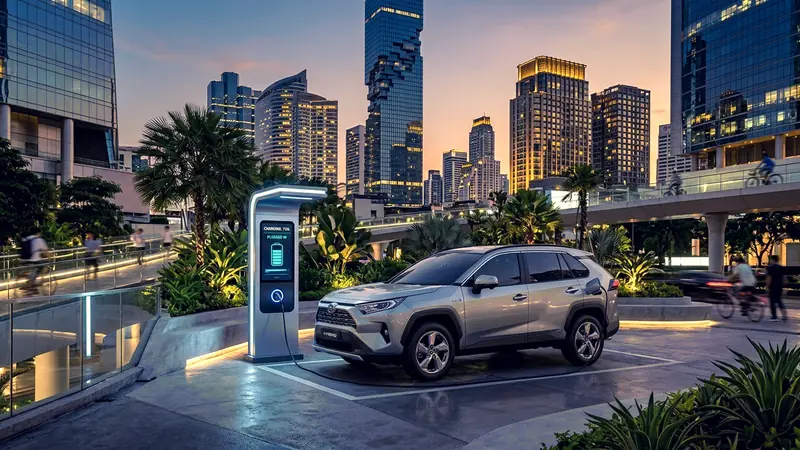
The geographically most distant piece of the puzzle is perhaps the most strategically relevant. Thailand is accelerating its transition towards hybrid and electric vehicles at a pace that has caught many analysts off guard. Bangkok is not merely an end market: it is a production platform. Several Japanese manufacturers — Toyota chief among them — have historically used Thailand as a manufacturing hub (a regional production and distribution centre) for Southeast Asia. If the country adopts stringent electric standards, the entire regional production chain will have to adapt. And this creates a domino effect that directly influences the investment decisions of GM, Audi and Mercedes in emerging markets.
An Industry in Forced Synchronisation
Putting all these signals together, a clear picture emerges: the global automotive sector is experiencing a forced synchronisation (a simultaneous alignment driven by shared external pressures). Regulatory pressures, Chinese competition, raw material volatility and growing demand in emerging markets are compelling historically rival players to move almost in lockstep. Whoever manages to consolidate their technological position and market leadership over the next eighteen months will hold a competitive advantage that will be very difficult to close. The market engine, to use an apt metaphor, is already running. The only question is who will know how to drive faster.