Key Takeaways
- Technical watchmaking: Rado has deployed high-tech ceramic since 1986, using sintering processes (extreme heat and pressure shaping raw powder into solid form) that deliver superior scratch resistance, full chemical inertness, and unmatched wrist comfort.
- Heritage and collaborations: Fauré Le Page, the Parisian maison founded in 1717, co-signs a capsule with French Bloom built around the house's iconic écaille (scale-pattern) leather motif.
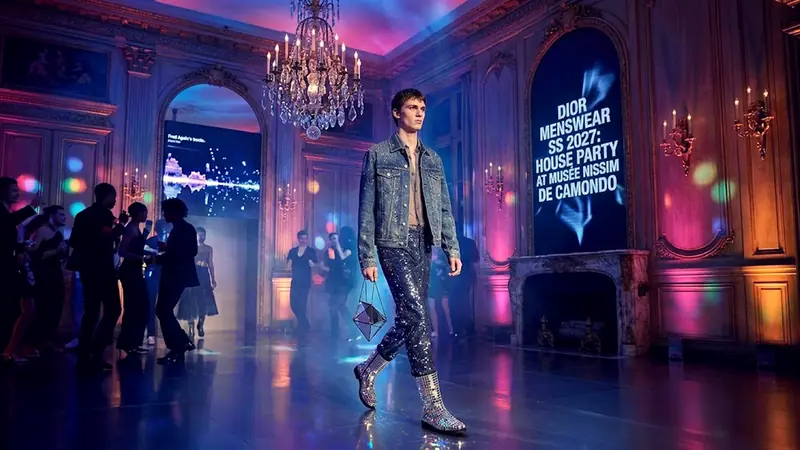
- Menswear SS 2027: Paris Fashion Week men's edition declares denim obsolete — liquid silver, mirror-finish gold, and high-sheen laminated fabrics (light-reflecting treated textiles) dominate the runways.
Luxury Isn't What It Used to Be. That's the Point
Forget spectacle for its own sake. Contemporary luxury has stopped shouting and started building. In 2026, the sector sits at the center of a quiet but radical metamorphosis: excellence is no longer measured in gilded surfaces or logo saturation, but in the ability to weave history, technical mastery, and aesthetic courage into something that holds up over time. From hotel lobbies to watch manufactures, from Parisian runways to aperitivo accessories, the new luxury claims its space without asking permission.
Hospitality: Two Philosophies, One Standard
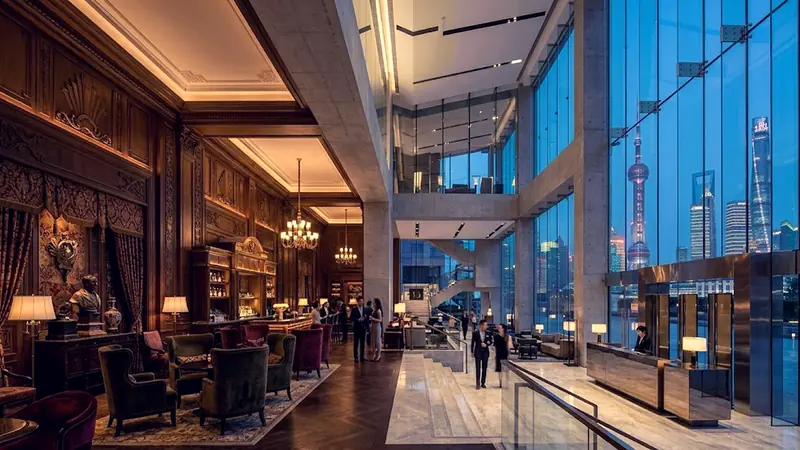
In the hospitality sector, 2026 presents two visions that speak to each other without resembling each other. In Shanghai, the urban fabric of Xujiahui absorbs the opening of the Andaz Shanghai ITC, a property embedded within one of the most hyper-technological complexes in the Chinese megalopolis. The move is anything but straightforward: the architectural brief deliberately refuses to erase the memory of old Shanghai — its nostalgic, eclectic character — choosing instead to set it in dialogue with the sharp lines of a contemporary aesthetic. The result is a bridge suspended between two centuries, a balance many attempt and few manage to hold.
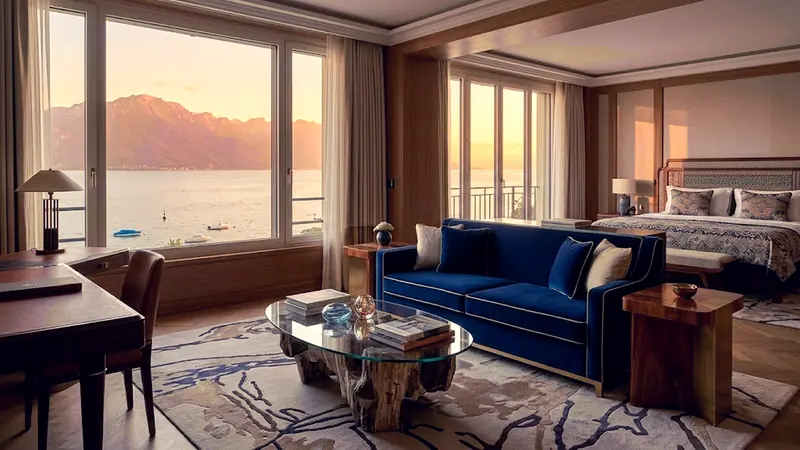
On the European side, the Beau Rivage Palace in Lausanne continues to set the terms on the shores of Lake Geneva through an opposite but equally precise strategy: no self-satisfied nostalgia, no coasting on the weight of a glorious past. Management has chosen to sidestep the conventional roles of the premium market, building an identity strong enough to render the five-star classification itself obsolete. The bespoke service that follows does not respond to codified standards — it anticipates and rewrites them. In a market where luxury hospitality trends toward homogenization, this is a near-subversive position.
Ceramic, Science and Sculpture on the Wrist
In high watchmaking, the real revolution isn't visible on runways — it's felt under a fingertip. Swiss manufacture Rado introduced high-tech ceramic into its timepieces in 1986, at a time when the watch industry still regarded metal as the only viable language for wrist luxury. Forty years on, that intuition has become an unmistakable material signature. The sintering processes governing the production of ceramic cases and bracelets required decades of refinement: extreme temperatures, controlled pressures, micrometric tolerances (precision measured in millionths of a meter). The end result is a material that delivers exceptional scratch resistance, total chemical inertness, and a wrist comfort that traditional metals struggle to match.
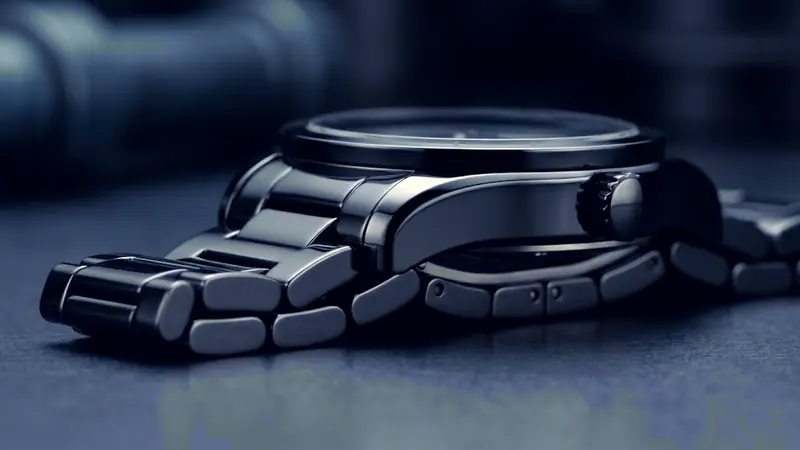
Rado's ceramic demonstrates how materials engineering can transform a watch into something that sits halfway between precision instrumentation and functional sculpture. An object that does not age in appearance and does not yield to daily wear. In the luxury watchmaking landscape of 2026, where the boundaries between technology and craft grow increasingly porous, this approach is not a footnote — it is the entire argument.
Denim Is Out: Metal Takes the Runway
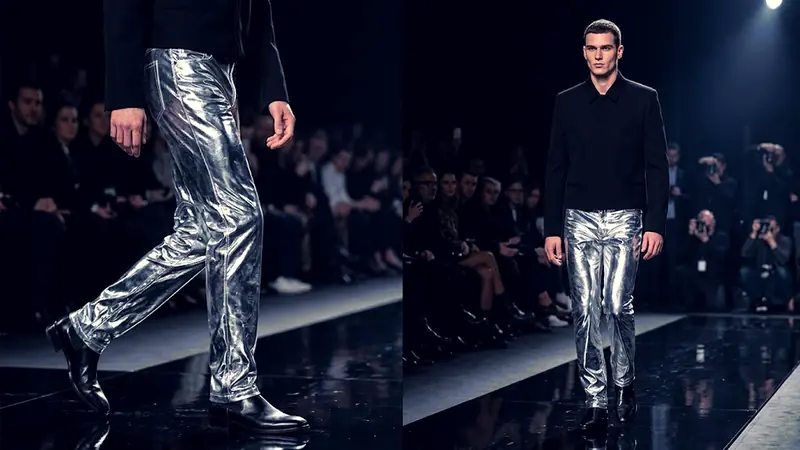
Paris Fashion Week Men's for the Spring-Summer 2027 season delivered a clean, unambiguous verdict: denim is finished. In its place, metallic trousers seized the catwalks with a visual force that was impossible to dismiss. Fabrics treated to simulate liquid silver, mirror-finish gold surfaces, high-sheen laminates that capture and return light aggressively — menswear has decided to stop hiding behind the comfort of casual and has chosen calculated excess as its new style code.
This shift toward reflective surfaces is not accidental. The fashion sector is forcefully reclaiming its ability to impose an unequivocal visual presence, transforming a historically utilitarian garment like the trouser into an absolute statement piece (a garment designed to command attention). The message is unambiguous: anyone wearing fabric that catches the light does not go unnoticed. And in 2026, going unnoticed is the one luxury nobody can afford to want.
Fauré Le Page and French Bloom: When Savoir-Vivre Becomes an Accessory
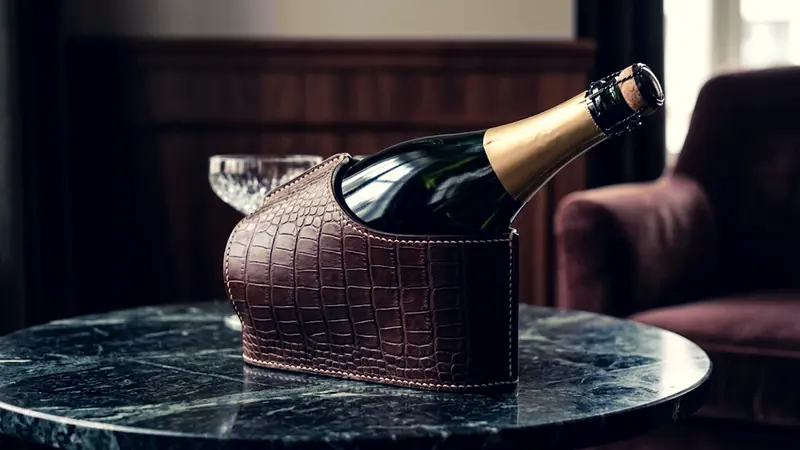
The picture closes with a collaboration that distills the direction of contemporary luxury better than any manifesto could. Fauré Le Page, the Parisian arms and leather goods maison founded in 1717, and French Bloom, a leading brand in the premium non-alcoholic sparkling wine segment, have co-signed an accessory bearing the historic house's iconic scale-pattern motif. This is not merely an object — it is the material translation of a paradigm shift in luxury consumption: French artisanal heritage meeting a new culture of wellness, inclusivity, and conviviality with zero compromise on quality.
Luxury in 2026 is precisely this: a hybrid ecosystem where a watch's ceramic, a hotel lobby, a pair of blinding trousers, and a bottle-carrier bag all tell the same story. The capacity to command tradition in order to build aesthetics and functions the future has not yet seen coming.