Key Takeaways
- Tesla Model Y beats its own declared range: In the NAF summer test, the Model Y exceeded its WLTP figure by 11.3%, delivering a verified 652 km of real-world range.
- Zeekr, Xpeng and the Chinese bloc dominate: The Zeekr 7X outperformed its declared range by 52 km; the Xpeng X9 beat its WLTP figure by over 11% in the commercial vehicle segment.
- European brands in freefall: Mercedes-Benz CLA, Skoda Elroq and Volvo EX90 shed between 41% and 43% of their rated range in the winter test at -32°C — not a single European vehicle hit its nominal figure.
The most unforgiving test on the planet
The Norwegian Automobile Federation (NAF) pulls no punches. Its biannual test, known as "El Prix", is globally recognised as the most reliable measure of real-world electric vehicle range. No climate-controlled labs, no pristine tarmac, no ideal conditions: testing happens on public roads, with temperatures in the 2026 winter edition plunging to -32°C. Twenty-five vehicles tested. Zero mercy. The results from this round — integrated with data from the summer 2025 edition — deliver a verdict to the global market that no corporate press release can overturn.
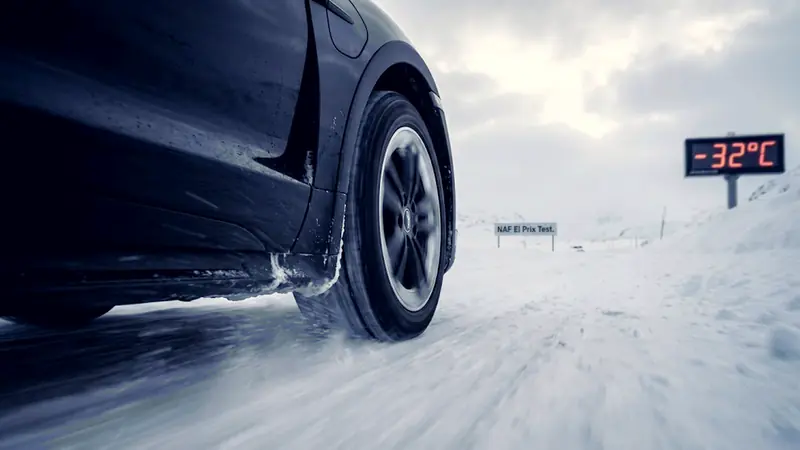
The context surrounding this analysis is anything but peripheral. Norway is not just any market: in June 2026, new electric vehicle registrations reached 96.5% of total sales. A hyper-mature ecosystem, saturated with technology, where consumers have spent years cross-referencing declared range against real-world range with the same cold precision one applies to a bank statement. In this predictive laboratory, what surfaces today maps out what will happen everywhere else tomorrow.
Tesla: numbers that embarrass the competition
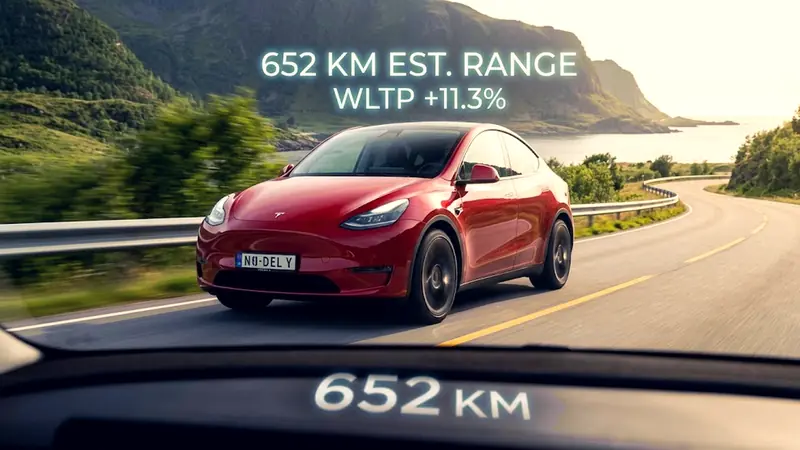
Tesla continues to set the benchmark. This is not a matter of brand perception or aggressive advertising campaigns — it is applied engineering mathematics. In the NAF summer test, the Model Y did not merely reach its declared range under the WLTP (Worldwide Harmonised Light Vehicle Test Procedure, the EU standard for measuring EV range) cycle — it exceeded it by 11.3%, certifying 652 km of effective real-world range. The Model 3 Long Range recorded a surplus of 19 km over its official figure. These are not negligible margins: they are concrete proof of an aerodynamic architecture and a powertrain thermal management system that perform better in real-world conditions than homologation protocols can actually measure. The WLTP cycle, designed to standardise comparisons, once again proves to be an inadequate instrument for capturing the reality of electric driving on the road.
China is no longer the outsider: it is the new standard
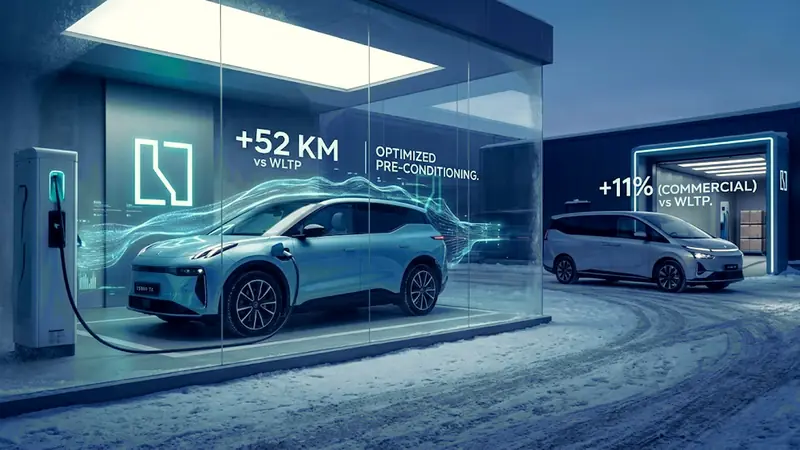
If Tesla represents the established reference point, the bloc of Chinese manufacturers stopped chasing the pack long ago and started setting the pace. NAF data confirms this without ambiguity. The Zeekr 7X outperformed its declared range by 52 km — a margin that, in percentage terms, lands like a hammer blow on European competitors. In the commercial vehicle segment, the Xpeng X9 exceeded its WLTP figure by over 11%, in a category historically hostile to electric powertrains due to high loads and elevated energy consumption.
But it is in the winter test that Chinese technology demonstrated its most significant maturity. At polar temperatures, where every kilowatt-hour counts double and lithium cell chemistry (the electrochemical core of EV batteries) undergoes extreme stress, vehicles from brands such as Zeekr and Xpeng — alongside Korean rivals — positioned themselves at the top of the rankings for low-temperature efficiency and DC fast-charging stability. The credit belongs to advanced software systems for battery pack thermal pre-conditioning (algorithms that heat or cool cells before charging to maximise performance): systems that anticipate energy demands, prepare cells ahead of charging sessions and minimise thermal dispersion. This is not luck. It is vertical integration pushed to its extreme, where hardware and software are born together and communicate without latency.
Europe: collapsing numbers and a systemic crisis
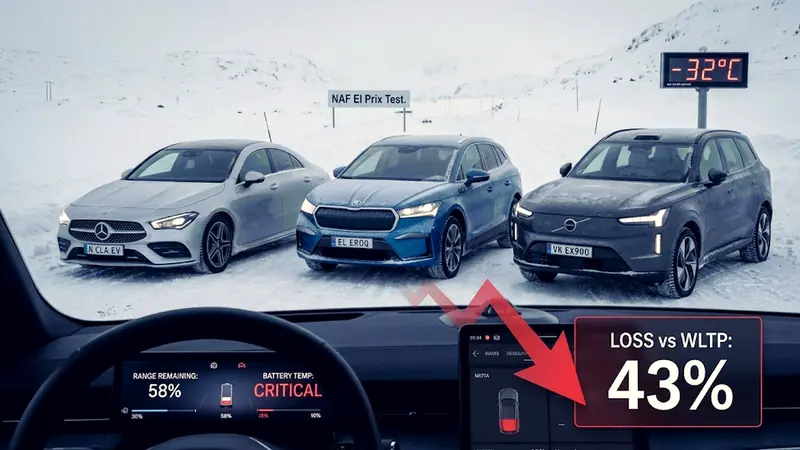
The data on European manufacturers leaves no room for optimistic interpretation. In the 2026 winter test, not one of the twenty-five vehicles tested reached its nominal range — but the collapses recorded by flagship models from the Old Continent carry a different weight entirely. The Mercedes-Benz CLA, the Skoda Elroq and the Volvo EX90 suffered range losses of between 41% and 43% against their declared figures. Nearly half of the promised range, evaporated under the pressure of the cold.

These numbers do not capture an isolated industrial accident. They document a structural lag in hardware-software integration (the seamless fusion of physical components and control code) — the very same integration that Tesla and Chinese groups such as BYD and Geely have turned into their primary competitive advantage. Traditional European manufacturers have historically developed mechanics and software as separate compartments, frequently outsourcing the latter to third-party suppliers. In an era where the battery is the engine and the software is the fuel, this fragmentation translates into measurable energy loss — counted in kilometres.
The market's verdict: this is no longer a marketing question
In a mature market like Norway's, where the average consumer has already purchased their second or third electric vehicle, the consistency between declared specifications and real-world performance has become the primary purchase driver. Not design, not the badge, not brand heritage. NAF data functions as a leading indicator for the entire global market: brands that cannot guarantee real-world range under adverse conditions lose credibility before they ever lose market share. For the European automotive industry, accelerating the development of thermal management (systems that regulate battery temperature for optimal performance) solutions and more efficient electrical architectures is no longer an optional competitive lever. It is the only way to stay in the game.