Tesla, Rivian and the Silent War for the Autonomous Wheel
2026 is shaping up to be the year autonomous driving stops being a keynote promise and becomes a geopolitical, commercial and regulatory battleground. On one side, Tesla continues its global expansion with new markets and new models. On the other, safety data is being placed under the microscope by those with no interest in protecting Elon Musk's brand. And in the middle, a competitor like Rivian is gearing up to carve out market share with an alternative system. The picture is more complex than it appears, and ignoring it would be an amateur's mistake.
Key Takeaways
- FSD Safety in Europe: Independent researchers are challenging Tesla's official data on autonomous driving.
- EU Regulatory Expansion: Belgium is the fifth European country to authorise Tesla's ADAS system (Advanced Driver Assistance System).
- Rivian enters the race: The alternative autonomous system to FSD (Tesla's Full Self-Driving technology) will be available by the end of 2026.
Tesla's Numbers Don't Add Up (At Least According to Those Who Matter)
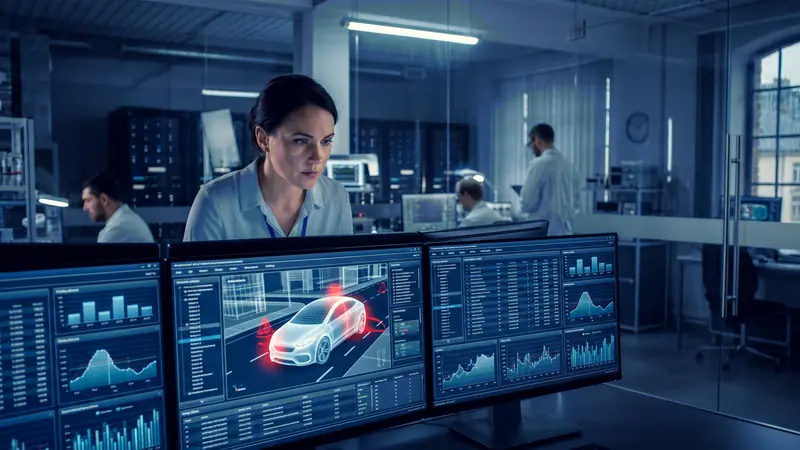
Let's start with the most uncomfortable issue: the safety data for Tesla's FSD (Full Self-Driving) system in Europe has been called into question by independent researchers. Not by anti-tech activists, not by journalists with a political agenda. By researchers. The distinction is significant. Tesla has always used its own internal statistics as a narrative shield — "our system is safer than a human driver" is the mantra repeated ad nauseam. But when data is collected and analysed by third parties, the picture changes. The structural problem is a single one: Tesla controls the data pipeline (the flow of information from collection to publication). In a sector where transparency should be a regulatory prerequisite, this is a conflict of interest the EU can no longer afford to ignore. And it isn't ignoring it.
Belgium Says Yes, But Europe Is Far From United
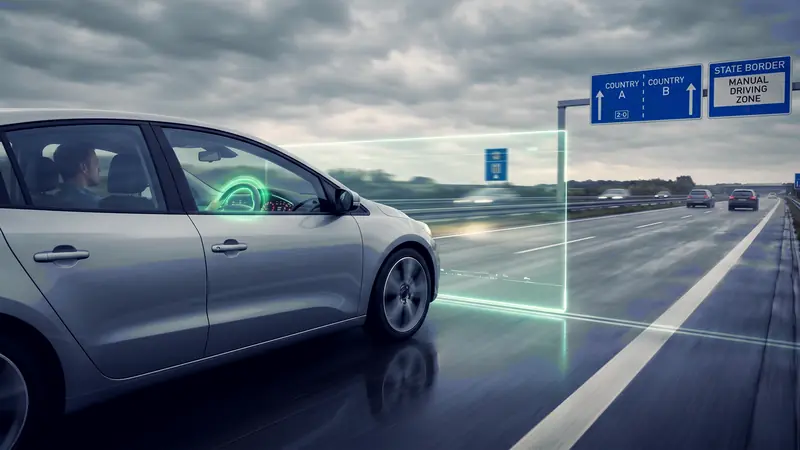
Belgium has just authorised Tesla's autonomous driver assistance system, becoming the fifth European Union country to do so. On paper, this looks like good news for Musk. In reality, it is a signal of just how fragmented the European regulatory landscape still is. Five countries out of twenty-seven. Less than twenty percent. This means Tesla is operating in a continental market with deeply inconsistent rules, where crossing a border can mean going from a legally active system to one that is legally switched off. For a company that sells the idea of a global, interconnected neural network (an AI system inspired by the human brain), this fragmentation is an existential contradiction. The irony is that just as researchers are questioning the system's safety, governments continue to authorise it one by one, as if they were approving a new type of traffic light rather than a technology that redefines legal liability in the event of an accident.
India: The Model Y L Is a Geopolitical Move Disguised as an SUV
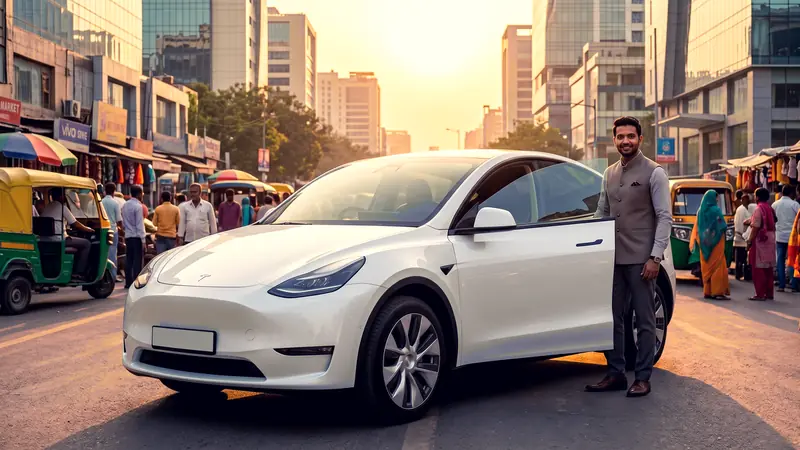
Tesla has begun deliveries of the Model Y L in India. The "L" suffix stands for Long — more interior space, the same footprint (the vehicle's external dimensions) as the standard Model Y. It is a surgical move for a market like India's, where the emerging middle class wants status and practicality without paying the premium (price surcharge) of a higher-segment vehicle. But behind the commercial logistics lies a far bigger game. India is the next great theatre of global electric mobility. Whoever enters now, with the right product at the right price, builds a competitive advantage (a market position that is difficult to erode) that will last a decade. Tesla knows this. And so do the Chinese competitors already operating on the subcontinent. The Model Y L is not just an SUV: it is a statement of geopolitical intent.
Rivian Raises the Stakes: The End of Tesla's Narrative Monopoly
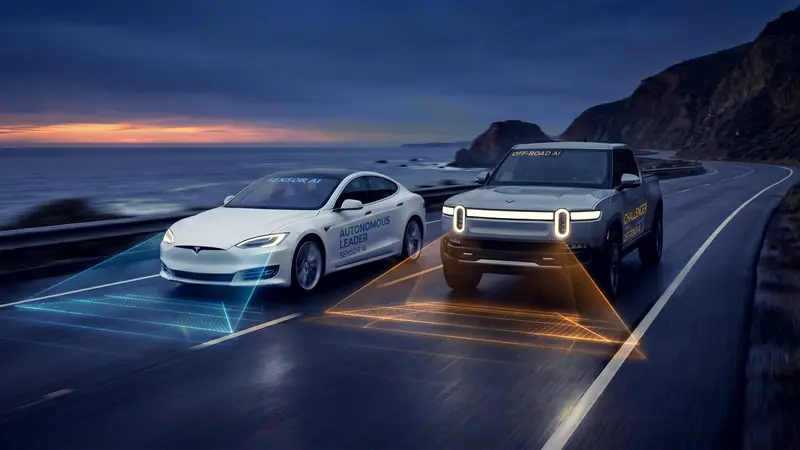
The most underreported story right now is this: Rivian has announced an autonomous driving system as an alternative to Tesla FSD, with availability expected by the end of 2026. Why does it matter? Because until now Tesla has dominated not just the market, but above all the frame (the narrative lens) through which autonomous driving is understood. FSD was synonymous with advanced autonomous driving for mainstream consumers. Rivian is breaking this semantic monopoly. It is not merely a technological question — it is a question of perception. When a second credible player enters the same space with an alternative solution, consumers start making comparisons. And comparisons generate questions. And questions generate regulatory pressure. The timing is perfect: it arrives precisely as the credibility of Tesla's data is being challenged in Europe. Coincidence? In business, there are no coincidences.
The Final Picture: An Industry in Search of Adults in the Room
Joining the dots, a clear image emerges: autonomous driving has entered its most dangerous phase — that of apparent maturity. The systems exist, they are being authorised, they are being sold. But the foundations — data transparency, regulatory harmonisation (uniformity of rules across countries), legal liability in the event of an accident — are still quicksand. Tesla has built a narrative empire on the promise of autonomy. Rivian is arriving to challenge it. Europe is trying to make sense of what is happening. And India is opening its doors to whoever shows up with the right product. Whoever wins this war will not necessarily be the one with the best technology. It will be whoever can navigate global regulatory complexity without drowning in their own contradictions.