Key Takeaways
- Expanding global diaspora: Iranians, Vietnamese and Western expats are redrawing the cultural maps of four countries, each with deeply different stories of integration.
- Hybrid identity as an asset: Living between two cultures is not a burden but a competitive advantage that younger generations are learning to leverage.
Four Countries, One Question: Where Does the Foreigner End and the Citizen Begin?
I spent the last few months moving between Los Angeles, Rome, Ho Chi Minh City and Paris. Not as a tourist — but to understand what really happens when a person decides to build a life far from where they were born. What I found is more complicated, more beautiful and more brutal than any reassuring narrative about the "richness of diversity." We're talking flesh and bone. Expired documents, accents that never quite disappear, children translating for their parents in the emergency room. We're talking about real people.
Los Angeles: Iranians and the Paradox of Perfect Integration
Tehrangeles — as the Westwood neighbourhood of Los Angeles is known — is not a metaphor. It is a city within a city, with its own restaurants, its own Farsi-language radio stations, its own visa-specialist attorneys. The Iranian community in the United States today numbers over 500,000 people, with an extremely high concentration in California. One figure stands out: the college graduation rate among Iranian Americans exceeds the national average. Doctors, engineers, entrepreneurs. An integration that works, at least on paper.
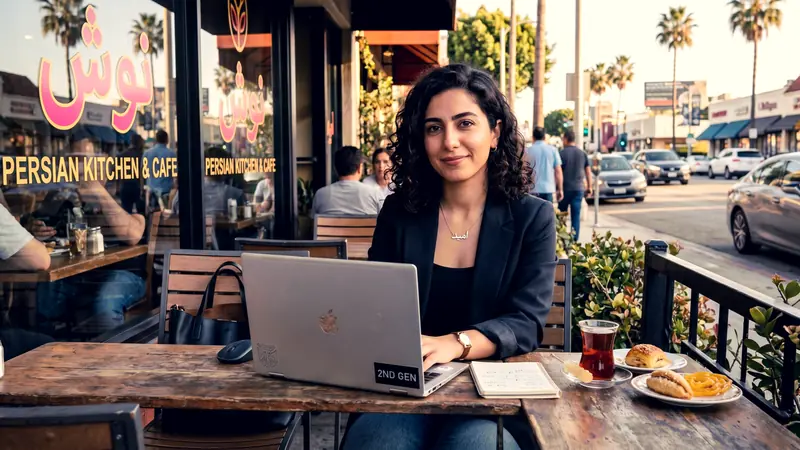
But beneath the surface lies a tension that never goes away. The 1979 revolution (the overthrow of the monarchic government by the Islamic regime) created a diaspora (a community dispersed outside its country of origin) that carries with it an unresolved collective trauma. Many of these Iranian Americans have never returned to Iran. They cannot, or they choose not to. Their integration is real, but built on a loss that is never named at the dinner table. In 2026, with geopolitical tensions between Washington and Tehran still running high, that tension is still felt.
Rome and Milan: Expats and the Invisible Privilege
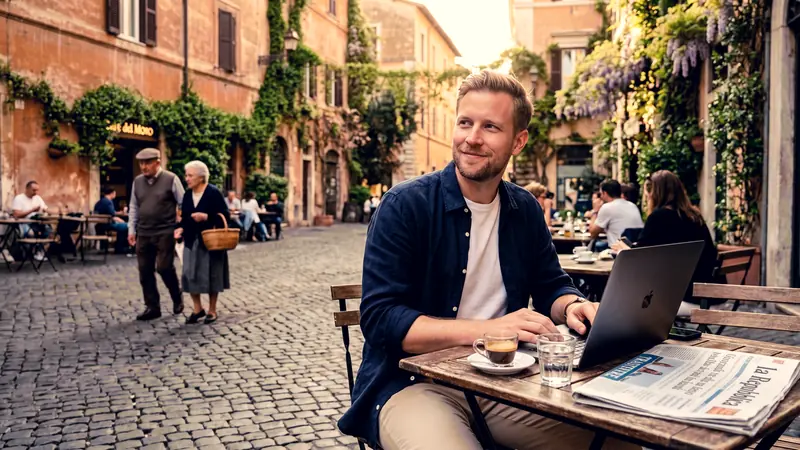
In Italy the story is different — almost the opposite. The expats who choose Italy — Americans, Northern Europeans, Australians — often arrive out of aesthetic preference. The food, the climate, the pace of life. No one forced them. And that changes everything. In Rome I meet a Dutch designer who has lived in the Pigneto neighbourhood for seven years. She speaks Italian with an accent she finds "adorable," and which opens doors for her. The same cannot be said for a Bangladeshi migrant living three blocks away.
The term "expat" (short for expatriate — a skilled foreign national with privileged status) carries an ideological weight that few people want to examine. Is it the same as "immigrant"? No, and everyone knows it. The difference is not only economic — it is racial, cultural and systemic (structured in ways that favour certain groups). Italy in 2026 still has a bureaucratic system that discourages genuine integration: residence permits (legal documents authorising residency) that take months to process, complicated access to healthcare, and a Kafkaesque maze for the recognition of foreign qualifications. Privileged expats navigate around it with money. Everyone else cannot.
Vietnam: The Diaspora That Returns (and Changes Everything)
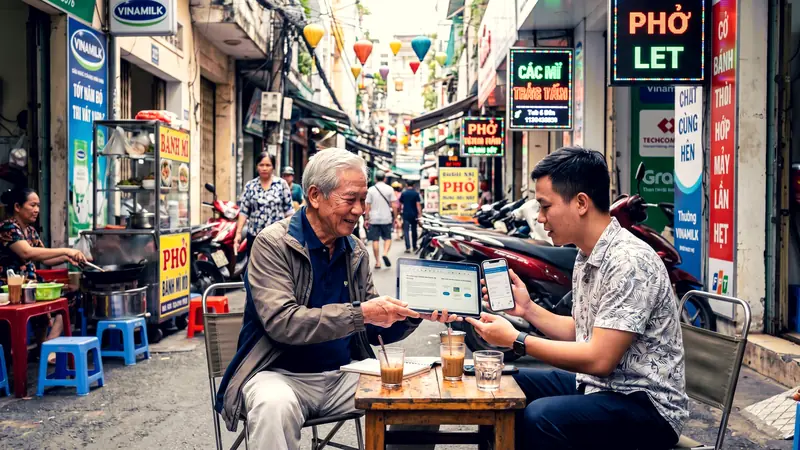
Ho Chi Minh City in 2026 is one of the fastest-growing cities in Asia. And a significant share of that growth is being driven by the Viet Kieu (Vietnamese people born or raised abroad who return home). The children and grandchildren of those who fled after 1975 are coming back with capital, skills and a dual identity that Vietnam does not yet quite know how to handle. Are they Vietnamese? Are they foreigners? The official answer is "welcome." The real answer is far more ambiguous.
The Viet Kieu bring investment, startups and a Western mindset. But they also bring generational conflict with the Vietnamese who stayed behind, who sometimes see them as arrogant and disconnected from local reality. The overseas Vietnamese community — more than five million people spread across the United States, Australia, France and Germany — is one of the most economically active diasporas in the world. Remittances (money sent home by emigrants) still account for a significant share of Vietnam's GDP. This is not simply a success story. It is a story about power.
Paris: France and the Broken Social Contract
Paris is the city that left me most unsettled. Not because of what I saw, but because of what I felt. Expats in France discover an extraordinary culture, an enviable quality of life and a healthcare system that actually works. But France also has an unresolved reckoning with its colonial history and with the communities that history brought within its borders. Wealthy white expats experience one Paris. The banlieues (high-density, low-income urban suburbs) experience another.
In 2026, after years of social unrest, France continues to oscillate between its republican ideal of total assimilation and the reality of a plural society that cannot come to terms with itself. Choosing France as your new home is undoubtedly a life choice. But which France are you choosing? The Marais or Seine-Saint-Denis? The answer to that question says everything about who you are, where you come from and how much integration truly costs you.
Four countries, four stories. No easy conclusions. Just people trying to figure out where they belong — and a world that keeps making it harder than it needs to be.