Key Points
- Global convergence: June 19, 2026 marks the overlap of at least three distinct celebrations — Juneteenth, the Dragon Boat Festival, and Midsommar Eve — falling on a single calendar date.
- Historical roots and rituals: From General Gordon Granger's arrival in Galveston in 1865 to Incan ceremonies honoring Inti in Cusco, the holidays of this period draw on traditions ranging from millennia of agricultural culture to documented historical events.
- International reach: The Fête de la Musique, established in France in 1982, has now been adopted in over 120 countries, making it one of the most widespread cultural participation events in the world.
When the calendar gets crowded: June 19 and the densest week of the year
There are times of year when the civil, religious, and astronomical calendar overlap with a density that is hard to ignore. The third week of June is one of them. June 19, 2026 is no ordinary date: it is the day on which the American Juneteenth, the Chinese Dragon Boat Festival, and the Swedish Midsommar Eve all fall simultaneously. A cultural pile-up worth examining without rhetoric, piece by piece.
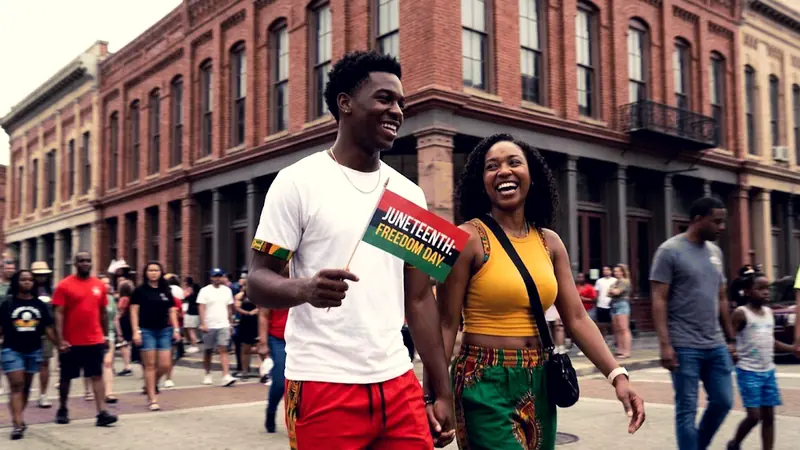
Let's start with the United States. Juneteenth commemorates June 19, 1865, the date on which General Gordon Granger landed in Galveston, Texas, to enforce the emancipation of enslaved African Americans. The Emancipation Proclamation had been signed by Lincoln more than two years earlier, in January 1863, but in the more remote regions of the South the news had never arrived — or had been deliberately suppressed. That delayed communication turned Galveston into an unwitting symbol: not of liberation, but of the lag with which freedom reaches those who need it most. Recognized as a federal holiday only in 2021, Juneteenth took nearly 160 years to achieve the institutional status it deserved.
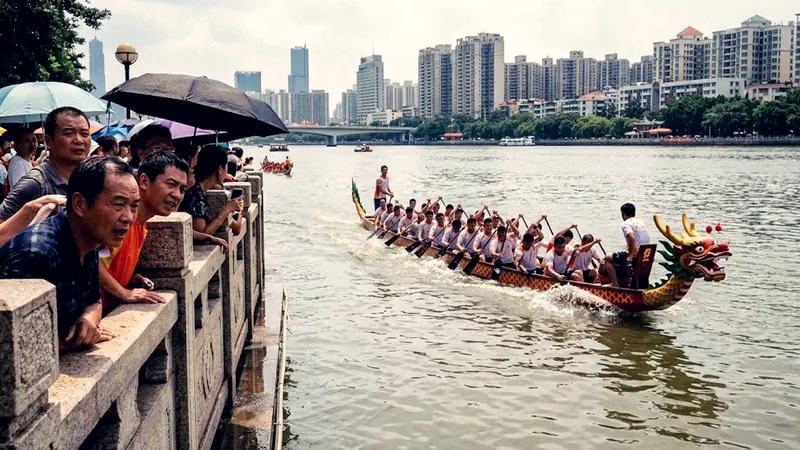
Thousands of miles away, on the same date, China and much of Southeast Asia celebrate the Dragon Boat Festival. The holiday follows the lunisolar calendar and falls on the fifth day of the fifth lunar month — in 2026, exactly June 19. Dragon-shaped boat racing competitions are the most visible spectacle, but the core of the tradition is culinary and ritual: zongzi, glutinous rice dumplings wrapped in bamboo leaves, are prepared and consumed according to a ceremonial practice dating back over two thousand years. The most widely cited origin links the festival to the commemoration of the poet and minister Qu Yuan, who drowned in 278 BC. The overlap between collective ritual, sporting competition, and historical memory makes this celebration one of the most complex cases of cultural syncretism in East Asia.
The solstice as an axis: from Stockholm to Paris, all the way to Cusco
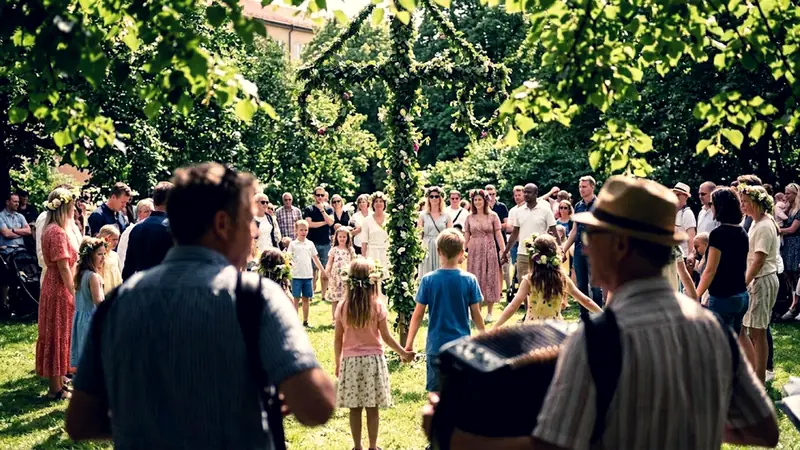
The boreal summer solstice, which in 2026 falls around June 21, acts as a gravitational axis for a series of holidays distributed across the days immediately before and after it. In Sweden, Midsommar Eve is set by statute on the Friday falling between June 19 and 25: in 2026 it therefore coincides with the 19th. The celebration is among the most deeply rooted in Scandinavian identity — songs, flower-picking, feasts of herring and boiled potatoes, and the collective dance around the majstång, the maypole adorned with greenery. This is no superficial folklore: in Sweden, Midsommar Eve generates levels of consumption and travel comparable to the Christmas period.
Two days later, on June 21, France hosts the Fête de la Musique. Established in 1982 by the French Ministry of Culture, the initiative transformed the solstice into a free, urban musical marathon: professionals and amateurs alike perform in streets, squares, and courtyards, with special exemptions from noise regulations. The model has been replicated in over 120 countries, becoming one of the most widespread participation events in the global cultural landscape — a rare case of successful soft power export achieved through music rather than cinema or luxury goods.
The Noche de San Juan, celebrated between June 23 and 24 in Spain and across the Hispanic world, closes the cycle with bonfires. The tradition blends pagan roots tied to the arrival of summer with the Christian commemoration of Saint John the Baptist. Jumping over fire is the central act: a purification ritual that repeats unchanged on coastlines and in town squares, regardless of urban or rural context.
Completing the circle, in the Southern Hemisphere, June 24 is the day of Inti Raymi. In Cusco, Peru, the Incan ceremony honoring the sun god Inti marks the beginning of the new agricultural year and the austral winter solstice. The modern reenactment draws tens of thousands of visitors each year, consolidating Cusco as a cultural tourism hub with a direct economic impact estimated to be in steady growth over the past decade.
Taken together, the window between June 19 and 24 concentrates events involving hundreds of millions of people across four continents. The density is no coincidence: it is the product of millennia of astronomical observation, historical memory, and identity-building that the Gregorian calendar has ended up compressing into six days.