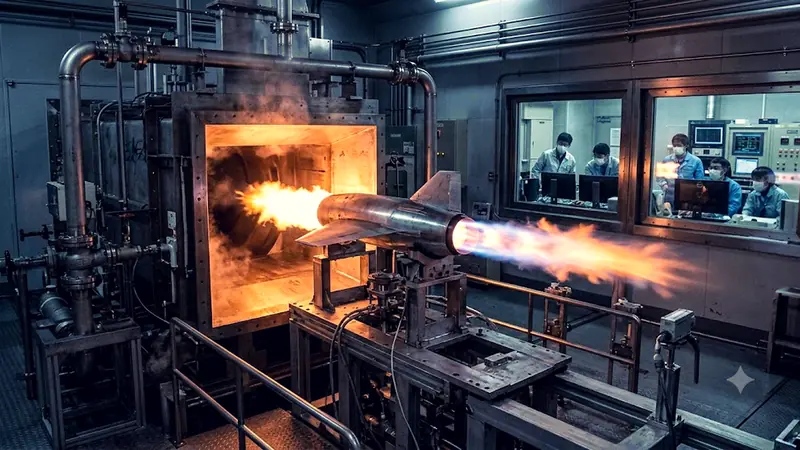
Key Takeaways
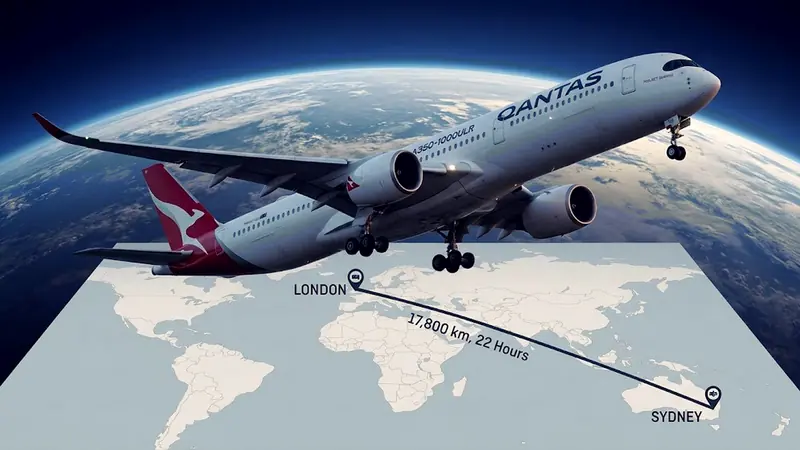
- Record-breaking non-stop route: Sydney–London covers approximately 17,800 km in 22 hours of continuous flight, with commercial operations scheduled to launch in October 2027.
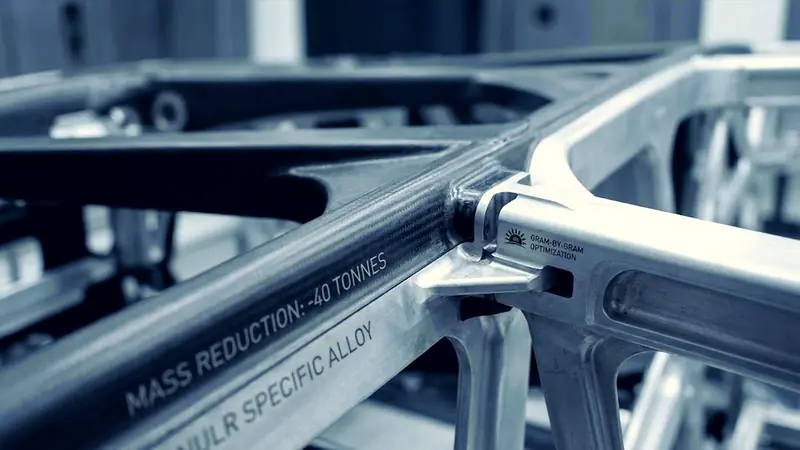
- Airbus A350-1000ULR and Qantas Project Sunrise: The Ultra Long Range variant has been stripped down by roughly 40 tonnes compared to standard configuration to offset the additional fuel load required for the mission.
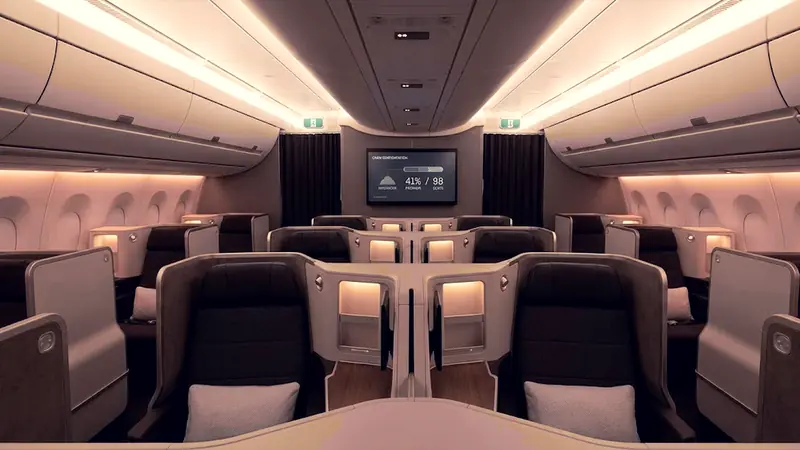
- Low-capacity cabin, maximum yield: Just 238 seats total, with 41% of the configuration allocated to First, Business and Premium Economy to drive the highest possible revenue per passenger.
The Impossible Route Is Becoming Real
October 2027. An aircraft lifts off from Sydney and touches down in London without once making contact with the ground in between. No stopover, no crew change in Dubai or Singapore, no departure lounge. Twenty-two hours of unbroken flight along one of the longest straight-line routes commercial aviation has ever attempted. Qantas has been working toward this for years, and the project now has a name, a date and an aircraft: Project Sunrise, operated by the Airbus A350-1000ULR (the Ultra Long Range variant of one of the most advanced airframes currently flying).
This is not a marketing stunt. It is engineering pushed to the absolute physical limits of what materials science and fuel chemistry currently allow. Behind every hour of that flight sits a precise technical decision, measured to the gram.
Forty Tonnes Lighter: The Weight Obsession
The primary challenge of a flight of this magnitude is not speed. It is not even routing. It is fuel. Covering approximately 17,800 kilometres without a single stop requires the aircraft to board a quantity of jet fuel that alone constitutes an enormous mass penalty. And every kilogram of mass burns additional fuel. The paradox of extreme long-haul aviation is self-consuming — unless the aircraft's base weight is cut drastically.
Airbus and Qantas responded with a radical weight-reduction programme: the Project Sunrise configuration sits approximately 40 tonnes below that of a standard A350. This is not a matter of removing decorative panels. The optimisation reached deep into the structural airframe and every component of the interior, with calculations conducted literally to the gram. The counterintuitive result is that by eliminating the multiple takeoff and landing cycles that a connecting itinerary demands — the phases notoriously most intensive in fuel burn — the total consumption of the direct flight is broadly comparable to that of the same journey split across two legs.
238 Seats and Zero Compromise on Margin
The aircraft's capacity is capped at just 238 passengers. A low number for a wide-body of these dimensions. But it is a deliberate and non-negotiable choice: the weight saved on the interior must offset the additional fuel load. There is no room to fill the cabin with low-yield economy seats.
The commercial model underpinning Project Sunrise is built entirely on yield management (the practice of maximising revenue per individual passenger). Forty-one percent of total capacity — 98 of 238 seats — is reserved for First Class, Business and Premium Economy. A premium share significantly above the norms of conventional long-haul operations. CEO Vanessa Hudson has been explicit about this positioning: it is a niche product engineered for maximum operating margin, designed for passengers who accept no compromises and are in a position not to.
Flying for 22 Hours Without Becoming a Physical Wreck
The real battleground for Project Sunrise is not in the hangar. It is the human body. Keeping a person in a pressurised environment for nearly twenty-four consecutive hours demands abandoning the conventional long-haul paradigm — meal, film, sleep, landing — and building something fundamentally different from the ground up.
Qantas brought in designer David Caon and, critically, the sleep medicine team at the University of Sydney, led by Professor Peter Cistulli. The outcome is a clinical approach to passenger management. The cabin features a Wellbeing Zone (a dedicated mid-cabin area for physical movement): research data collected by the team confirmed that physical mobility during flight is as critical to passenger condition as seat comfort. Passengers will be able to stand, hydrate and perform stretching exercises in a space specifically engineered for that purpose.
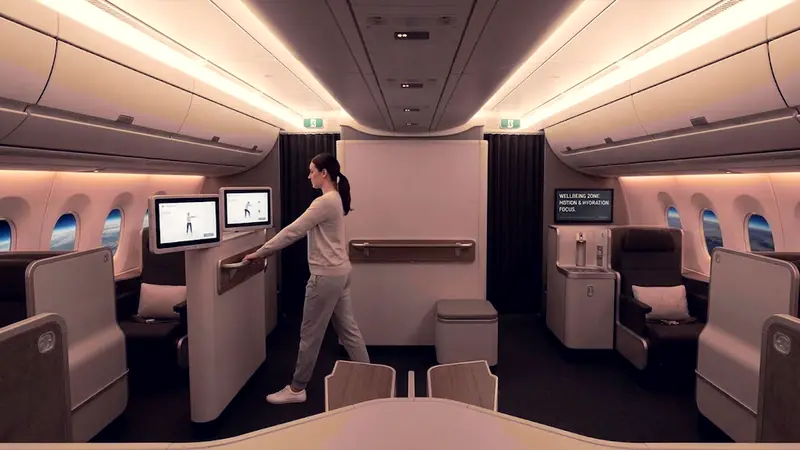
Circadian rhythm management (the body's internal 24-hour biological clock) is handled by algorithms that modulate cabin lighting in real time according to the destination time zone. Onboard menus have been formulated with functional logic: spiced dishes and caffeine to force alertness during phases when the body must remain awake, light protein-based meals to support rest periods. In premium zones, select overhead bins have been removed to increase perceived air volume and reduce the onset of claustrophobia across a flight measured in many hours.
A Laboratory That Will Reshape the Industry
Project Sunrise is not simply a route. It is a technology incubator. The solutions developed to reduce airframe weight and optimise flight systems at extreme distances will feed directly into future Airbus programmes, including next-generation cargo platforms. But there is a strategic dimension that extends well beyond engineering.
In a global environment defined by rising geopolitical tensions and the sudden closure of airspace — scenarios that in recent years have forced carriers onto alternative routings with multiplied times and operational complexity — operating aircraft capable of ultra-long-range performance represents a genuine defensive asset. A carrier that does not depend on intermediate hubs can redraw its network in real time, bypassing crisis zones without renegotiating overflight agreements or transiting through politically sensitive airports. Qantas is fully aware of this. And it is almost certainly not the only airline watching closely what Sydney is building.