Key Takeaways
- Product launch: OpenAI released ChatGPT Work on July 9, an AI agent built on an always-on virtual machine capable of completing autonomous tasks (documents, presentations, websites) without continuous supervision.
- Technical architecture: The system runs on GPT-5.6, available in three variants (Sol, Terra, Luna) and two reasoning modes, "max" and "ultra," the latter capable of coordinating up to sixteen parallel agents.
- Market showdown: The release lands 48 hours after Anthropic extended Claude Cowork to mobile and web, opening direct competition over performance benchmarks and computational efficiency.
An Agent That Works, Not Just Responds
OpenAI launched ChatGPT Work on July 9, redefining how users interact with its assistant: no longer a chatbot generating text, but an agent delivering finished output. The system runs on an always-on virtual machine hosted on the company's servers, accessible via web, mobile, and desktop. A user can kick off a task from their phone, close the app, and the agent keeps working autonomously for hours. Integration spans Slack, Microsoft Teams, Google Drive, SharePoint, Salesforce, email, and calendars, letting the agent gather data, plan steps, and execute them without constant human input.

Three Models, Two Reasoning Modes
The engine behind ChatGPT Work is GPT-5.6, shipped in three configurations: Sol, built for complex reasoning and coding; Terra, designed for everyday tasks with performance comparable to GPT-5.5; Luna, a lightweight version for high-volume scenarios. Two operating modes round out the system: "max," which extends processing time on complex problems, and "ultra," which distributes workload across multiple AI agents running in parallel, up to sixteen units on the heaviest tasks.

Measuring Up Against Claude Cowork
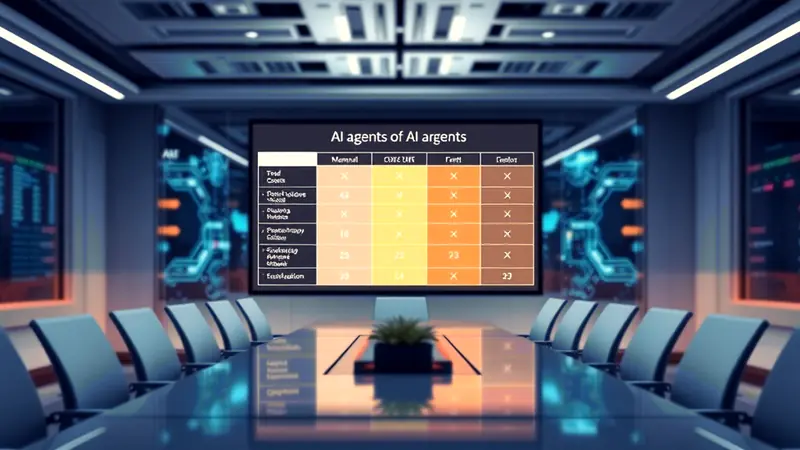
The timing follows Anthropic's extension of Claude Cowork to mobile and web by just 48 hours, which happened on July 7. Comparative tests across three operational scenarios—organizing an event, building a website, drafting a presentation—show ChatGPT Work producing more complete, ready-to-use results, while Claude Cowork executes faster, six minutes versus eighteen, though with more standardized output.
On technical benchmarks, GPT-5.6 Sol scored 80 points on the Artificial Analysis Coding Agent Index, beating the competing Claude Fable 5 model by 2.8 points while using less than half the computational resources. On the Agents' Last Exam test, Sol posted a score of 53.6% against Fable 5's 40.5%.

User-Reported Issues
The launch hasn't been without friction. Several users have reported unusual drops in weekly usage quotas, with one case showing a 3% reduction in available credit after just two requests. The new desktop interface has drawn criticism for making Work mode the default experience, pushing traditional chat into a submenu. Users have also flagged the disappearance of existing features like Projects and Memories.

Sam Altman defended the rollout, noting that the launch generated double the traffic of the platform's historical peaks and calling the move a necessary step on the path toward AGI.
What Comes Next
The distinction between the two systems now hinges on the type of task at hand rather than brand preference. ChatGPT Work is positioned for projects that need to go from concept to finished product, while Claude Cowork is built for organizing and synthesizing existing materials. The AI agent market for workplace applications now operates across two competing architectures, with businesses tasked with weighing computational efficiency alongside raw model capability.