
Green Energy, Politics and Geopolitics: The Great Chessboard of the Global Transition
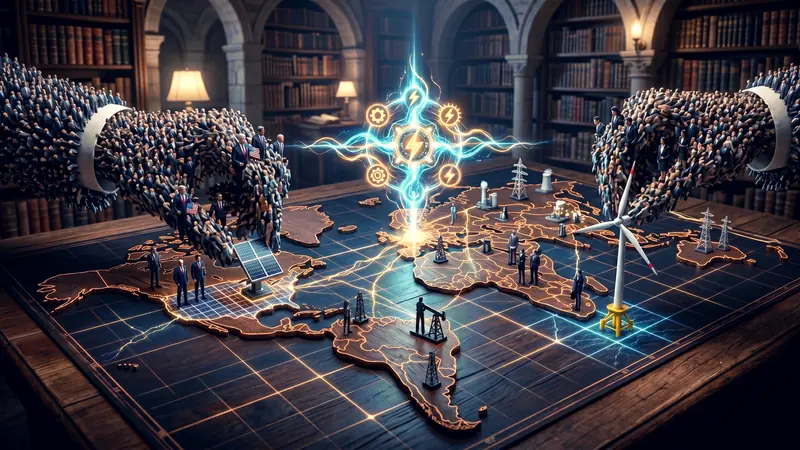
It's 2026 and the world is still arguing about how to stop burning the planet from under its own feet. From Bangkok to Berlin, from Tokyo to Washington, every government has its own plan, its own narrative, its own hand of cards to play at the energy transition table (the shift from fossil fuels to renewables). But behind the glossy press releases and climate pledges, a silent economic war is redrawing global alliances. Whoever controls clean energy controls the future. Full stop.
Key Takeaways
- The race for renewables is geopolitical: Germany, Japan, Thailand, France and the USA are all accelerating their energy transitions, but with national agendas that frequently clash with one another.
- The cost of indecision is real: Countries that delay decarbonisation (the reduction of CO₂ emissions) risk trade sanctions, loss of competitiveness and structural energy dependency.
- Green politics is power: Figures like Katharina Dröge in Germany demonstrate that environmentalism is no longer a niche agenda, but a central lever of governance in advanced economies.
Thailand Plays the Solar Card — and It's About Far More Than Ecology
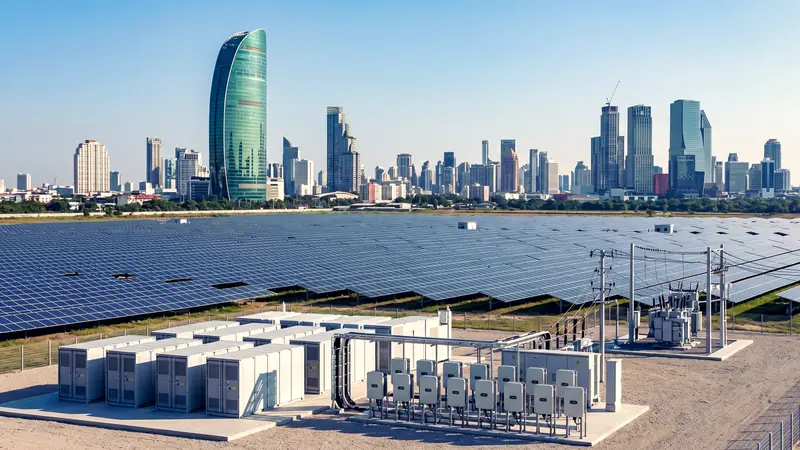
Let's talk about a country that spent decades building its economic growth on imported natural gas and cheap fossil energy. Now Bangkok wants to change course. Thailand is pushing hard on the expansion of renewable sources — solar leading the charge — with the stated goal of cutting greenhouse gas emissions and reducing dependence on energy imports. But there's a subtext the official statements leave out: in a geopolitically volatile region like Southeast Asia, a country that generates its own energy holds an enormous strategic advantage. Thailand's energy mix (the combination of energy sources used) remains heavily fossil-fuel-dependent, but the direction of travel is set. The real obstacle? Grid infrastructure, still inadequate to handle the intermittency (variability in output) of renewables at scale.
Katharina Dröge and the German Green Paradox
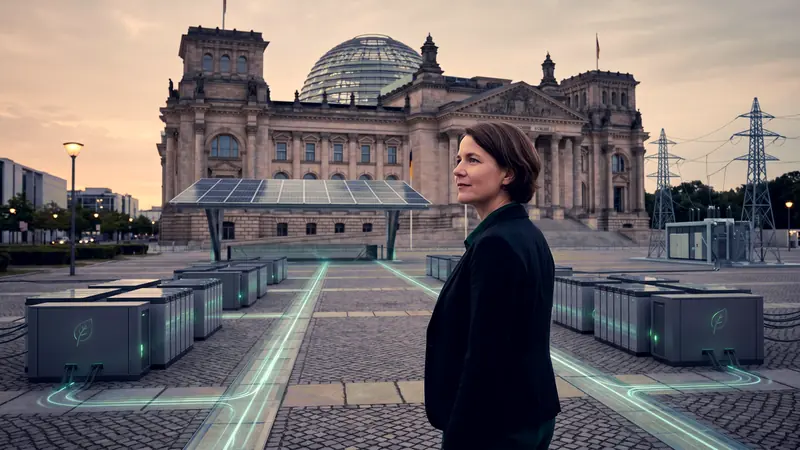
Germany is the most glaring case of systemic contradiction in recent energy history. It shut down its nuclear plants, spent years dependent on Russian gas, and paid a steep price for that choice. Now Katharina Dröge, leading the German Greens, finds herself navigating politically turbulent waters: on one side, the industrial pressure of a manufacturing economy that needs stable, affordable energy; on the other, a climate emergency that brooks no delay. The Energiewende (literally Germany's "energy turnaround") has become a global symbol — of ambition and of the difficulties of execution in equal measure. The unresolved sticking point remains energy storage (the accumulation of energy for future use): without batteries or industrial-scale storage systems, renewables alone cannot keep the factories of the Ruhr Valley running.
Japan Gets Back on Track — This Time It Means Business
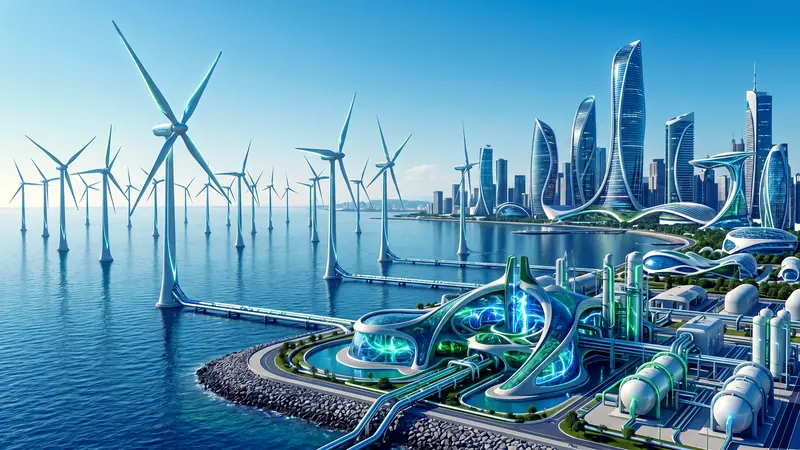
Tokyo has a complicated history with energy. After Fukushima, Japan shut down almost all of its nuclear capacity and found itself importing vast quantities of LNG (liquefied natural gas, chilled for transportation). Now the government is trying to build a new equilibrium: more renewables, particularly offshore wind (wind power generated at sea) and green hydrogen (produced through electrolysis using clean energy). Japan has no fossil fuel resources of its own, so the transition is not an ideological choice — it is an economic survival imperative. Current government initiatives aim to build an industrial ecosystem around hydrogen that could transform the country into an exporter of energy technology, not merely a consumer of it.
The USA and France: Two Models, One Shared Urgency
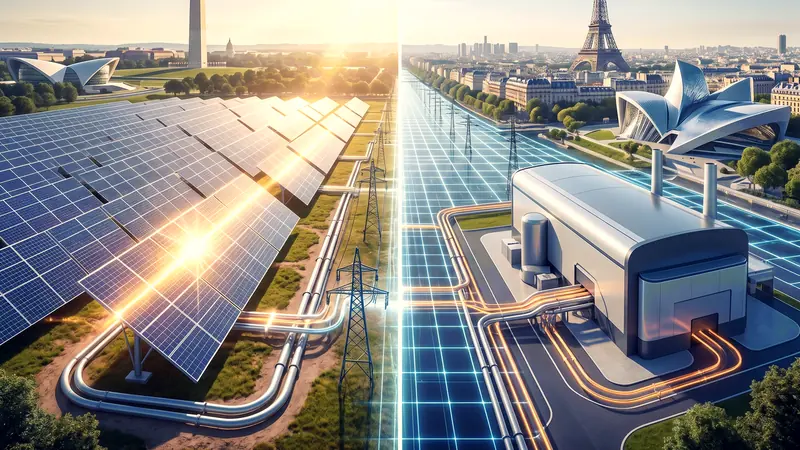
The United States is playing the game in its own characteristic style: massive tax incentives, industry subsidies, internal competition between states. The result is a strongly expanding renewables market, driven by solar and wind, but with a regulatory fragmentation that slows projects at the national scale. France, by contrast, is betting heavily on next-generation nuclear — the so-called SMR (Small Modular Reactor, compact and modular nuclear reactors) — as a complement to renewables. Paris has grasped something many still struggle to admit: without a stable baseload source (constant and reliable energy generation), the transition risks becoming a house of cards.
The Macro Picture: Who Wins, Who Loses
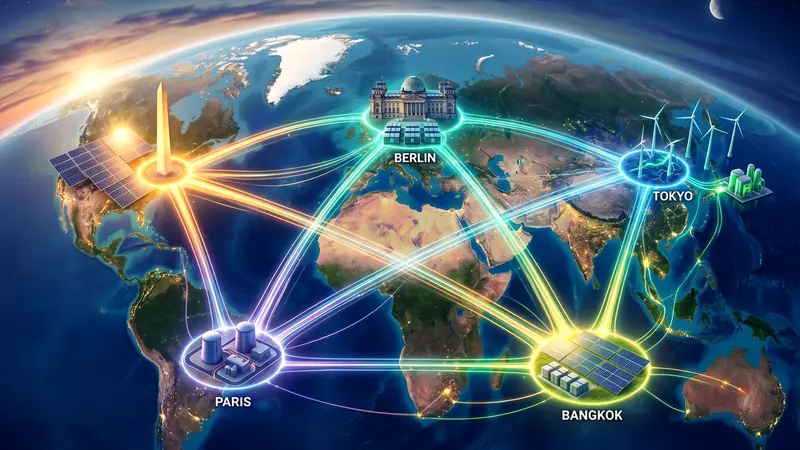
Joining the dots, a sharp picture emerges. The global energy transition is not a story of warm climate sentiment — it is a brutal redistribution of global economic power. The countries that invest today in technology, infrastructure and human capital tied to renewables will be building the technological dependencies of tomorrow. Latecomers will pay the toll, exactly as happened with semiconductors (microchips for electronics and computing). Germany, Japan, France, the USA and even Thailand know this. The question is no longer whether to make the transition. It is who will do so on their own terms — and who will be forced to accept someone else's.