
Key Points
- The price of a domestic humanoid: Unitree G1 already available for under 10,000 euros, while Tesla aims to sell Optimus at 20,000 dollars.
- Key technologies: Wi-Fi Sensing, Smart Toilet with spectroscopy, Edge AI, Embodied AI and Samsung Bespoke AI refrigerators with recognition of 30-40 ingredients.
- Market risk: Enshittification is turning home appliances into subscription services, eroding the very concept of private home ownership.
The Trojan Horse Was a 30-Euro Smart Speaker
Nobody signed a contract. Nobody gave explicit consent to turn their home into a sentient organism. And yet it happened, slowly, with the same quiet discretion as mould growing behind a wall. First came Alexa, with her reassuring voice and her awkward jokes. Then the connected thermostat, then the robot vacuum cleaner that bumped into sofa legs like a drunk. We thought we were buying convenience. We were installing the nerves of a brain that did not yet exist, but which by June 2026 is already awake, alert and, above all, no longer waiting for your commands.
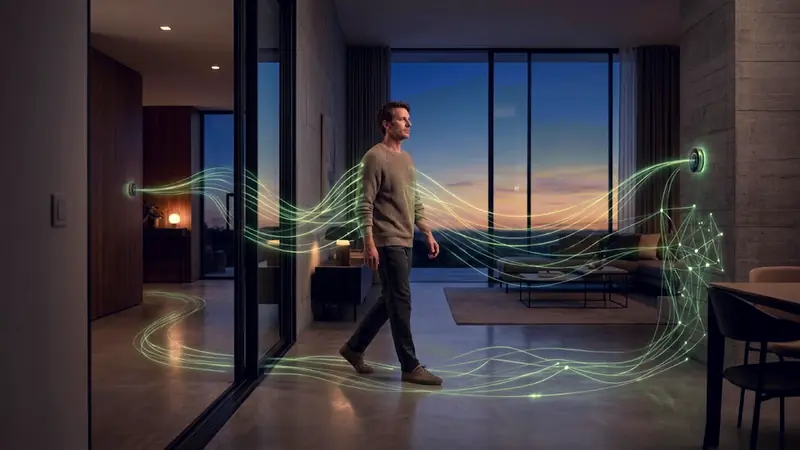
The old Smart Home paradigm was simple and reassuringly dumb: you spoke, it obeyed. A transactional relationship, almost servile. That world is dead. The integration of Generative AI — the same technology powering the chatbots millions of people argue philosophy with at three in the morning — into home hubs has given birth to what technologists call the Cognitive Home, and what in more honest terms we might describe as an invisible housemate who knows everything about you. The home no longer reacts. It deduces. If your smartwatch detects sky-high cortisol levels as you cross the threshold, the home already knows: the lights dim, the room becomes acoustically isolated, the temperature drops two degrees and the oven pre-heats based on what the fridge AI has already inventoried. You have not pressed a single switch. You have simply existed.
Your Bathroom Is Your New GP
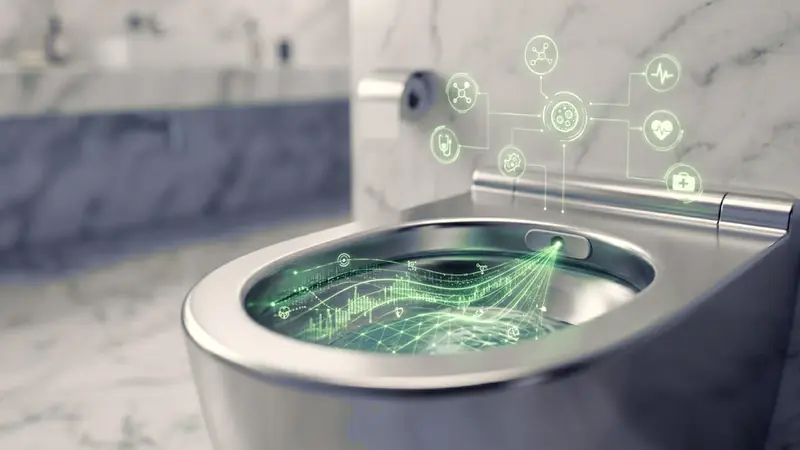
But it is in the "little extras" that this revolution shows its most surreal — and in some ways most unsettling — face. Take the bathroom. Companies like Withings with its U-Scan and American startup Throne have turned the toilet into a silent clinical surgery. A small disc clipped to the bowl, spectroscopy sensors and computer vision, and with every flush the AI analyses urine and faeces, measuring hydration, glucose spikes, vitamin deficiencies and searching for biomarkers for infections or bowel cancer. The report arrives on your smartphone. If necessary, the system contacts your doctor directly. Nobody asked whether you wanted to run tests this morning. The home decided for you.
Even more unsettling, in its elegance, is Wi-Fi Sensing. To bypass the psychological resistance to cameras in every room, AI has learned to use router waves like a sonar. By analysing how the signal bounces off bodies, the home "feels" through walls without seeing you. It knows if an elderly person has fallen unconscious. It can measure the breathing rhythm of a sleeping newborn, diagnosing sleep apnoea. It knows, in practice, almost everything that happens within your four walls, without a single camera pointed at you. And then there is the mirror. Baracoda's BMind uses hidden cameras to analyse subcutaneous blood flow and facial micro-expressions while you brush your teeth: it feeds back your blood pressure, stress level and mood, and suggests mindfulness exercises or adjusts the bathroom lighting to calm you down. A psychologist and a cardiologist, at seven in the morning, in your pyjamas.
For pet owners, the picture is completed by cat flaps such as the Swiss Flappie, which uses computer vision to stop the cat coming back in with prey in its mouth, and AI collars that analyse a dog's barking and cross-reference it with posture, translating everything into intelligible notifications: joint pain, stress from external noises, behavioural distress.
The World Is Divided Over Who Fears It Most
The geography of adoption tells a great deal. In the United States, the obsession is security: AI cameras do not merely record, they classify the intent of anyone approaching the front door. Amazon has launched Ring Always Home, a mini indoor drone that, at the sound of breaking glass, autonomously takes off from its base and streams live video to the owner's phone. In Europe, caught between GDPR, the AI Act and energy bills, AI acts as a financial broker: the home analyses energy prices in real time and starts the washing machine at three in the morning or draws on solar panels to cut costs. Edge AI dominates, with data processed locally to avoid feeding the servers of American or Chinese giants. In Japan, South Korea and China, with populations ageing at record rates, AI enters the home as nurse and companion: social robots that converse with elderly residents, remind them to take their medication and analyse tone of voice to detect the earliest signs of Alzheimer's or profound loneliness.
The Living-Room Robot Costs Less Than a City Car
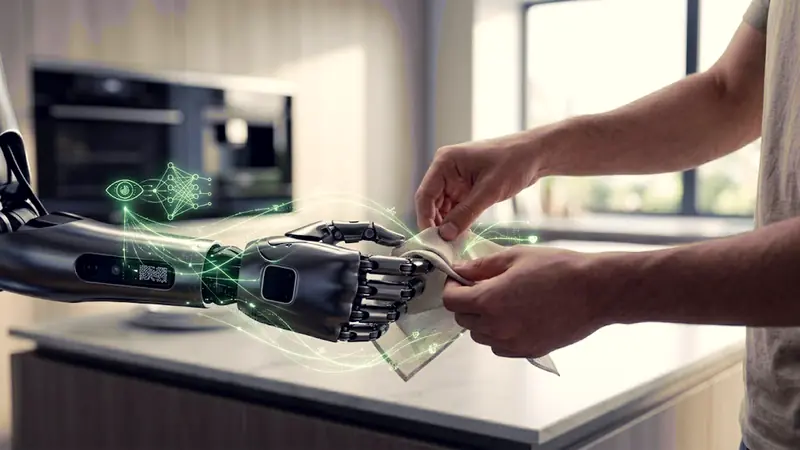
The definitive leap, however, is what technologists call Embodied AI: artificial intelligence that takes on a physical body. Unitree, a Chinese company, already has its G1 model on the market for under 10,000 euros. Tesla is testing its Optimus with the stated goal of selling it at 20,000 dollars. Apple has shifted resources into home robotics. Startups such as Figure AI, backed by OpenAI, are accelerating. These humanoids are not programmed line by line: they learn through visual imitation. Fold a T-shirt in front of them, and the AI watches, understands the physics of the movement and replicates it. Delegating physical domestic labour to a machine is no longer science fiction: it is a hire-purchase agreement.
The Bill Nobody Showed You
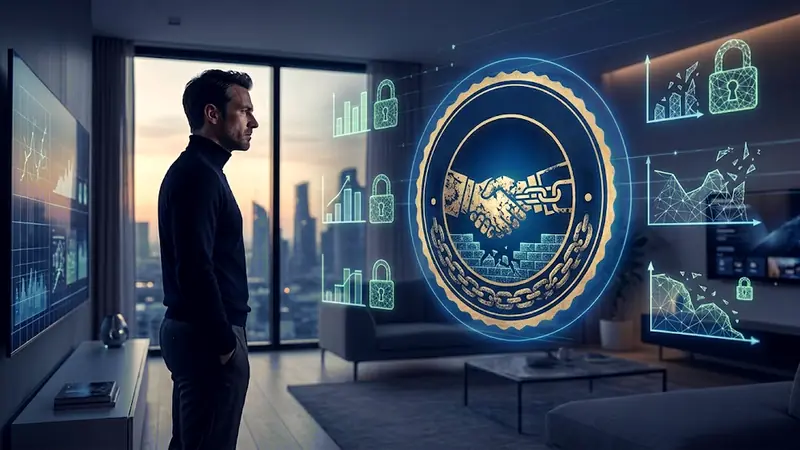
Every revolution presents its bill late. Here the bill is threefold and steep. The first problem is the medical data dictatorship: if the mirror knows you are depressed and the toilet knows your cholesterol is high, that information exists somewhere. The concrete risk, already being discussed at American regulatory tables, is that insurance companies will purchase these profiles to recalculate life insurance premiums or deny coverage. The second problem is physical ransomware: a hacker who breaks into a Cognitive Home does not lock your PC — they lock you inside your house, cranking the heating up to 40 degrees and threatening to switch off the fridge until payment in Bitcoin is received. Cybersecurity becomes physical safety. The third problem is progressive enshittification: you buy a washing machine, but to use the advanced AI cycle you pay 10 euros a month. The home is no longer yours. It is a subscription service you happen to live in.
According to market projections, by 2030 the Cognitive Home sector will be worth over 580 billion dollars globally. The ethical and regulatory debate is already at least three years behind the technology it is supposed to govern.