
The AI Power Map Is Being Redrawn: China Takes the Lead, Europe Wakes Up, and Southeast Asia Wants Its Share
Forget the duopoly narrative of Silicon Valley versus Beijing. The race for artificial intelligence in 2026 looks increasingly like a game of Go (a Chinese strategic board game) played on a global board, where every move counts and old geopolitical balances crumble in real time. A recent survey conducted across several US-allied nations has handed Washington an uncomfortable truth: China is perceived as the leader in the AI race, overtaking the US in the collective imagination of those who, until recently, would have bet on American hegemony without a second thought. This is not merely a matter of perception. It is a political, economic, and strategic signal that no serious analyst can afford to ignore.

Key Takeaways
- Global perception flipped: An international survey among US-allied countries identifies China as the perceived leader in the artificial intelligence race.
- Nvidia issues $25 billion in bonds: The chip giant launches a record bond offering to fund AI infrastructure and development.
- Southeast Asia in the race: Thailand and Vietnam are positioning themselves as new regional AI hubs, attracting investment and gigafactories.
China's Overtake: Perception or Reality?
The distinction between perception and reality, in technological geopolitics, matters less than one might think. If the United States' long-standing allies begin to look to Beijing as the beacon of AI innovation, the practical consequences — commercial partnerships, technology transfer agreements, infrastructure choices — follow that perception with brutal precision. China has invested massively in large language models (LLMs, AI systems trained on enormous datasets), in proprietary chips, and in a startup ecosystem that no longer depends on Washington's approval to survive. The result is plain to see: a Chinese AI ecosystem that is no longer playing catch-up, but is instead setting the pace in specific segments. For the US, this survey should ring like an alarm bell, not like a statistic to be filed away.
Nvidia Bets $25 Billion: The Bond Market Finances the Future
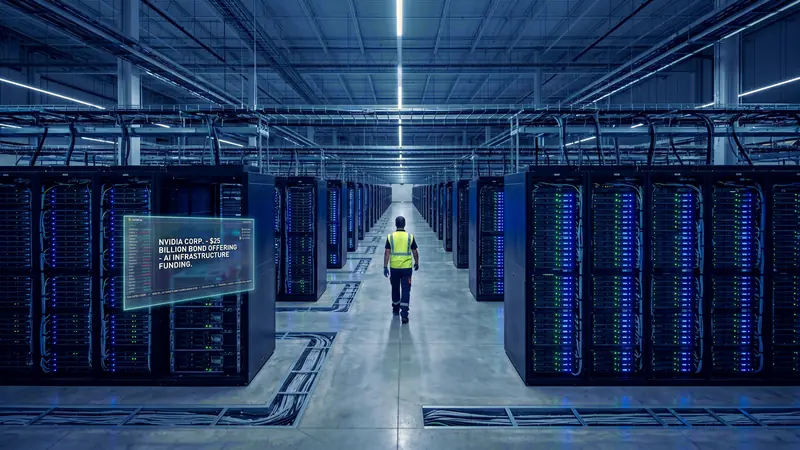
While governments squabble over who is ahead, the market speaks plainly through numbers. Nvidia has launched a $25 billion bond offering (corporate bonds, debt issued by companies) — one of the most significant transactions in the tech sector in recent years. The implicit message is powerful: even the company that produces the most sought-after GPUs (graphics processing units used for parallel computing) on the planet needs external capital to sustain the breakneck pace of AI development. This move reveals a structural truth that is often underestimated — AI infrastructure is capital-intensive (requiring enormous fixed capital investment) in a way that is almost unprecedented. Building data centres, powering them, cooling them, and upgrading them costs figures that defy logic. And Nvidia, positioning itself as an indispensable supplier of this global infrastructure, is essentially issuing debt against the future of artificial intelligence itself.
Europe: Between Bavarian Dialects, Korean Cinema, and French Ambitions
Europe is playing its hand with a peculiar style, built on cultural niches and industrial ambitions that coexist in often contradictory ways. In Germany, a research project is working to teach AI Bavarian dialects — an initiative that, beyond its folksy appeal, touches on a deeply serious issue: the preservation of linguistic diversity in an era of language models trained predominantly on English and Mandarin. At the same time, Berlin is investing in AI applied to cybersecurity (defensive digital security), recognising that the next war will be fought on servers before it is fought on battlefields. France, for its part, is emerging as a magnet for European-level AI startups, building an ecosystem that aims to compete with London and Stockholm. Meanwhile, South Korea is demonstrating how AI can democratise (make accessible to everyone) entire creative industries: its film industry is using artificial intelligence to cut production costs and generate advanced special effects, opening the door to a new generation of filmmakers (independent directors) who do not need Hollywood budgets to tell visually ambitious stories.
Southeast Asia: The Variable Nobody Wants to Acknowledge
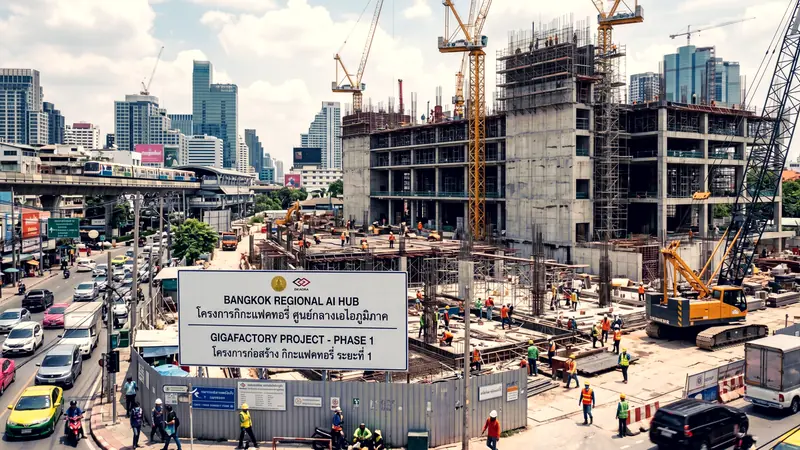
The true geopolitical surprise of this phase, however, is coming from Southeast Asia. Thailand and Vietnam are no longer simply destinations for outsourcing (relocating production to lower-cost countries) manufacturing: they are laying the foundations to become regional AI hubs with concrete ambitions. Bangkok is preparing to host an AI gigafactory (a massive industrial-scale facility for AI infrastructure), while Hanoi is working on strategic partnerships with global players and investing in research and development. These countries have grasped something that many Western governments still struggle to accept: in the AI economy, whoever controls the physical infrastructure — the data centres, the connectivity, the energy — controls the power. And they are building that infrastructure right now, while the ground is still contestable.
The Final Picture: A Multipolar AI World
Joining the dots, the picture that emerges is unambiguous: we are entering an era of technological multipolarity (a system with multiple centres of power). There will not be a single winner in the AI race — there will be regional ecosystems, vertical specialisations, and fluid alliances that will redraw the map of global power. Anyone who still thinks this is an American story with a guaranteed happy ending is looking at the wrong board.