Key Points
- Systemic disinformation: The United States is experiencing exponential growth in the spread of false information, with documented impacts on electoral processes, public health, and social cohesion.
- Emerging tech hubs: Vietnam and Thailand are establishing themselves as new poles of Asian innovation, with targeted investments in artificial intelligence, robotics, and environmental technologies.
- Europe-Asia axis: France and Germany are leading Europe's technological response, while Japan and Vietnam are redefining their social and economic models through digital innovation.
A world divided by truth: the disinformation crisis in the United States
In 2026, the United States is grappling with one of the most insidious challenges in its recent history: the uncontrolled proliferation of false information. This is no longer a marginal phenomenon confined to extremist niches of the web. Disinformation has become infrastructure — a parallel system for producing and distributing information capable of competing with traditional media in both reach and speed. The consequences are concrete and measurable: from accelerated political polarization to the spread of health-related conspiracy theories, to the manipulation of financial markets through algorithmically constructed narratives. Social platforms, generative language models, and coordinated bot networks now form an ecosystem that makes fact-checking a daily — and often losing — exercise. Washington has debated regulation for years, but the tension between freedom of expression and the editorial responsibility of platforms remains unresolved, and the social cost continues to rise.

Asia reimagines itself: between tradition, innovation, and sustainability
Thousands of miles away, Asia presents a radically different picture, where technology is perceived not as a threat but as a tool for positive transformation. Japan offers the most nuanced example: a country that has always known how to integrate modernity and tradition is now applying the same logic to its social fabric. Japanese couples are rewriting the rituals of marriage, moving away from the rigidly codified formats of the past to embrace ceremonies that are more personal, inclusive, and centered on the authentic relationship between partners. A cultural shift that may seem minor but reflects a profound transformation in Japanese society, which is increasingly willing to question conventions in favor of authenticity. At the same time, the Japanese government and tech companies are investing heavily in innovation in service of welfare: assistive robotics for an aging population, artificial intelligence applied to preventive medicine, and smart infrastructure for metropolitan cities.
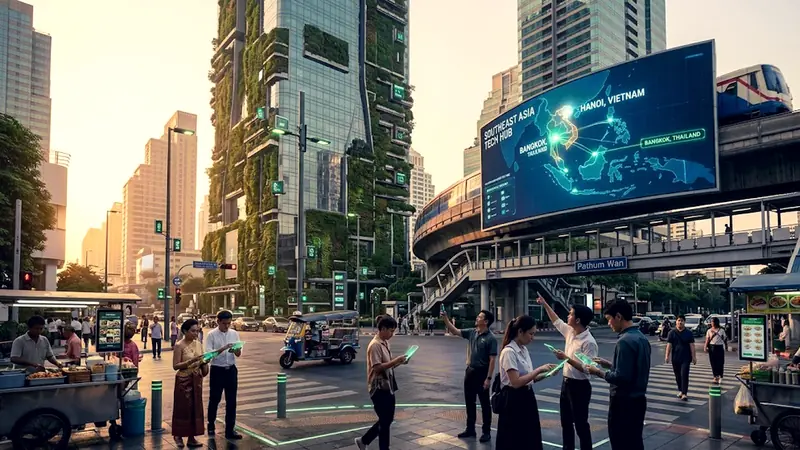
Vietnam, on the other hand, tells the story of a country that has leapfrogged the stages of technological development at a remarkable pace. From a low-cost manufacturing economy, Hanoi and Ho Chi Minh City have transformed into laboratories of innovation, attracting international capital and producing a generation of engineers and developers competitive on a global scale. The focus on artificial intelligence and robotics is not government rhetoric: it is the result of consistent industrial policies, partnerships with foreign universities, and a startup ecosystem that in 2026 counts hundreds of active ventures in fintech, agritech, and healthtech. Thailand, for its part, has chosen a more specific path, leveraging technology as a driver of environmental sustainability. Bangkok is piloting air quality monitoring solutions based on distributed IoT sensors, while in the agricultural sector, smart irrigation systems have already reduced water consumption in several northern provinces of the country.
Europe: the Franco-German duel for continental technological leadership
In Europe, the most compelling contest is playing out between France and Germany, two powers that interpret the role of technology in the continent's future in very different ways. Paris has embraced a narrative of excellence: France is positioning itself as Europe's artificial intelligence hub, backed by substantial public investment, a vibrant startup scene centered around Station F, and an industrial policy that rewards high-value-added innovation. The French approach is deliberately strategic and sovereigntist: building national champions capable of competing with American and Chinese giants, avoiding the technological dependency that defined the previous decade.
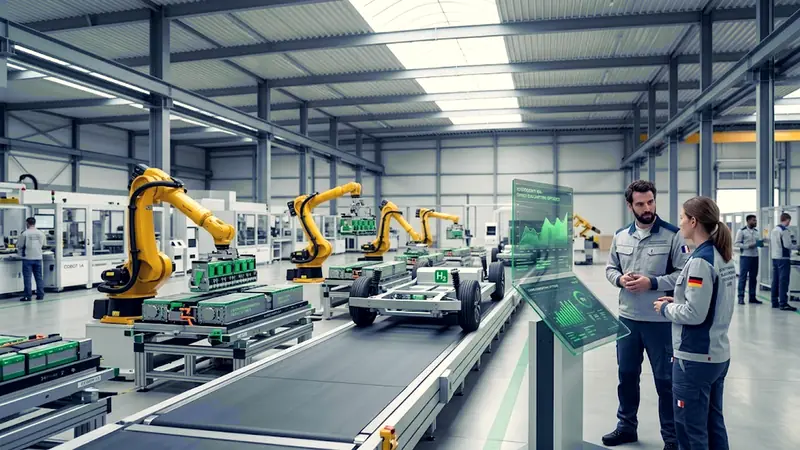
Berlin and Munich respond with the solidity typical of the German model: Germany does not chase disruption at all costs, but integrates technological innovation into the fabric of its established industrial apparatus. Advanced automation in factories, digitalization of the manufacturing supply chain, and investments in renewable energy paired with storage technologies form the core of Germany's strategy. A less spectacular approach, but potentially more enduring, built on deep-rooted engineering expertise and a network of Mittelstand companies that adopt innovation with pragmatism.
A global map in motion
The picture that emerges from these seven scenarios is that of a world in which technology carries no universal meaning, but takes on radically different forms and functions depending on the cultural, economic, and political context in which it operates. Where in the United States it amplifies social fractures through disinformation, in Asia it is harnessed to address concrete needs for development and sustainability, while in Europe it becomes the terrain of internal geopolitical competition. According to projections by the World Economic Forum, by 2028 more than 60% of global GDP will be generated by high-technology-intensive sectors: the question is not whether countries will adapt, but at what speed and at what social cost.