Key Takeaways
- Major investment: Hyundai Motor has committed over one billion Thai baht to its new EV production hub in Thailand.
- Technical highlight: The IONIQ 5 N Line 2026 enters local assembly with an 84 kWh battery, 330-mile range, and 225 hp rear-wheel-drive configuration.
- Regional impact: The move cements Thailand's role as the strategic epicenter of EV manufacturing across the ASEAN (Association of Southeast Asian Nations) bloc.
Hyundai Plants Its Flag: Thailand Becomes the EV Heartland of Southeast Asia
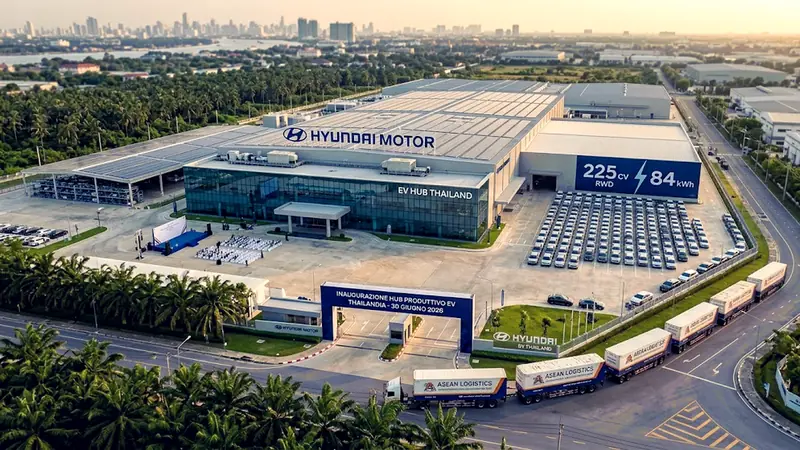
Hyundai Motor is not hedging its bets. With an investment exceeding one billion baht, the South Korean giant has officially inaugurated a dedicated electric vehicle and battery assembly facility in Thailand, positioning the country as a primary production hub for the entire ASEAN region. The move slots directly into the framework of the government's EV3.5 plan (Bangkok's policy to attract global EV manufacturers), the program through which Thailand is aggressively courting major global players in the electric vehicle space to reestablish itself as a future-facing manufacturing powerhouse.
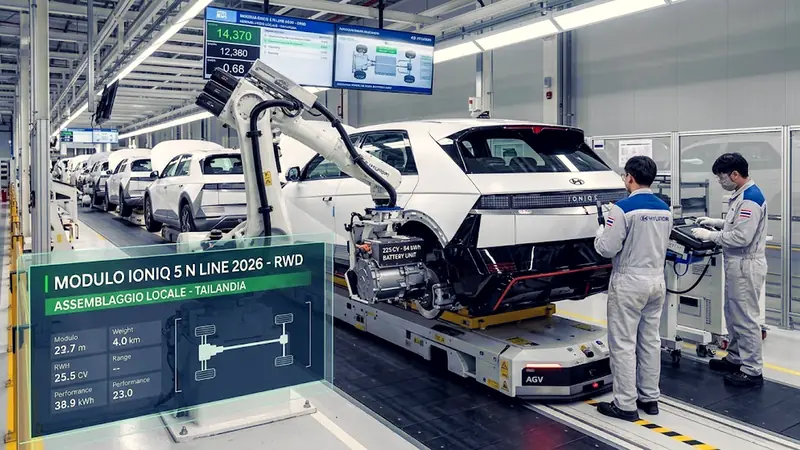
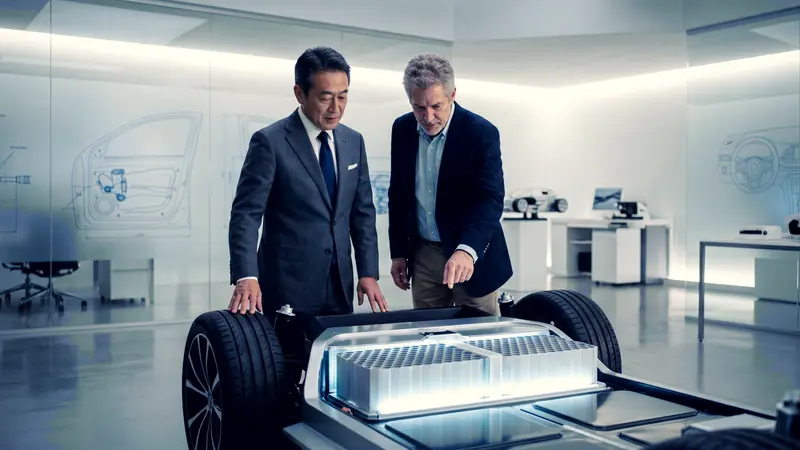
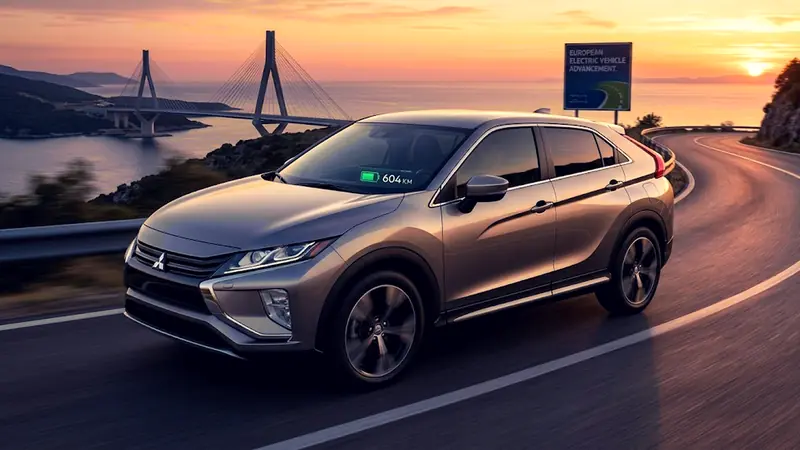
The flagship product of this shift is the new IONIQ 5 N Line 2026, now rolling off the line on Thai soil. Beneath the motorsport-inspired bodywork sits an 84 kWh battery pack, a declared range of up to 530 km, and a rear-wheel-drive layout producing 225 horsepower. These are hard numbers for a vehicle that is not a concept — it is a commercial product already in active production.
Centralizing output at this strategic node allows Hyundai to sharply reduce logistics and tariff costs tied to importation (duties on fully built-up vehicles), reinforcing its competitive position in a rapidly expanding market. The signal is unambiguous: the global center of gravity for the electric vehicle industry is shifting, and Thailand has already decided which side it is on.