Key Takeaways
- Location and concept: An office in Bangkok designed by a Thai architecture studio, documented by art4d magazine.
- Standout feature: An indoor slide linking two floors, breaking the rigidity typical of corporate spaces.
- Key materials: Colored glass block walls, stainless steel, and handcrafted wood details define zones each with their own color identity.
Khotkool Office: When the Workplace Becomes a Playground
In Bangkok, a project by a Thai architecture studio flips the unwritten rules of the workplace. Khotkool Office, documented by art4d magazine, cuts sharply against the sterility of anonymous open-plan layouts, bringing color, craftsmanship, and a playful element rarely found in a work environment to the table. The result is an interior that breathes local identity in every corner, refusing any compromise toward aesthetic homogenization.
Raw Materials, Bold Moves
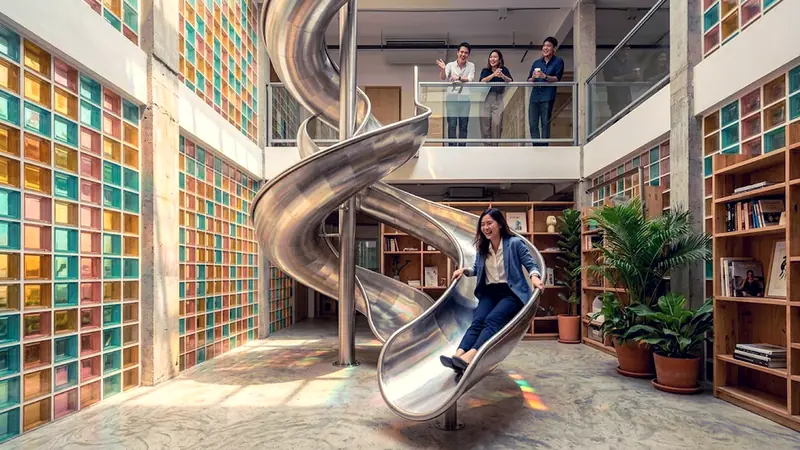
The heart of the project lies in a combination of materials that rarely coexist in the same space: walls made of colored glass block (thick tinted glass units used as building material) sit alongside stainless steel surfaces, while hand-worked wood details add artisanal warmth. Every zone of the office carries its own color identity, turning the space into a continuous visual journey. The boldest move, though, is the indoor slide physically connecting two floors — a gesture that breaks the formality of the space and pushes employees from different departments to cross paths without relying on stairs or elevators.
Unassigned Desks, Productivity Reimagined
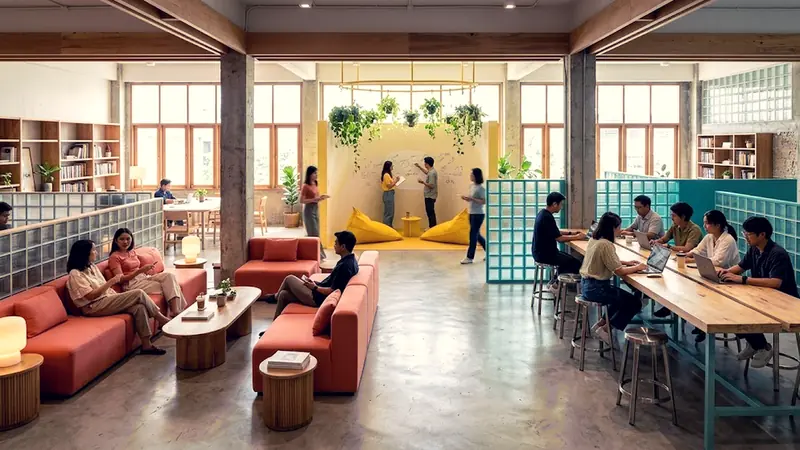
Workstations aren't assigned; they follow a flexible logic that alternates with relaxation zones featuring soft furnishings and greenery scattered across the floors. Khotkool Office shows how simple materials and direct cultural references can translate into concrete tools for workplace well-being, standing sharply apart from the minimalist austerity that often dominates corporate design on a global scale.