Key Takeaways
- Total investment: Seoul is committing 1,558 trillion won (over $1,000 billion) to the "Three Mega Projects" announced on June 29, 2026.
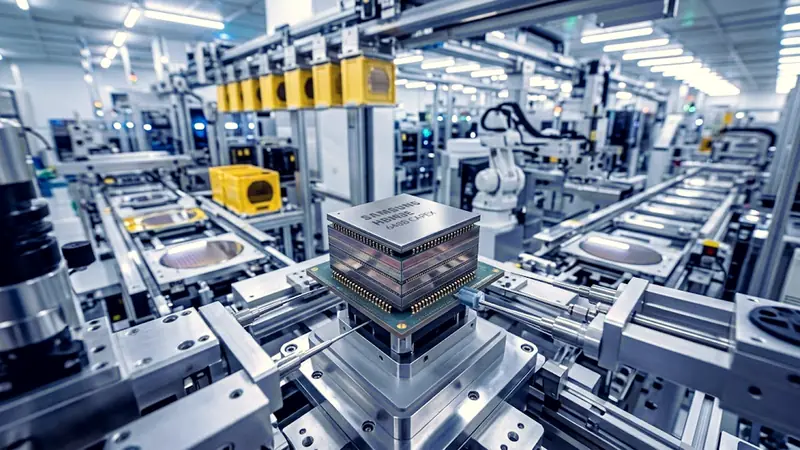
- Technology and infrastructure: Four new semiconductor plants in the Honam region, physical AI development, and AI data centers with capacity reaching up to 18.4 GW by 2035.
- Market impact: SK Hynix surpasses $1,000 billion in market capitalization, while South Korean exports top $100 billion monthly for the first time in history.
A trillion-dollar plan
South Korean President Lee Jae-myung announced the "Three Mega Projects" on June 29, 2026, a public-private investment package worth 1,558 trillion won. The goal is to build in three years the production capacity that took South Korea 43 years to achieve in the postwar era, focusing on semiconductors, physical artificial intelligence, and data centers.

Honam, the new chip hub
The first pillar involves creating a production hub in the southwestern Honam region, set to become the country's second major industrial center after the Seoul metropolitan area. Samsung Electronics and SK Group will invest 800 trillion won to build four new plants in the region. Samsung alone has planned domestic investments of 2,655 quadrillion won through 2040, with 625 trillion won earmarked specifically for regional development.

Physical AI and industrial robotics
The second pillar targets the integration of artificial intelligence and robotics. South Korea aims to become the world's leading power in physical AI by 2030, developing AI robots for ten industrial sectors and commercializing humanoid robots by 2028. The plan calls for training 10,000 specialists in AI robotics over five years.
Data centers and technological self-sufficiency
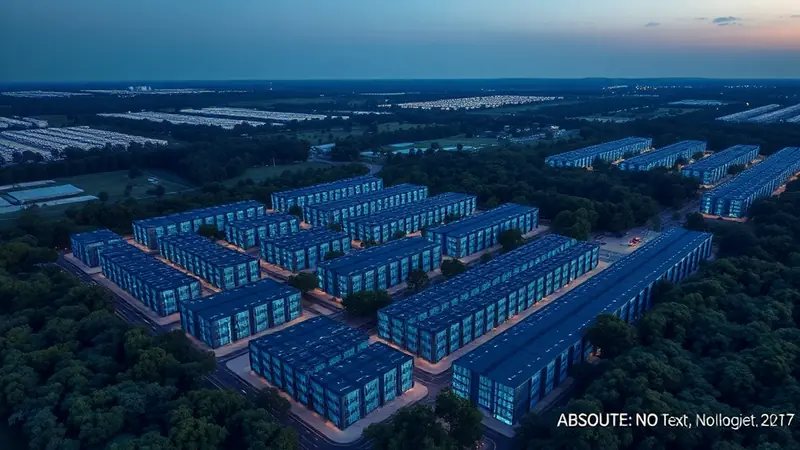
The third pillar covers AI infrastructure. SK, GS Group, and Naver will invest roughly 550 trillion won to build data centers with a combined capacity of 8.4 gigawatts by 2029, rising to 18.4 GW by 2035. Total investment in this segment will exceed 1,000 trillion won, with top priority given to chips and software developed domestically.
Global demand drives the sector
The plan arrives as global demand for AI semiconductors grows exponentially. SK Hynix surpassed $1,000 billion in market capitalization in May 2026, driven by the data center boom. South Korean exports topped $100 billion monthly for the first time, driven largely by semiconductors.

Regional rebalancing and direct oversight
Lee described the project as a matter of national "survival," adding that its outcomes "will determine South Korea's future for the next 20 to 30 years." The president will personally oversee the plan's implementation and appoint a dedicated coordination official. Locating the plants outside Seoul reflects a strategy of regional rebalancing, aimed at countering rural decline and industrial concentration in the capital.

A compressed development model
The "Miracle on the Han River" transformed South Korea from a war-ravaged agricultural country into an industrial power over 43 years. The new plan compresses that trajectory into three years of planning and execution. Lee stated his intention to carry out a "region-led, Korean-style AI industrial revolution" that would expand on a global scale.