Key Takeaways
- Funding surge: Southeast Asian venture rounds jumped 503% year-over-year in the first half of 2026, totaling $7.4 billion raised.
- Signature deal: DayOne, a Singapore-based hyperscale platform, closed $4.5 billion across two Series C tranches, including a $2 billion round led by Coatue.
- Infrastructure race: more than $55 billion in data center commitments for 2026, with aggressive expansion across Malaysia, Thailand, and Indonesia.
An explosion that's no fluke
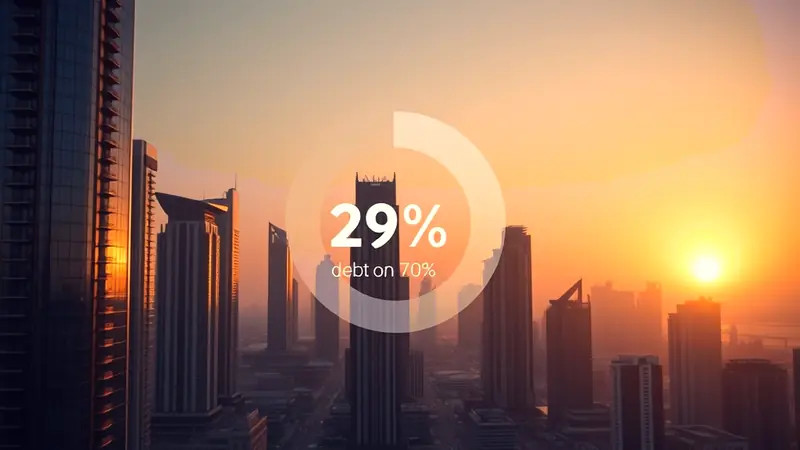
Southeast Asia is undergoing a radical reshaping of its tech ecosystem, and at the center of this transformation sits a sector that until a few quarters ago barely registered on anyone's radar: enterprise infrastructure. The numbers speak for themselves, leaving little room for lukewarm interpretation. In the first half of 2026, venture funding directed at this segment grew 503% year-over-year, an acceleration that, according to Tracxn data, translates into $7.4 billion raised by regional tech companies between January and June, more than double the $3.2 billion recorded over the same period in 2025. The paradox is that this surge coincides with a drop in the number of deals, down from 153 to 127: fewer rounds, but far larger in size.
The clearest picture emerges when breaking the data down by funding stage. Late-stage funding reached $6.0 billion, dominating the landscape by a wide margin. Seed funding grew 68%, hitting $328 million, while early-stage funding stayed largely flat at $1.0 billion. Singapore alone captured 94% of the regional total, equivalent to $6.9 billion, cementing its position as the undisputed financial and legal center of gravity for the entire region.

DayOne's decisive role and the concentration of capital
Much of this surge bears the signature of a handful of massive deals. DayOne, a Singapore-based hyperscale data center platform, raised a combined $4.5 billion through two Series C tranches. In the first quarter alone, the company closed a $2 billion round led by Coatue and backed by the Indonesia Investment Authority, with the stated goal of expanding AI-ready capacity across Europe and Asia-Pacific.
This concentration of capital around mature platforms isn't an isolated episode but a structural feature of the market. Investors are rewarding established enterprise assets: in the first quarter of 2026, late-stage funding hit $2.2 billion, marking a 1,368% increase quarter-over-quarter and a 1,130% jump compared to the same period in 2025. At the same time, seed funding fell 30% quarter-over-quarter, a sign of an ecosystem that favors caution at the earliest stages in order to concentrate resources on scalable, proven infrastructure.
Fifty-five billion for tomorrow's computing power
The real engine behind this transformation is the race to build computing capacity dedicated to artificial intelligence. In 2026, Southeast Asia secured commitments exceeding $55 billion in this segment, a figure that redefines the region's role on the global tech stage. Three factors explain this dynamic: rising regional demand for cloud and AI services, targeted regulatory policies from local governments, and the need for global operators to place capacity closer to Asian customers to cut latency and ensure regulatory compliance.
Singapore: strategic command amid constraints and power
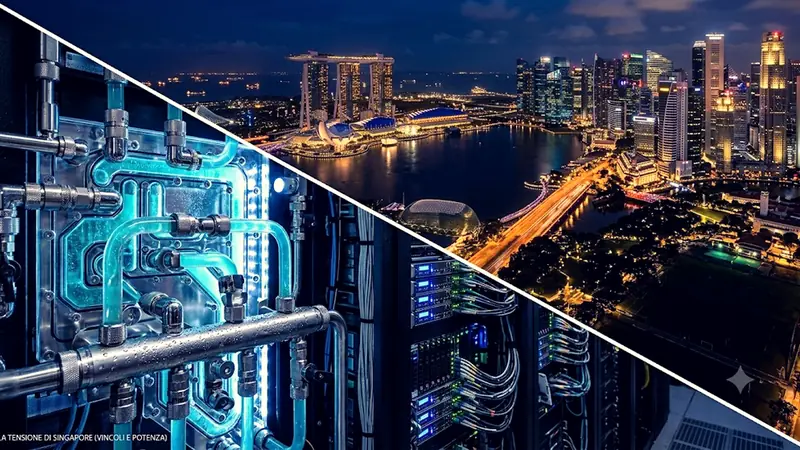
Singapore remains the region's undisputed hub, with roughly 1 gigawatt of installed capacity. But space is running out, and environmental constraints are tightening: the data center vacancy rate sits at just 1.4%, the lowest in all of Asia-Pacific. The government has mandated liquid cooling techniques for certain facilities, concentrating capacity allocations among operators with superior energy efficiency. In the second power allocation round, DC-CFA2, closed on March 31, 2026, only 200 additional megawatts were authorized, subject to strict requirements. Despite these physical limits, Microsoft announced an additional $5.5 billion investment in the city-state at the start of 2026, as Singapore gradually evolves from a simple hosting hub into a strategic and financial command center for cloud operations across Asia.
Malaysia, Thailand, and Indonesia: the new frontier
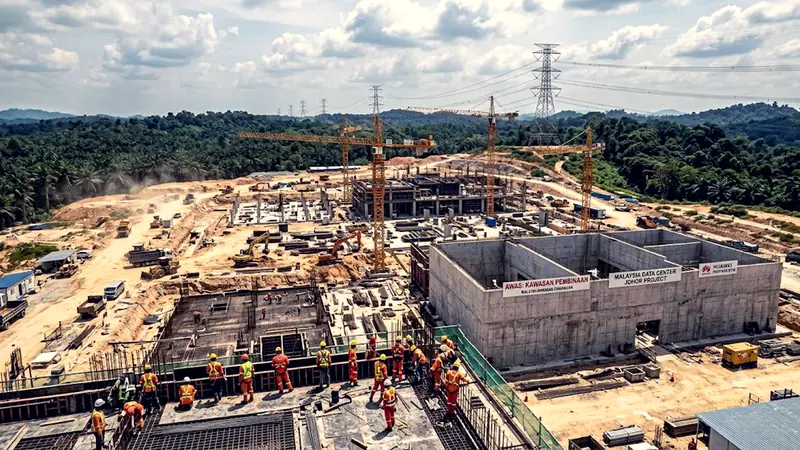
Singapore's land scarcity has pushed expansion into neighboring countries. Malaysia, particularly the state of Johor, has multiplied its operating capacity roughly 4.5 times in just a few years, now counting more than 500 active data centers and over 300 under construction. Microsoft has committed $2.2 billion in the country, Google $2 billion for its first Malaysian data center, while AWS has planned significant investments in Indonesia as well.

Thailand is emerging as the region's most-improved market. According to BMI Country Risk & Industry Research, total capacity under construction and development reaches 944 megawatts, more than four times the current capacity of 216 MW. The country has attracted top-tier commitments: AWS with $15 billion, ByteDance with $4 billion, and Google with $1 billion, backed by a pilot program for 2-gigawatt direct renewable energy purchase agreements and incentives from the Board of Investment. The Eastern Economic Corridor is emerging as a secondary hub, with 70 MW already active and a 300 MW pipeline.
Indonesia, with a cloud market that has grown at an average annual rate of 48% over the past five years and a population exceeding 280 million, represents the region's other strategic front. DCI Indonesia is expanding its capacity from 83 MW to 1,000 MW, while BDx Data Centers operates a 500 MW facility in West Java.

Cracks beneath the surface
This dizzying growth isn't without friction. BMI warns that rising electricity prices and delays in grid upgrades could slow the conversion of projects into real operational capacity. In Malaysia, the government has suspended applications for non-AI data centers since February 2026, and the prime minister has voiced explicit concern about the country's water and power constraints. As BMI puts it, the challenge is no longer generating demand, but ensuring the power grid is ready and delivery capacity is real.
A scenario in acceleration
Southeast Asia isn't simply making up for the funding contraction seen between 2023 and 2025. It's making a leap in scale. Enterprise infrastructure, driven by artificial intelligence and cloud computing, has established itself as the region's most dynamic sector, capable of attracting capital on a global scale and reshaping the entire digital landscape. With commitments exceeding $55 billion and data center capacity set to multiply in the coming years, the region is carving out an increasingly central role in the next phase of the world's digital infrastructure.