Key Takeaways
- Offshore wind potential: around 600 GW of estimated technical capacity, viewed as an industrial development strategy beyond mere energy generation.
- Mandatory green ports from 2030: Vietnam's port system handles over 100,000 international calls and roughly 800 million tonnes of cargo annually.
- Regulatory framework: Resolution 36-NQ/TW of 2018 and the 2025 "Institutional Quartet" outline the strategy through 2030, with a vision to 2045.
Vietnam is beginning a shift away from an extractive model of maritime exploitation, based on intensive fishing and direct resource extraction, toward a circular blue economy built on technology and added value. The country has over 3,260 kilometers of coastline and more than one million square kilometers of marine area.
The Regulatory Framework: Resolution 36 and the Institutional Quartet
Resolution No. 36-NQ/TW, adopted by the Party Central Committee in October 2018, sets out the strategy for sustainable maritime economic development through 2030, with a vision to 2045. In 2025, the government added the so-called "Institutional Quartet": four resolutions covering science and innovation, international integration, legislative reform, and private sector development.
In February 2025, the government approved the Implementation Plan for the National Marine Spatial Planning 2021-2030, with a vision to 2050, through Resolution 37/NQ-CP. The document introduces, for the first time, an integrated marine spatial planning approach that coordinates fisheries, energy, tourism, and transport with ecosystem protection.
Green Ports and Maritime Transport
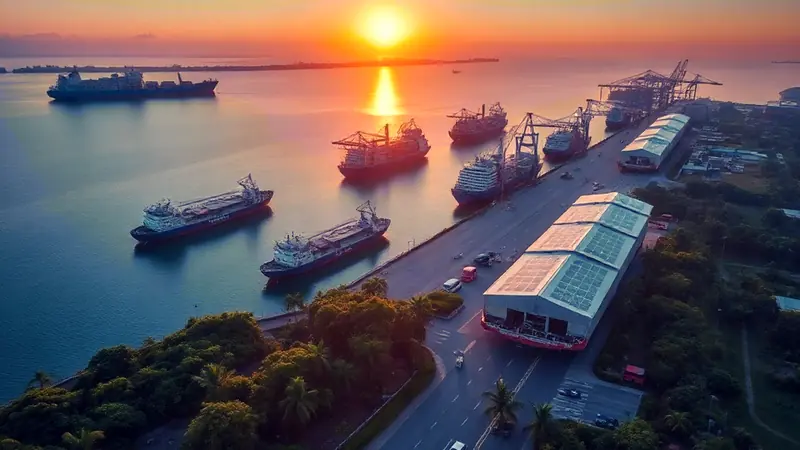
The government has launched a national "green ports" initiative, which will become mandatory from 2030. The ports of Quy Nhon and Hai Phong are already installing shore power systems for ships, replacing diesel cranes with electric ones, and using artificial intelligence and IoT to optimize operations.
The Vietnam Maritime Corporation (VIMC) has signed agreements for pilot hydrogen projects, aiming to align its ports with national sustainability standards by 2045.
Offshore Wind as an Industrial Driver
With an estimated technical potential of around 600 GW, offshore wind is seen by the government as a lever for industrial development capable of generating a production ecosystem spanning naval engineering, shipbuilding, offshore construction, logistics, and maintenance. The country can draw on skills already established in shipbuilding and oil & gas services.
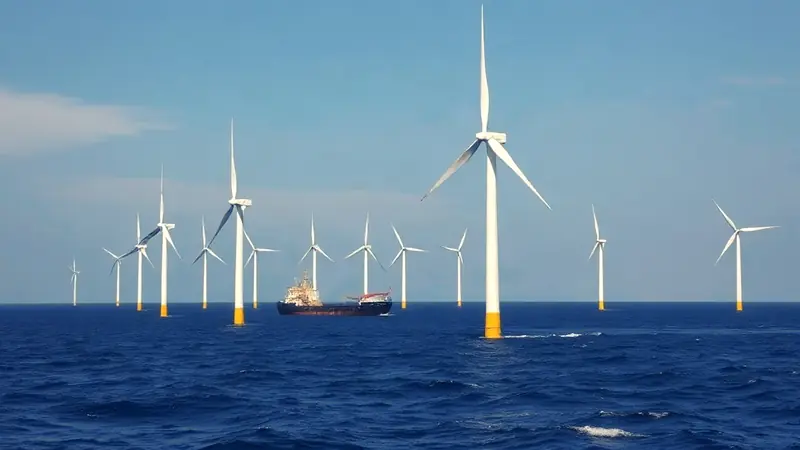
The government is working to stabilize the regulatory framework on marine area allocation and energy purchase mechanisms, seen as the main obstacles to unlocking investment in the sector.
Aquaculture and Tourism
The fisheries sector is moving away from intensive coastal fishing toward high-tech industrial aquaculture, which the government describes as a model of "marine industrial parks" involving local communities. Maritime tourism is being redirected toward offerings tied to ecosystem conservation and traditional fishing communities.
Scientific and International Cooperation
Deputy Prime Minister Trần Hồng Hà has pointed to the need for a shift in the growth model based on innovation and integration with digital and green transitions. The Ministry of Science and Technology has issued a research plan for environmental protection and marine economic development for the 2025-2030 period.

Vietnam is cooperating with the United Nations Development Programme (UNDP) and Norway on ocean governance. At the 2025 UN Ocean Conference, Prime Minister Phạm Minh Chính confirmed the country's commitment to participate in blue finance cooperation mechanisms.
Remaining Obstacles
The maritime sector's contribution to gross domestic product remains below its estimated potential. Regulations remain fragmented and investments require substantial capital. Revision of the Law on Marine and Island Resources and Environment is seen as a necessary step to attract private investment, while the ongoing administrative reorganization carries the risk of fragmented local-level marine governance.