Key Takeaways
- Material reuse: EGAT has reused over 28 million tonnes of ash over the past twenty years, avoiding 23.8 million tonnes of CO₂ emissions.
- Programme: Third edition of "EGAT Green i", structured around two challenges: Circular Innovation Challenge and Sustainable Concrete.
- Partner network: Eight organisations involved, including TGO, the Ministry of Industry, GIZ, CPAC and Siam City Cement, to bring prototypes to market.
Third edition of the programme
The Electricity Generating Authority of Thailand (EGAT) has launched the third edition of "EGAT Green i", a programme first introduced in 2024 as a platform for gathering environmental ideas. The second edition, focused on the circular economy, had engaged students and young talents. The 2026 version takes a different approach: not an idea competition, but a full pathway from concept to prototype through to commercialisation.

EGAT's governor, Narin Phaowanich, stated that the transition toward a low-emission society requires knowledge and creativity to translate into innovations capable of solving concrete problems and generating measurable value.
Two parallel challenges: industrial waste and cement
The programme is organised around two tracks. The first, called "Circular Innovation Challenge", is aimed at university students, researchers and start-ups, with the goal of developing solutions for resource management and industrial waste reduction through Artificial Intelligence, Internet of Things and Data Analytics applied to circular economy principles.
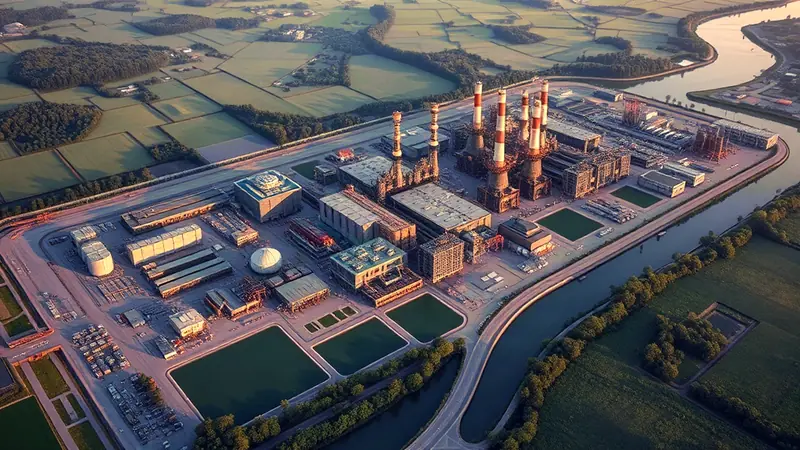
The second track, "Sustainable Concrete", involves researchers, start-ups and industry in developing low-carbon construction materials. The central focus is the use of by-products from EGAT's power generation — fly ash and bottom ash from lignite, along with synthetic gypsum — to partially replace traditional cement, using geopolymer-based technologies.
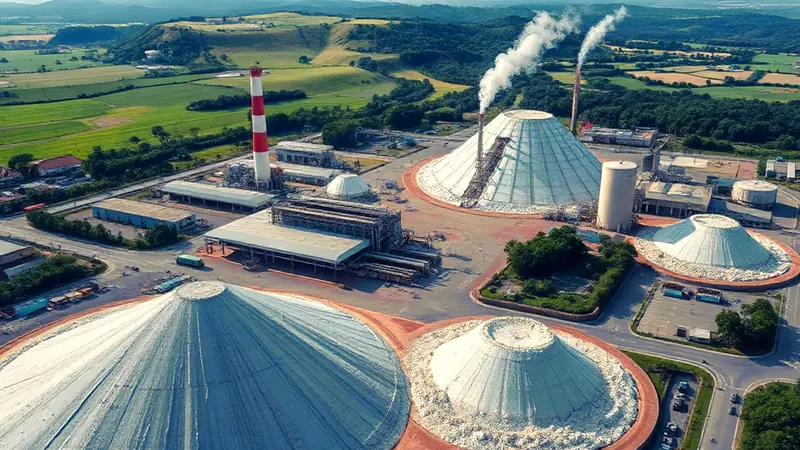
The starting point is already well established: over the past twenty years EGAT has reused more than 28 million tonnes of ash, avoiding the emission of 23.8 million tonnes of CO₂.
Eight partners for an innovation ecosystem
The project involves a network of eight strategic partners: the Thailand Greenhouse Gas Management Organization (TGO), the Ministry of Industry, the German International Cooperation Agency (GIZ), the Thai Cement Association, as well as construction companies such as CPAC and Siam City Cement.
This public-private structure aims to support projects from the research stage through to market application, including potential access to public procurement for the innovations developed.

Emission reduction targets
The programme is part of EGAT's broader energy transition strategy, with targets to cut greenhouse gas emissions by 30% by 2030 compared to 2021, and carbon neutrality set for 2050. The case of coal ash transformed into construction material shows how the waste from one industrial process can become a productive input for another sector.