Key Takeaways
- Sodium in production: CATL unveiled its second-generation sodium-ion cells in February 2026, with large-scale rollout already underway, while BYD is building its first dedicated plant.
- Iron-air for long duration: discharge durations of up to 100 hours, estimated cost under $20 per kilowatt-hour, 45% efficiency.
- Redox-flow on the rise: market expected to reach $9.2 billion by 2036 according to IDTechEx, growing at 27% annually.
Global demand for electric vehicles and energy storage systems is accelerating, while reliance on lithium-ion chemistry shows signs of strain. Lithium prices remain volatile, supply chains stay concentrated in a handful of regions, and concerns over mining sustainability are pushing industry and research toward alternatives. Three technologies are moving from lab to market: sodium-ion, iron-air, and redox-flow batteries.

Sodium: Thermal Resilience as the Primary Edge
Sodium-ion batteries operate on chemical principles similar to lithium, but rely on an element that is more abundant and geographically widespread. CATL, the world's largest battery maker, unveiled its second-generation sodium cells in February 2026, confirming plans for large-scale rollout this year. BYD has begun construction of its first plant dedicated to this chemistry.
The immediate advantage isn't energy density, which still trails lithium, but resistance to extreme temperatures. The Changan Nevo A06, the first production sedan powered by a sodium pack, operates across a range of −40°C to +70°C, with discharge power at −30°C nearly triple that of an equivalent LFP cell. BYD has also introduced a third-generation sodium cell capable of withstanding over 10,000 charge cycles. General Motors has announced a sodium-cell development program for grid storage in partnership with Peak Energy, aiming to outperform LFP chemistries.
Iron-Air: The Long-Duration Niche
While sodium aims to replace lithium in urban mobility and distributed storage, iron-air batteries target a specific niche: long-duration energy storage. The technology relies on the oxidation and reduction of iron in the presence of air, promising discharge durations of up to one hundred hours at an estimated cost below $20 per kilowatt-hour.
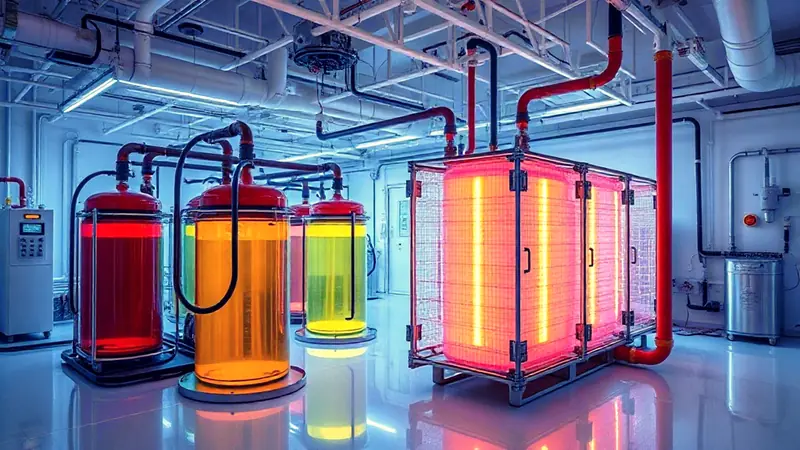
The trade-off is efficiency, capped at 45%: more than half the energy put in is lost. In markets where grid electricity prices turn negative or face severe curtailment, the cost of input energy approaches zero, making the penalty acceptable. Industry projections indicate the global long-duration storage market will require between 1.5 and 2.5 terawatts of capacity by 2040, with iron-air batteries positioned as the leading candidate for the segment beyond 24 hours. The first commercial pilots are operational in 2026, with gigawatt-hour-scale plants expected by 2028.
Redox-Flow: Safety and Modularity
Sitting halfway between solid-state chemistry and liquid architecture, redox-flow batteries decouple power from energy, scaling electrolyte volume and power stacks independently. IDTechEx estimates the market will reach $9.2 billion by 2036, growing at an annual rate of 27%.
The competitive edge lies not only in modularity but in inherent safety: liquid electrolytes are non-flammable, a significant factor amid growing scrutiny over large-scale lithium fire incidents. Traditional vanadium chemistries are giving ground to iron-, zinc-, and organic-based solutions. Startups like Halide Energy and R.Flo are testing copper and iron cells with cycle lives exceeding 40,000 discharges.
A Layered Ecosystem
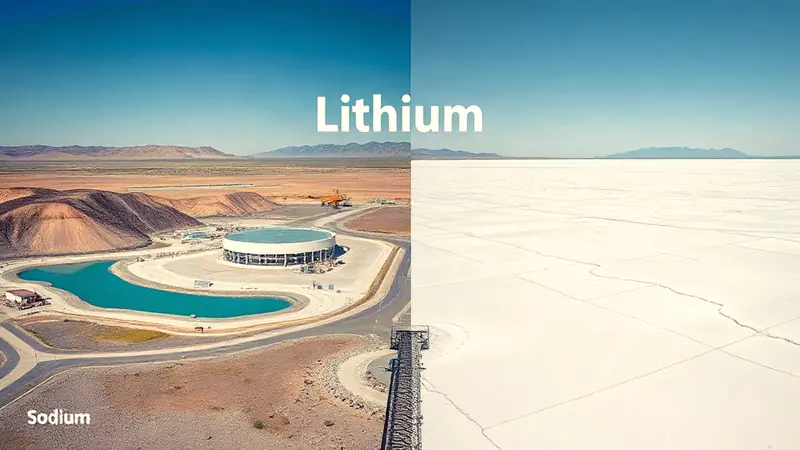
None of these three technologies is set to replace lithium on its own. What's emerging is a layered storage ecosystem: sodium for compact vehicles and installations in harsh climates, iron-air for power grids needing to store energy for days, and redox-flow for data centers and smart grids seeking safety and durability. For all three, 2026 marks the shift from experimentation to first-stage commercial industrialization.