Key Takeaways
- 2026 Target: 5 million meals distributed, with a declared economic value of 250 million baht.
- Technology & Partners: Operations run via Line OA (Thai social messaging platform), rapid-test kits by NSTDA (Thailand's national science agency), logistics by SOS Foundation; project led by CP Extra (Makro and Lotus's) alongside Thailand's Ministry of Social Development.
- Market Impact: The Phasi Charoen district pilot has already reached over 150 families, targeting "Zero Waste to Landfill" by 2030.
Food Rescued, Families Fed: CP Extra Rewrites the Rules
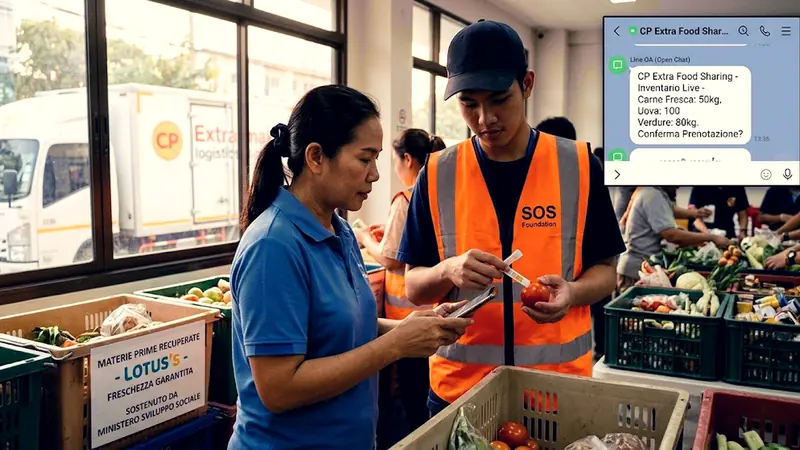
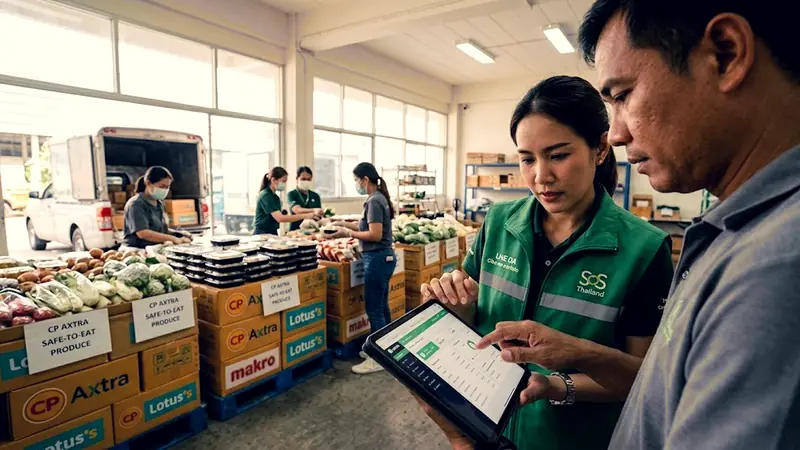
CP Extra, the retail giant operating Makro and Lotus's, has launched the "Food Sharing" project — a direct evolution of the "Edible, Don't Throw Away" initiative born under the Thailand Food Bank framework. The mechanism is brutally straightforward: meat, eggs, and vegetables pulled from shelves due to storage deadlines or cosmetic imperfections — yet nutritionally intact — are recovered and rerouted to community volunteer kitchens. No waste. No dumpsters.
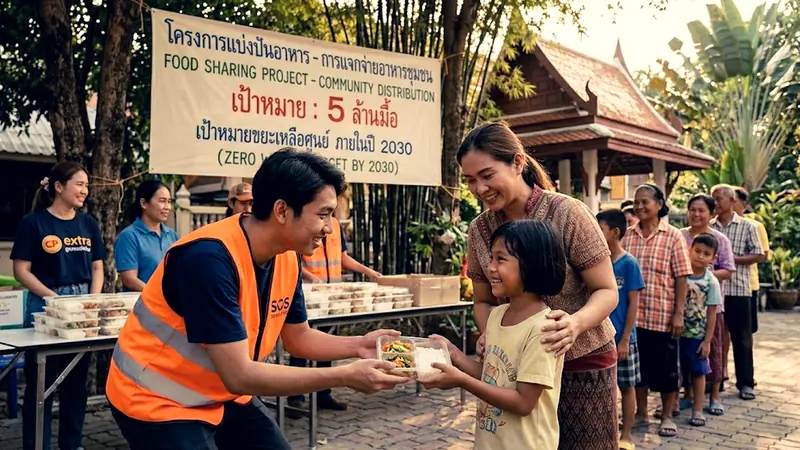
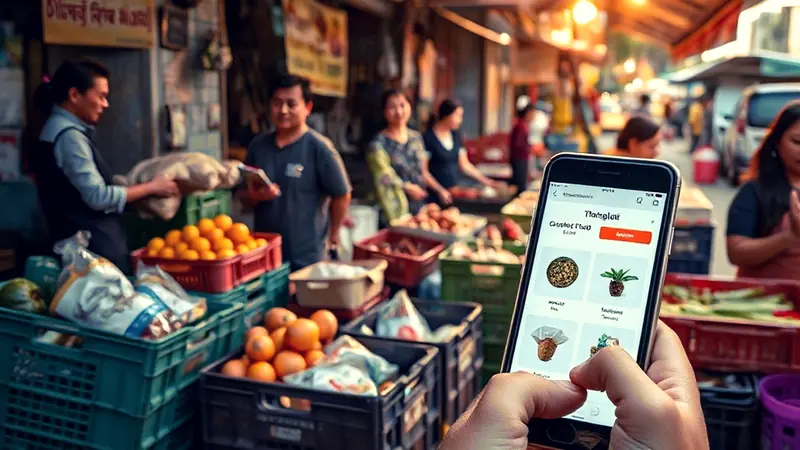
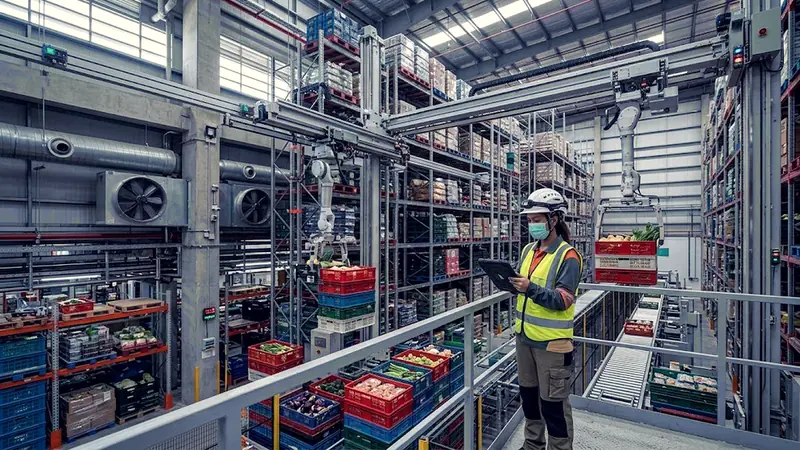
The entire operational architecture runs on a precise technological supply chain. The Line OA platform (Thai social messaging app used for community coordination) allows community leaders to monitor available stock in real time, optimizing every logistical movement managed by the SOS Foundation. Food safety is not left to chance: rapid-test kits developed by NSTDA (National Science and Technology Development Agency) certify the freshness of every ingredient before it reaches anyone's plate. The pilot program in the Phasi Charoen district has already served over 150 families.
The 2026 figures are unambiguous: 5 million meals to be delivered, with a declared economic value of 250 million baht. Behind the numbers sits a long-term strategic objective — "Zero Waste to Landfill" by 2030 — that elevates this initiative from a welfare operation to a full-scale industrial bet on sustainability. Thailand's Ministry of Social Development is on board. The machine is running.