Key Points
- State Medicine: Over 80% of Japanese doctors regularly prescribe Kampo remedies, covered by the national health insurance.
- Forest Science: Shinrin-yoku increases the activity of Natural Killer (NK) immune cells by up to 50%, with measurable effects on cortisol levels and blood pressure.
- Okinawa as a laboratory: The Hara Hachi Bu rule, practised on the island — which has one of the highest rates of centenarians in the world — dictates stopping at 80% fullness to slow down cellular ageing.
The Country That Decided Not to Get Sick
While the West continues to argue between aggressive pharmacology and wellness gurus on TikTok, Japan has already solved the problem for centuries. Not with a revolution, not with an app. With roots, mushrooms, hot water and the quiet discipline of those who know that the body is not to be fought — it is to be listened to. In 2026, with European healthcare systems still in chronic distress and waiting lists measured in years, it is worth examining what this nation has built at the intersection of millennia-old tradition and modern science. Spoiler: it is not mysticism. It is health policy.
Kampo: When Herbal Medicine Enters the Ward
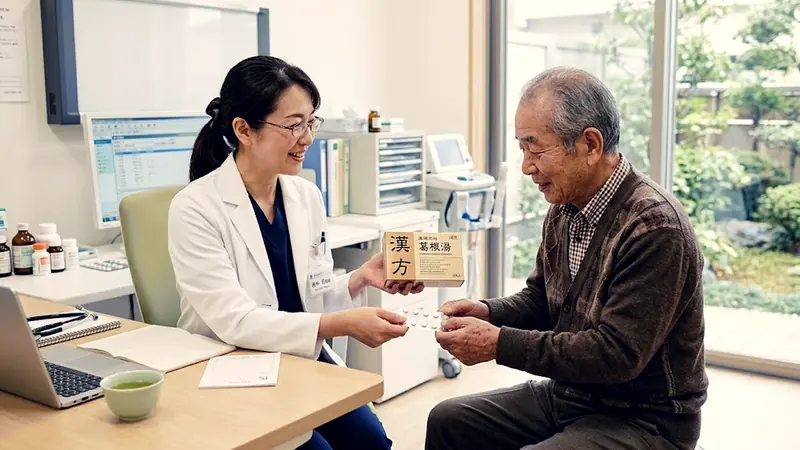
Let us start with the figure that would make any hospital consultant in Europe leap out of their chair: in Japan, over 80% of doctors regularly prescribe remedies from Kampo medicine, an herbal system evolved from ancient Chinese tradition and then radically reworked by Japanese culture over more than a thousand years. We are not talking about herbal teas bought at a farmers' market. We are talking about preparations based on herbs, roots and mushrooms that are reimbursed by the national health insurance, prescribed on a doctor's note and used alongside — not instead of — conventional drugs.
Kakkonto, made from Kudzu root, cinnamon, ginger and liquorice, is the remedy of choice for the very first symptoms of a cold: not when a high fever has already set in, but at the first shiver, the first stiffness in the neck. The mechanism is brutally pragmatic — it slightly raises body temperature to induce sweating and expel the pathogen before it takes hold. Hochuekkito, on the other hand, works deep within the digestive system to restore the so-called Ki, the vital energy, and is frequently prescribed in hospital wards for post-operative recovery. This is not folklore. It is protocol.
The Pantry Before the Medicine Cabinet
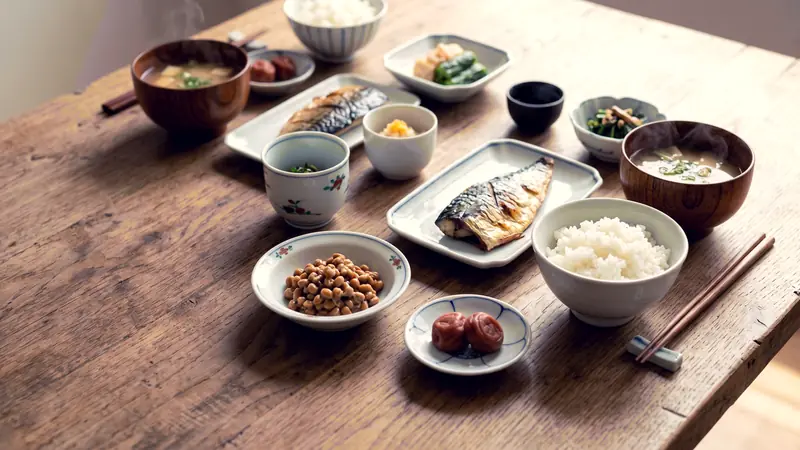
But Japan's true first line of defence does not wear a white coat. It wears an apron. When a Japanese person feels unwell, the first thing they open is the kitchen. Umeboshi — those plums fermented in salt and red shiso leaves, with their aggressive and polarising flavour — are a concentrate of citric acid that breaks down lactic acid in the muscles, combats nausea and, not incidentally, is the most effective traditional remedy against hangovers. "The samurai's aspirin," they call it. That is not an innocent nickname: it is a functional description.
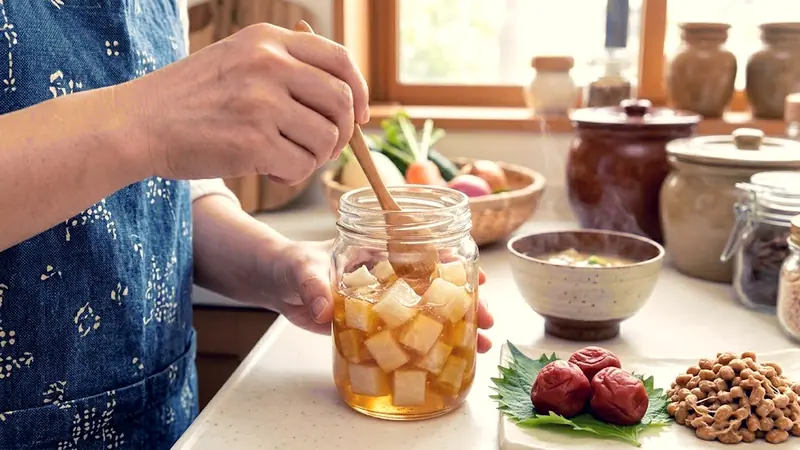
For coughs and sore throats, Hachimitsu Daikon is prepared instead: the giant white Asian radish is cut into cubes and left to macerate in honey for a few hours. The resulting liquid is a natural syrup dense with digestive enzymes and vitamin C, as effective as many over-the-counter syrups and without side effects. Even older is Kuzuyu, a warm drink made from the starch of the Kuzu root that forms a protective film over the stomach lining: grandmothers prepare it for children with digestive problems or at the first signs of a fever, with the same naturalness with which elsewhere one tears open a sachet of anti-inflammatory powder.
And then there is fermentation, which in Japan is not a gastronomic trend but a pillar of daily health. The Miso broth consumed every morning is a natural probiotic that builds and maintains the gut microbiome. Natto — those fermented soya beans with a sticky texture that divide the world into two camps — contains Nattokinase: an enzyme validated by clinical studies for its ability to thin the blood and protect the cardiovascular system. Eaten at breakfast, every day, for generations.
The Forest as a Medical Outpost, the Hot Springs as Therapy
Japanese wellbeing, however, does not end with what one ingests. It extends to the physical space in which one immerses oneself. Shinrin-yoku, literally "forest bathing", is not a romantic walk among the trees. It is a preventive medical practice codified in the 1980s by the Japanese Ministry of Agriculture in response to the epidemic of overwork-related stress. The science behind it is concrete: walking slowly through a forest and breathing in phytoncides — the antimicrobial essential oils emitted by trees such as Hinoki cypress to defend themselves against pathogens — lowers cortisol levels, reduces blood pressure and increases the activity of Natural Killer cells by up to 50%, the immune system's sentinels against viruses and tumour cells. Fifty percent. That is not a figure from Zen meditation: it is immunology.
On the thermal front, Japan's volcanic nature has transformed Onsen into genuine therapeutic facilities. Toji, the prolonged curative balneotherapy, harnesses sulphurous waters to treat eczema and dermatitis, and iron-rich waters to combat anaemia. At the domestic level, during the winter solstice, the tradition of Yuzuyu involves immersing oneself in a bath with dozens of whole Yuzu fruits: the essential oils from the peel dilate blood vessels, heal chapped skin and prevent chilblains. Ritual and pharmacology coinciding perfectly.
Discipline of the Body, Science of Longevity
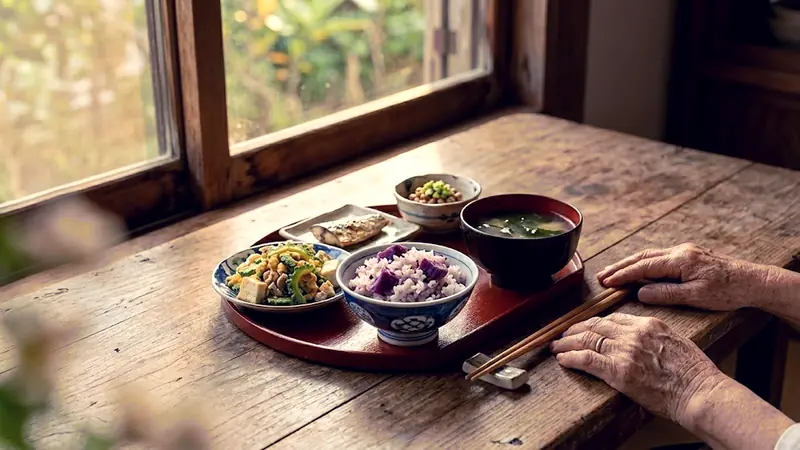
In Okinawa, the Japanese island with one of the highest rates of centenarians on the planet, the rule of Hara Hachi Bu has been observed for centuries: stop eating when the stomach is 80% full. A slight, constant caloric restriction that reduces oxidative stress, prevents gastro-oesophageal reflux and slows the molecular mechanisms of cellular ageing. No branded intermittent fasting, no supplements at 90 euros a month. Just the discipline of leaving one fifth of the plate.
The picture is completed by physical practices of deep-rooted simplicity: Okyu, or moxibustion, which burns small cones of dried mugwort on the skin to release muscular tension and relieve chronic joint pain through penetrating heat; and Kanpu Masatsu, the vigorous rubbing of the bare body with a rough, dry cotton towel, a traditional practice for stimulating peripheral circulation, the lymphatic system and the sympathetic nervous system before winter.
Japan has built an ecosystem in which prevention, nutrition, environment and the physical body integrate into a coherent and measurable system. With an average life expectancy that in 2026 remains among the highest in the world and a per capita pharmaceutical expenditure structurally lower than that of many Western countries, the numbers continue to prove it right.