
Key Takeaways
- Pilot program: Miami Beach launches the Quiet Zone Pilot Program, a one-year experimental noise-reduction zone in the South of Fifth neighborhood.
- Escalating violations: From 675 citations in 2025 to 513 citations in the first 75 days of 2026, with a pace projected to exceed 2,000 annual violations.
- Technology and enforcement: Aluminum signage at entry points, strengthened nighttime patrols, and a revision of Chapter 46 of the municipal code to speed up violation enforcement.
A quiet zone by city mandate
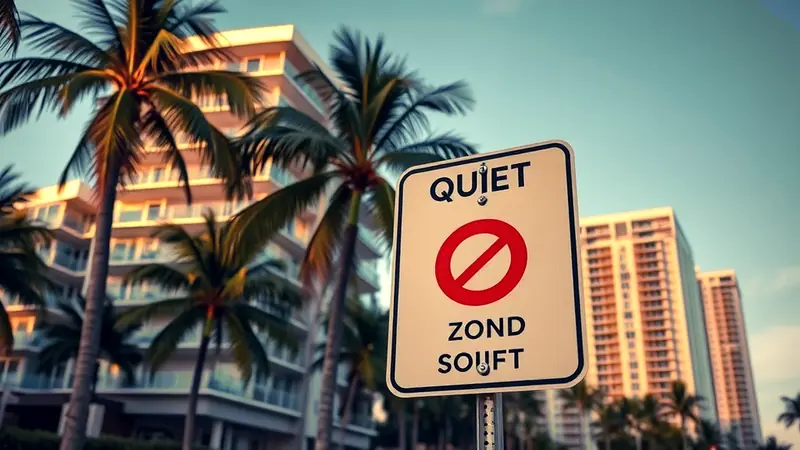
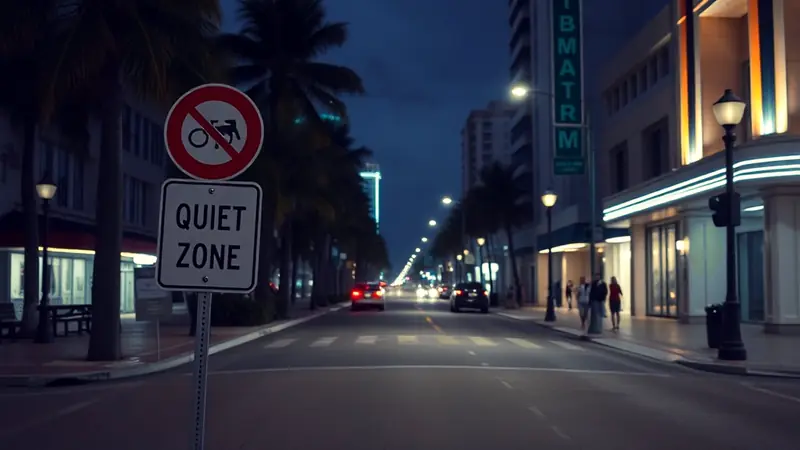
Miami Beach has activated the Quiet Zone Pilot Program in the South of Fifth neighborhood, a high-profile residential area where nighttime noise complaints had reached unsustainable levels. The year-long program introduces yellow aluminum signs at all main entry points, with direct messages to drivers: loud vehicles are not welcome, and violations carry penalties.
The measure targets four specific behaviors: repeated engine revving, modified exhaust systems, amplified sound systems, and any conduct that disrupts the nighttime quiet of residential areas. The initiative stems from a rapidly rising statistical trend.
The numbers behind the decision
In 2025, the Miami Beach Police Department issued roughly 675 citations for excessive vehicle noise. In the first 75 days of 2026, citations climbed to 513, a pace that would have pushed the annual total past 2,000 violations. The figures prompted the administration to step in with sharper enforcement tools than before.
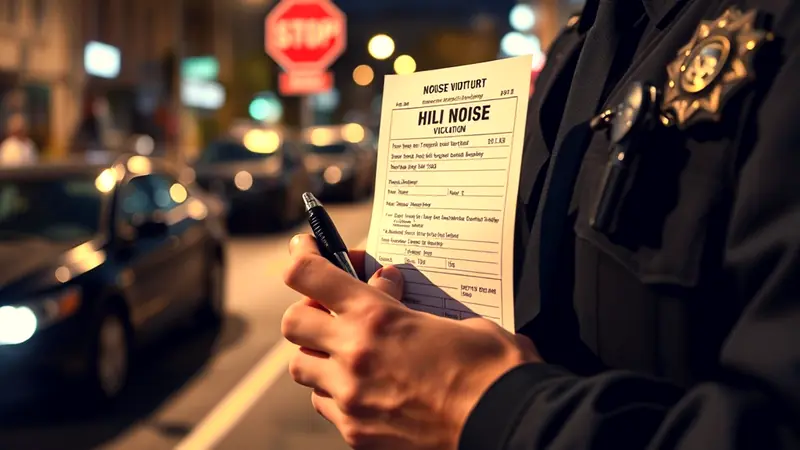
Evening and overnight patrols have been reinforced, with officers authorized to issue citations for violations observed directly on the scene. The city is also amending Chapter 46 of the municipal code, shortening the distance used to establish proof of violation, a technical adjustment designed to make nighttime enforcement more effective.
Officials speak out
Vice Mayor Laura Dominguez, who championed the measure, said the program targets those generating noise severe enough to become a disturbance for the entire neighborhood. Dominguez has worked with the police department on noise from motorcycles and modified mufflers, making the issue a city priority, including in its representation in Tallahassee.
Mayor Steven Meiner backed the initiative, stating that residents deserve to rest undisturbed. At the end of the trial period, authorities will review the collected data and neighborhood feedback before deciding on a possible expansion to other areas of the city.
A broader anti-noise strategy
The Quiet Zone Pilot Program is part of a wider plan launched in March 2026, when Dominguez had already flagged vehicle noise as an administrative priority. The city has also approved a pilot project using acoustic detection cameras, capable of distinguishing whether a sound comes from an audio system or a modified exhaust, while simultaneously photographing the vehicle's license plate.
Penalties for violations are structured in escalating tiers based on repeat offenses. At the end of the twelve-month trial, the city will decide whether to extend the South of Fifth model to other Miami Beach neighborhoods.