Key Takeaways
- Behavioral anomaly: The string "GRRR" appeared in Claude's (Anthropic) chain of thought while solving a combinatorics problem, reigniting the debate over model interpretability.
- Non-invasive neurotechnology: Meta unveiled Brain2Qwerty v2, a neural reading system using magnetoencephalography (MEG) with an average accuracy of 61% and peaks of 78% in text decoding.
- AI-generated reputational crises: Political deepfakes (Trump, the Macron-Thailand case) and disputed audiovisual productions (an Indian TV series, a Malaysian tourism ad pulled within 48 hours) point to an escalating pattern of image-related malfunctions tied to public use of generative AI.
The silent grumbling of an algorithm
It all starts with a screenshot posted on Reddit, the kind that usually gets lost in the daily flood of content. Not this time. A user extracted and shared portions of the so-called "chain of thought" from Claude, the model developed by Anthropic, as the system attempted to solve a particularly thorny combinatorics problem. Amid symbols, formulas, and technical reasoning, one fragment caught collective attention: the sequence "GRRR," written exactly as an exasperated human might scrawl it over an unsolvable crossword.
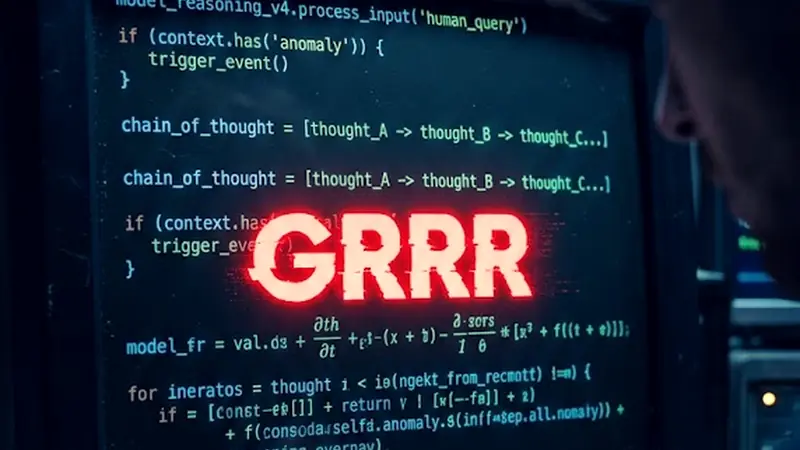
Anthropic has neither confirmed nor denied the authenticity of the content, leaving the matter suspended somewhere between technical curiosity and social media phenomenon. The real issue, though, isn't whether a machine "feels" frustration in any human sense. The issue is that the internal reasoning of these models is becoming increasingly opaque, a flow of computation that even developers can't fully decode. A "GRRR" could be a statistical echo of linguistic patterns, or a symptom of something more complex. The scientific community remains split, the public is entertained, and interpretability researchers keep asking what's really happening inside that black box.

Fake faces, real damage: a week of political deepfakes
On July 2, U.S. President Donald Trump posted a 90-second AI-generated video on Truth Social depicting him as "Dr. Trump," a doctor figure proposing a cure for the fictitious "Trump Derangement Syndrome." The clip featured deepfakes of well-known faces, including Whoopi Goldberg and Robert De Niro, shown admitting supposed "mistakes" regarding the president. The content spread rapidly, further fueling the debate over the use of facial synthesis in political contexts.
Days later, another manipulated image made headlines: a photograph showing French President Emmanuel Macron kneeling before the King of Thailand, circulated to coincide with the monarch's state visit to Paris. Thailand's Ministry of Foreign Affairs had to step in officially to deny the image's authenticity, calling it a fabrication built with generative tools. Two separate incidents, both confirming how visual manipulation is becoming a structural risk for institutional communication.
Meta and mind-reading without a scalpel
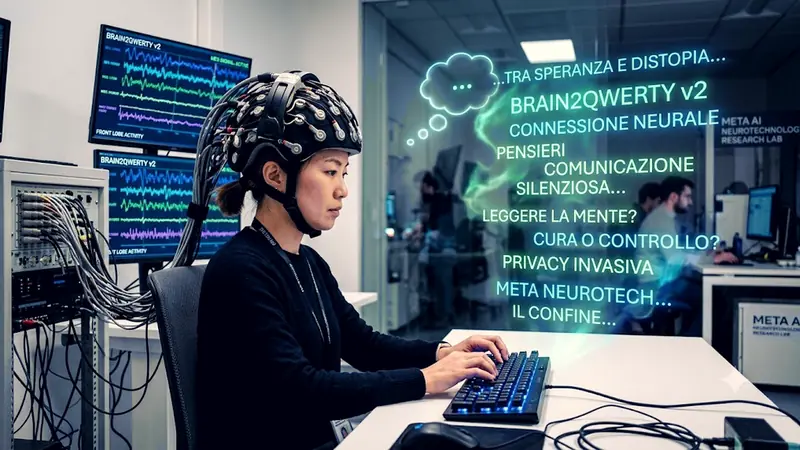
On the applied research front, Meta unveiled Brain2Qwerty v2, a system capable of decoding brain activity and turning it directly into written text, with no surgical implant required. The technology relies on magnetoencephalography (MEG), a technique that detects neural signals while a subject types on a keyboard. Results show an average accuracy of 61% on words produced, with peaks of 78% recorded among top-performing participants.
The announcement drew polarized reactions. On one hand, there's a tangible application for patients with locked-in syndrome or neurodegenerative conditions, groups for whom even partial communication would mark a radical change. On the other, concern is mounting over the very notion that an algorithm could intercept thoughts before they're voluntarily verbalized or typed. The gap between clinical application and dystopian scenario, in this case, comes down entirely to control and regulation, issues still largely unresolved.

When AI backfires on itself: culture and tourism under fire
Not every story this week involves existential threats: some are simply communication disasters. In India, television producer Ekta Kapoor found herself at the center of a social media storm over a scene from "Kyunki Saas Bhi Kabhi Bahu Thi," featuring an AI-generated depiction of the god Krishna that viewers deemed technically shoddy and culturally out of place. The sequence, set in a prison, triggered a wave of memes and tongue-in-cheek calls for the producer to "cancel her AI subscription."
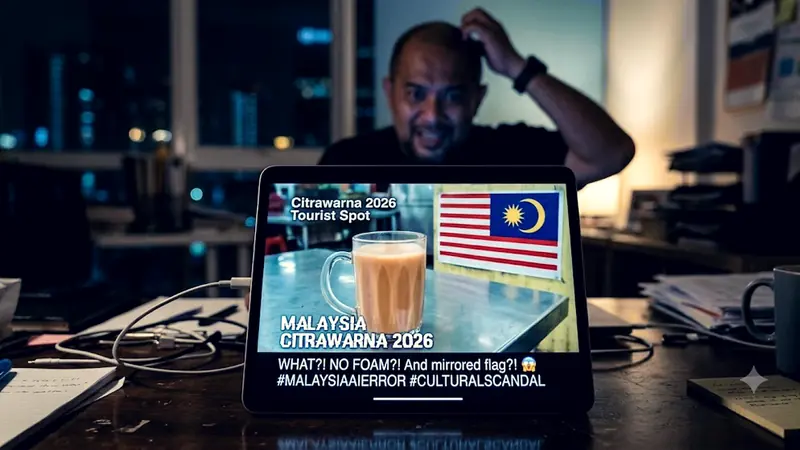
In Malaysia, meanwhile, the national tourism board came under fire over a promotional video for the Citrawarna 2026 festival, produced entirely with generative tools. The clip contained glaring cultural errors, including an inaccurate depiction of teh tarik (missing its signature foam) and a national flag rendered mirror-reversed. Actor and comedian Harith Iskander summed up the collective frustration, noting that the problem wasn't just the technical error, but the conscious decision to approve that content over the work of local creatives. The ad was pulled after just two days online.
Between algorithmic outbursts, falsified faces, and cultural productions spiraling out of control, the picture that emerges is one of a technology advancing rapidly on the technical front, while its relationship with institutions, the public, and the creative industry remains unstable ground, littered with errors, controversy, and unpredictable reactions.