Key Takeaways
- Full algorithmic governance: a Chinese startup is designing a city where AI autonomously manages public safety, energy distribution, predictive maintenance, and real-time urban planning — not just traffic lights and sensors.
- Technical architecture: the system runs on a digital twin (a virtual real-time replica) of the city, fed by millions of IoT sensors, computer-vision cameras, and drones, all coordinated by a centralized "urban brain."
- Strategic goal: the project fits into China's plan for global AI leadership by 2030, with ambitions to export the model as a turnkey urban operating system.
A City That Decides for Itself
A Chinese startup, whose identity was revealed exclusively by the international outlet Rest of World, has stopped dreaming up smart neighborhoods and started designing something far more radical: an actual city, inhabited by real people, governed by an artificial intelligence that decides. Not manages. Not assists. Not suggests. Decides. Public safety, power distribution, infrastructure maintenance, real-time urban planning — all of it falls under a system that learns and adapts without needing human sign-off at every step.
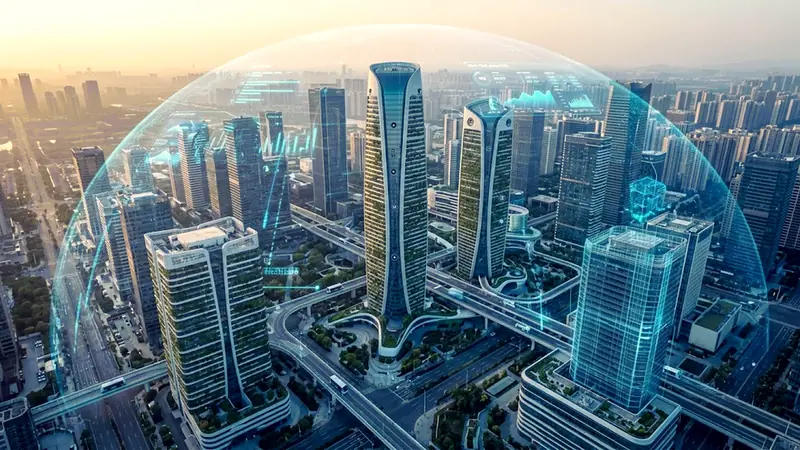
The gap between this and the smart cities we already know is stark. In Songdo, South Korea, or Masdar, in the United Arab Emirates, automation coexists with human oversight: algorithms propose, people confirm. Here, the model flips. The urban ecosystem this startup envisions is built to anticipate residents' needs before they're even expressed — mobility routes optimized instant by instant, household energy use adjusted to demand spikes, public safety responses triggered by algorithmic forecasts before a critical event even happens.
The City's Nervous System
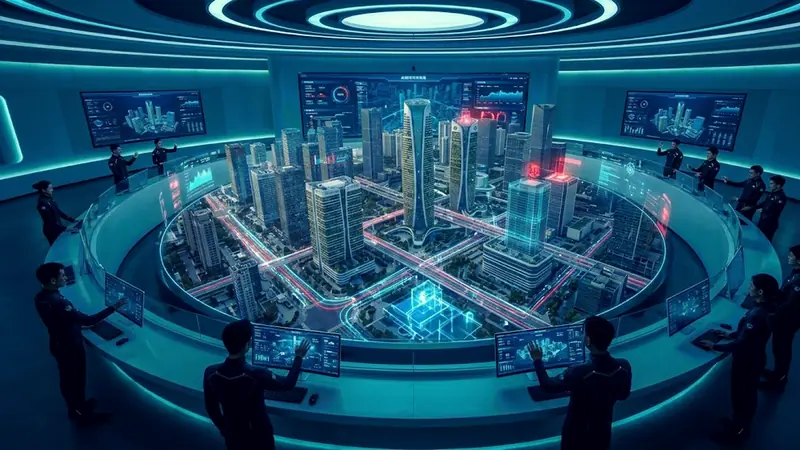
Behind the promise lies an infrastructure built on millions of IoT sensors (internet-connected devices), computer-vision cameras, surveillance and monitoring drones, and a centralized cloud architecture processing data continuously. At the heart of the project is a digital twin of the entire city — a virtual replica receiving every piece of physical data in real time and feeding back simulations, forecasts, and automatic corrections.
Running on this platform are deep learning models (AI trained on massive datasets) engineered to optimize every possible urban flow, from vehicle traffic to water distribution, from waste sorting to emergency medical response. What truly sets this project apart from previous attempts is the existence of a single decision-making system — an "urban brain" coordinating every function simultaneously, overcoming the fragmentation still typical of most smart cities, where mobility, energy, and security operate on separate tracks that rarely talk to each other.
A Lab, But Not the First
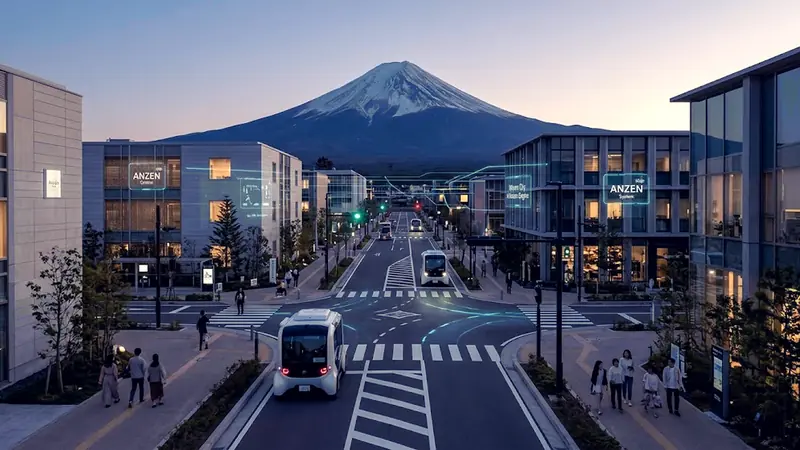
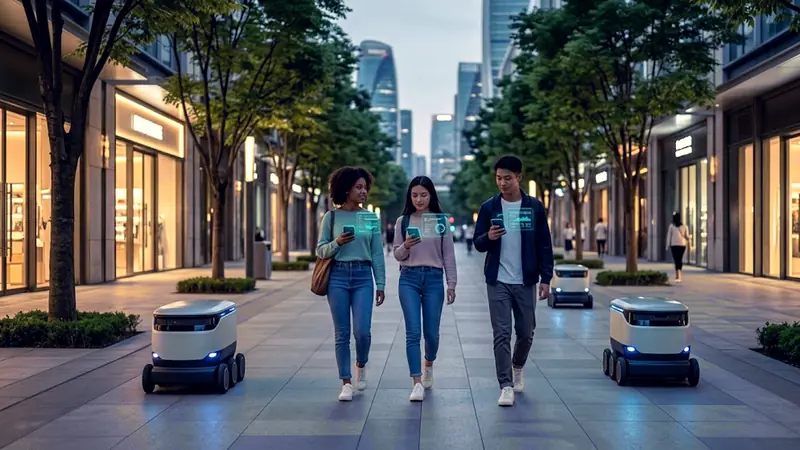
The concept closely echoes Woven City, Toyota's project at the foot of Mount Fuji dedicated to robotics, autonomous driving, and AI experimentation. The key difference is scale: Woven City remains a controlled lab with a limited number of hand-picked residents, while the Chinese project targets an actual population, not an experimental sample. NEOM, with its The Line component in Saudi Arabia, shares the same ambition of full algorithmic control over urban life, but has run into implementation complexities and delays that a centralized state framework like China's could partly sidestep, drawing on expertise already built through the active digital twins in Shanghai and the vertical trials underway in Shenzhen.
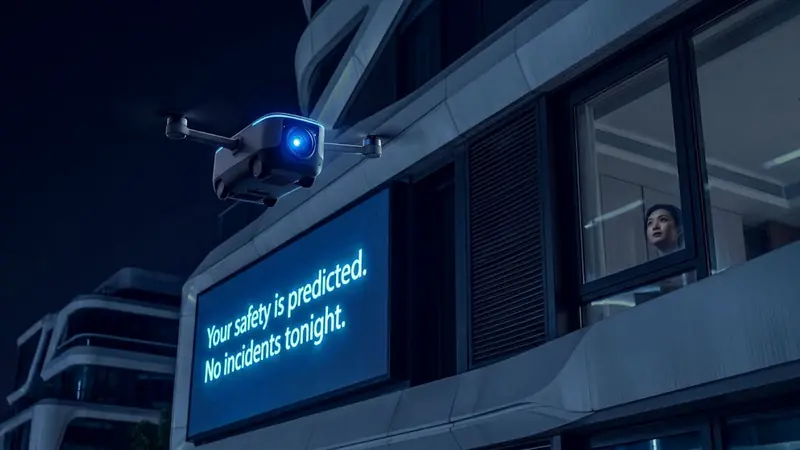
The city's exact location and construction timeline remain undisclosed. But the timing isn't accidental: the Chinese government has set 2030 as its target for becoming the world leader in artificial intelligence, and next-generation cities are the testing ground for technologies potentially destined for replication elsewhere.
Efficiency Versus Opacity
Supporters of the project point to concrete benefits: eliminating human error in service management, cutting energy waste, seamless mobility without traffic lights thanks to direct vehicle-infrastructure communication, and near-instant response capacity to earthquakes, floods, and other disasters. Continuous monitoring would enable predictive maintenance capable of extending infrastructure lifespan before failures occur — a city that repairs itself, optimizes itself, theoretically exportable to fast-urbanizing regions such as Southeast Asia or Sub-Saharan Africa.
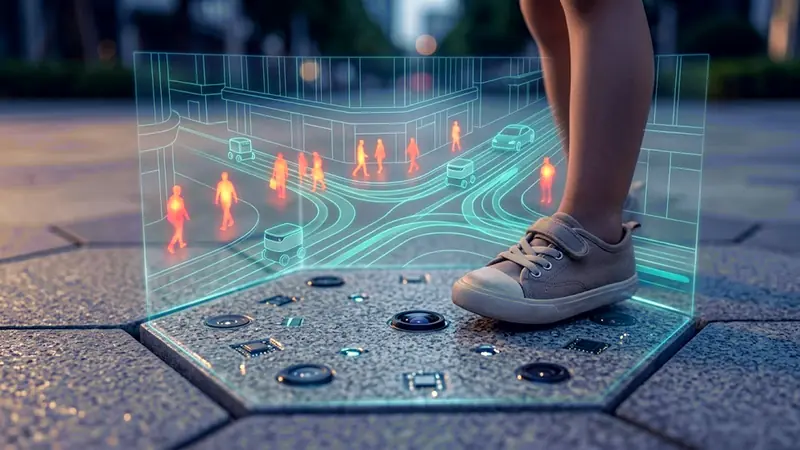
But the concerns are just as substantial. Who defines the algorithm's objectives? Based on what priorities? The risk of bias amplifying social inequalities is real, already documented in other predictive systems applied to credit and justice. In a context where social credit scoring (a system ranking citizens by trustworthiness) is already operational and public surveillance is pervasive, a city entirely run by AI risks becoming yet another layer of granular control over citizen behavior. The startup, for its part, insists participation in the project is entirely voluntary.
What Remains to Be Seen
Controversies aside, the experiment is positioned to become a global case study for urban planning in the decades ahead. If the model proves technically and socially sustainable, it could offer an exportable paradigm for rapidly growing markets, delivering a ready-to-use urban operating system. Most project details remain confidential, but the announcement has already ignited a debate stretching well beyond urban engineering, touching on ethics, governance, and individual rights. The world is watching, aware that this experiment could foreshadow the face of future cities — for better or worse.