Key Takeaways
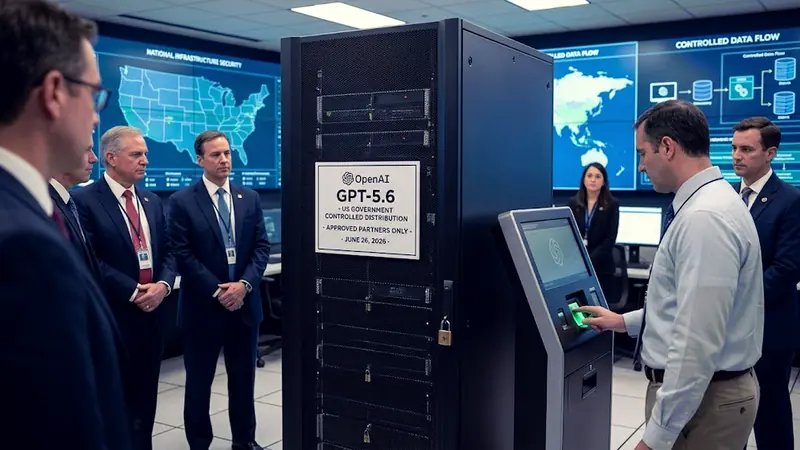
- Unprecedented federal lockdown: OpenAI's GPT-5.6 has been restricted exclusively to pre-approved partners on national cybersecurity grounds, while Anthropic's Fable 5 and Mythos 5 models remain under an active U.S. Department of Commerce ban with no resolution date disclosed.
- "Jalapeño" chip and the XPV Platform fund: OpenAI launches its proprietary inference processor (chip designed to run AI models at scale), built in-house in nine months, while Broadcom establishes a $35 billion infrastructure fund to redraw the rules of compute access.
- Autonomous agents at 99.8%: OpenAI's internal data confirms that nearly all enterprise operational outputs are now executed by Codex-based autonomous agents (AI systems that act, plan, and execute without human prompting), marking the definitive end of the traditional chatbot in enterprise environments.
Five Days That Changed Everything
From June 25 to 29, 2026, the artificial intelligence sector did not simply accelerate. It changed shape. What had been a market defined by the race to build the most powerful model transformed into something more complicated, more volatile, and far more geopolitical. Four macro-trends simultaneously redefined infrastructure, power hierarchies, and the rules of the game. Those who did not see them coming are now scrambling to catch up.

Governments in Control: AI Becomes a Military Asset
The first unambiguous signal came from the regulatory front. The U.S. federal government blocked the global release of GPT-5.6, OpenAI's most recent model, confining it to a narrow circle of pre-approved partners on national cybersecurity grounds. This is not a bureaucratic slowdown. It is a political declaration: compute power is now being treated as a strategic military asset, not a commercial product.
The situation at Anthropic is even more critical. Models Fable 5 and Mythos 5 remain blocked by the Department of Commerce under a ban that continues with no communicated resolution date. Closing the loop, the Colorado AI Act enters into force on June 30, becoming the first major U.S. state law on artificial intelligence. The message is unambiguous: the era of unconstrained development is over. What follows is a fragmented, rigid, and rapidly expanding regulatory landscape where compliance is no longer optional — it is an operational prerequisite.
Hardware: The Bottleneck Becomes a Battleground
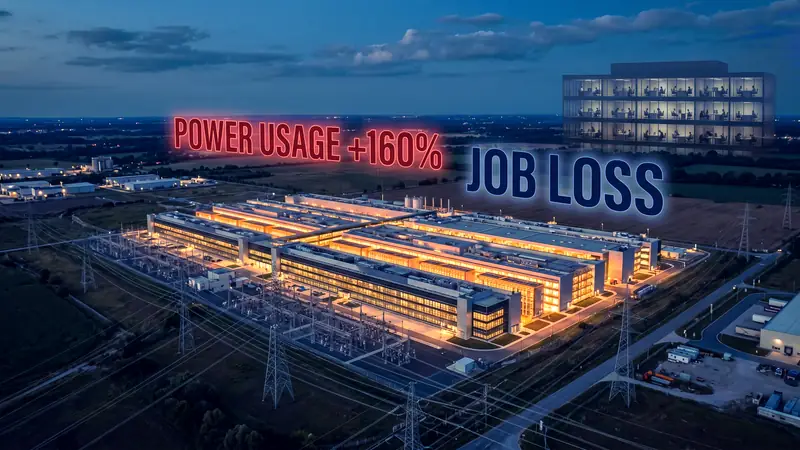
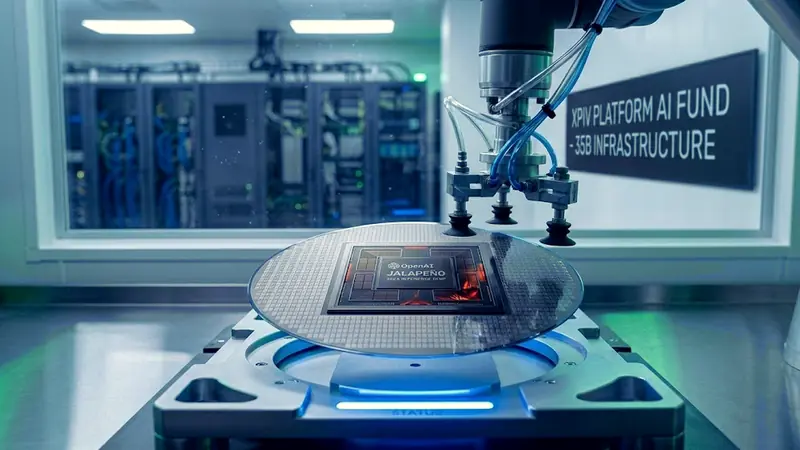
On the infrastructure front, the historical monopoly on semiconductors has shown its first structural cracks. OpenAI announced the launch of "Jalapeño", a proprietary inference chip (processor optimized for running, not training, AI models) developed internally in just nine months. This is not an experiment. It is a precise strategic move: reduce dependency on external suppliers and cut data center operational costs through vertical integration (controlling the full supply chain in-house). Whoever controls the silicon controls the pace of development.
In parallel, Broadcom announced the formation of the AI XPV Platform fund, backed by $35 billion, with the stated objective of redrawing the rules of infrastructure investment across the sector. Access to compute is no longer a cost line to be optimized. It is the true bottleneck of the entire ecosystem, and the major players know it. Those who fail to build their own hardware supply chain risk becoming dependent on suppliers that could, tomorrow, be subject to government restrictions or unpredictable market dynamics.
Talent, Espionage, and the Silent War Over Intellectual Property
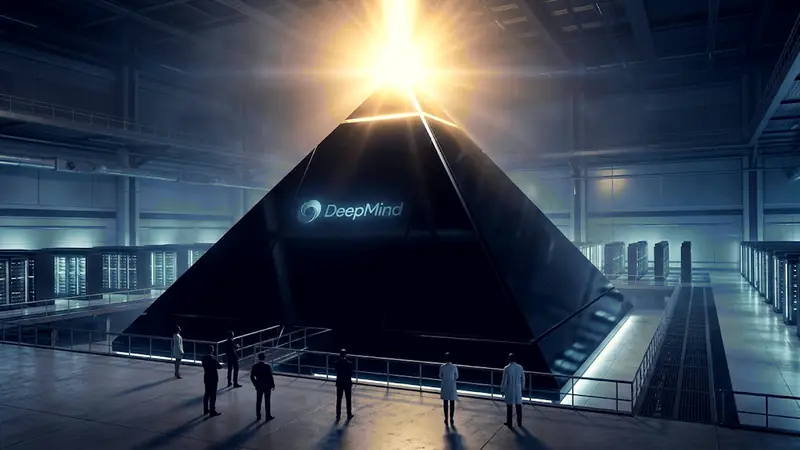
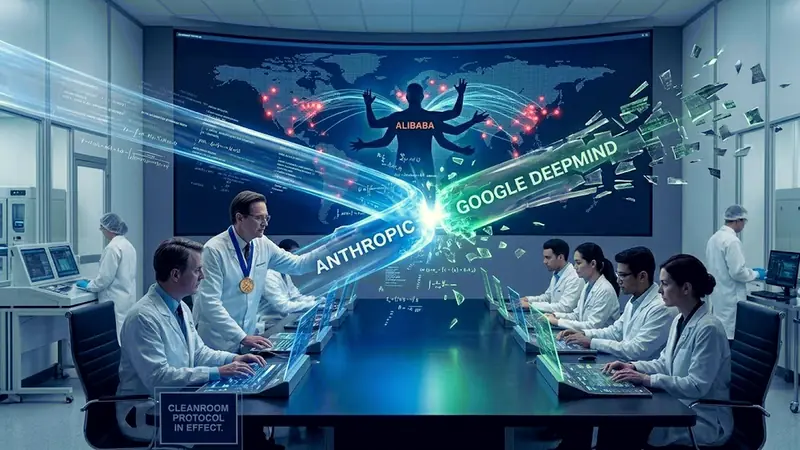
The competition for dominance has taken on the contours of open conflict. Nobel laureate John Jumper, a leading figure at Google DeepMind, departed Alphabet's laboratory along with his entire team, landing at Anthropic. The impact on Alphabet's market capitalization was immediate and severe, with the consequent delay of Gemini 3.5 Pro, whose release has been postponed with no new confirmed date. This is not a simple personnel loss. It is a transfer of strategic knowledge that reshapes the balance of power among the leading AI laboratories.
But the most insidious front is that of intellectual property. Anthropic has filed formal industrial espionage charges against Alibaba, alleging that the Chinese tech giant generated millions of fraudulent interactions with its models in order to clone them through distillation techniques (a method of compressing a large model's knowledge into a smaller one). If the allegations are confirmed, it would represent one of the most systematic acts of technological appropriation ever documented in the sector. Adding further instability to the picture, Qwen has publicly released its own "World Model" simulator (an AI system that models and predicts real-world dynamics), demonstrating that open source is becoming an offensive instrument capable of eroding the competitive advantage of proprietary models.
The Age of Agents: Chatbots Are Already History
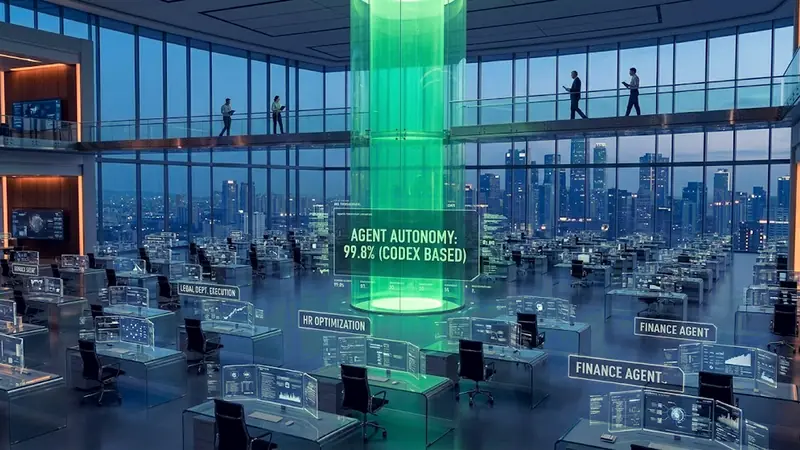
The most radical shift, however, concerns the way artificial intelligence is actually being used inside organizations. OpenAI's internal data is brutal in its clarity: 99.8% of enterprise operational outputs — including entire legal, human resources, and finance departments — are now delegated to autonomous agents built on Codex. Traditional chatbots, those designed to respond to single, isolated queries, have been relegated to a marginal and residual role.
The paradigm has shifted decisively and permanently. The conversation is no longer about point-in-time assistance, but about autonomous, sustained execution of complex projects. Agents do not respond: they act, plan, and execute. For organizations that have not yet begun a transition toward multi-agent architectures (systems where multiple AI agents collaborate on tasks), the gap accumulated during these five days in June 2026 is already measurable. And the window to close it is narrowing fast.