Key Takeaways
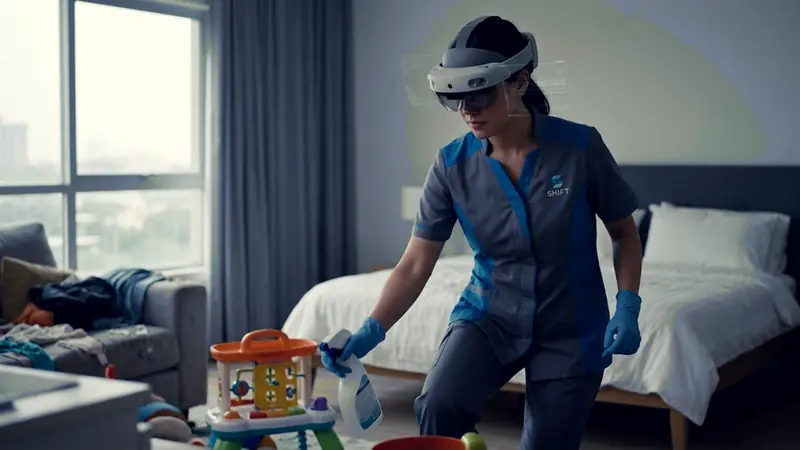
- The zero-cost model: Shift provides fully free professional home cleaning services in exchange for complete video recording of every operation carried out inside the home.
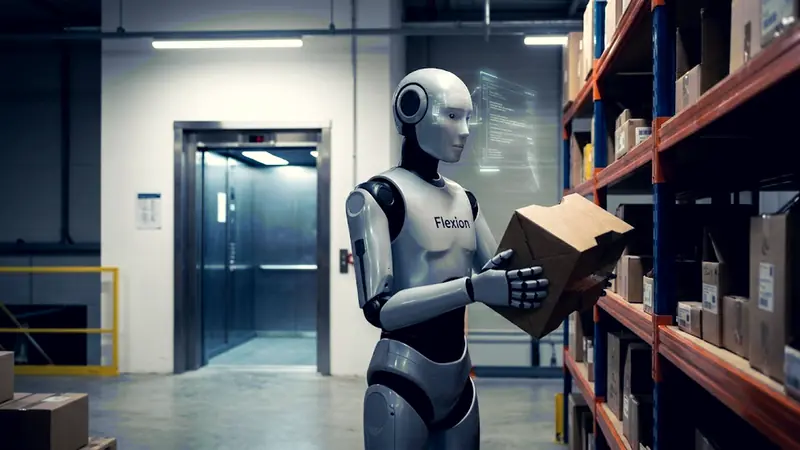
- Technology at the core: Operators wear hi-tech headsets with first-person cameras; the footage feeds training systems for humanoid robots, directly targeting the so-called Embodiment Bottleneck (the gap between virtual training and real-world physical performance).
- Aggressive expansion: Shift, born from German lab microAGI, already counts thousands of operators worldwide and is pushing the model into plumbing, moving, and home repairs.
Your Home as a Laboratory: Shift Arrives, and Cleans for Free
You walk through the door after a day that has drained you dry. The floors gleam. The stovetop is degreased. The laundry is folded with near-obsessive precision. The chaos you left behind that morning is gone. The bill? Zero. No subscription, no invoice surprises. Just one condition: everything that happened within those four walls was filmed, frame by frame, by a camera mounted on the head of the person who cleaned in your place.
Welcome to the operational model of Shift, the startup that in 2026 is redrawing the boundaries between domestic service, data collection, and artificial intelligence. This is not a conventional cleaning company. Shift describes itself as a "physical data refinery," and the definition is surgically accurate. The company was built as the consumer arm of microAGI, a German research lab specializing in AI training data, and its core product is not a polished floor — it is the terabytes of human dexterity data that each cleaning session generates.
The Bottleneck Stalling the Age of Robots
To understand why anyone would pay to have your home cleaned for free, you need to understand where the global race toward embodied artificial intelligence has hit a wall. Over the past two decades, major tech labs have consumed virtually all the text and images available on the internet. Language models have become extraordinarily capable. But building a robot that can move, manipulate objects, and adapt to the physical disorder of a real domestic environment is a radically different problem.
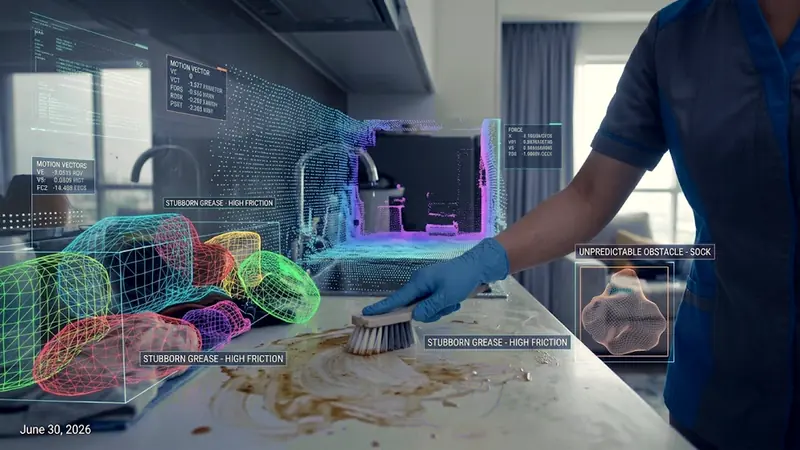
Experts call it the Embodiment Bottleneck (the inability of robots trained in controlled settings to handle real-world physical chaos). A robot trained exclusively in virtual environments or controlled labs will effectively short-circuit when it encounters a sock abandoned on a rug, a chair pushed sideways, or the exact pressure required to remove a stain without scratching a surface. Simulations do not replicate chaos. Neural networks need to watch real human beings navigating real physical disorder. That is precisely what Shift sells to its industrial clients.
Headsets, Motion, and the Invisible Mine of the Everyday
The operational mechanism is simple in its brutality. When a Shift operator crosses the threshold of an apartment, they wear a hi-tech headset equipped with cameras that record in first person every single gesture: the arc of an arm scrubbing a sink, the pressure applied to a surface, the logical sequence used to reorganize a refrigerator, the spatial awareness required to navigate between furniture. Every movement becomes raw data. Every piece of raw data becomes fuel for the next generation of robotic training systems.

The commercial value of this category of information on the open market is high enough to fully cover the cost of labor. Shift gives nothing away: it transforms your apartment into a data acquisition set and offers the cleaning as compensation for the use of your space. It is a barter. Except one of the two parties often does not fully grasp what they are handing over.
Privacy, Promises, and the Risk of De-Anonymization
The company does not ignore the issue. Before footage is archived or licensed to third parties, advanced software automatically blurs faces, visible documents, smartphone screens, and any potentially identifiable detail. Shift also guarantees that recordings will never be sold for advertising purposes. These are formal commitments, put in writing.

But security experts and digital rights advocates are not satisfied with contractual assurances. The objections are concrete: those cameras do not only capture movement. They map floor plans (detailed layouts of private living spaces), document physical vulnerabilities of environments, and record objects, habits, and details that no blurring software can intercept with absolute precision at all times. In a sector expanding at speed and lacking binding global regulation, the risk of misuse or accidental de-anonymization (re-identification of individuals from supposedly anonymous data) remains an open variable.
Pragmatism Wins. For Now.
Despite the controversy, public response has been unambiguous. Across the United States, bookings are consistently sold out. Shift, backed by thousands of operators already active across multiple countries, plans to extend the model beyond cleaning: plumbing, moving, home repairs. Any qualified physical activity that generates motion data useful for training autonomous systems is a potential new front.
For twenty years, we surrendered browsing data, preferences, social connections, and digital consumption habits in exchange for free web services. That deal shaped an entire economy. Today, the same logic is migrating into the physical dimension. Our domestic disorder, our most mundane and private daily routines, have become the essential raw material financing the era of embodied artificial intelligence. The question Shift poses — without ever stating it explicitly — is a single one: if it means never scrubbing a floor again, are you willing to put the secrets of your home up for sale?