
Key Takeaways
- Fiscal advantage: A vehicle with a positive eco-score qualifies for a substantial reduction on the company car benefit-in-kind, translating into a meaningful monthly saving per fleet vehicle.
- Audi Q6 e-tron: The first and only premium SUV in its category to achieve a positive eco-score under ADEME criteria, thanks to European-made batteries and assembly in Ingolstadt.
- BMW iX3 penalised: A WLTP range exceeding 800 km, achieved through larger battery packs, dragged down the model's environmental score and shut it out of France's fiscal incentives.
How the eco-score mechanism works
Since 2025, France has folded the eco-score into the calculation of the benefit-in-kind applied to company cars used privately. The score assesses a vehicle's overall environmental footprint, from battery production through to transport logistics, rather than focusing solely on tailpipe emissions.
A vehicle rated positively under ADEME's criteria receives a significant cut to its taxable benefit-in-kind. The gap between choosing a favourably scored model and a penalised one adds up to a considerable annual difference for a business running a single vehicle. In the premium segment, where corporate fleets account for a large share of registrations, the effect showed up in order books almost immediately.
Audi gets ahead of BMW on regulatory ground
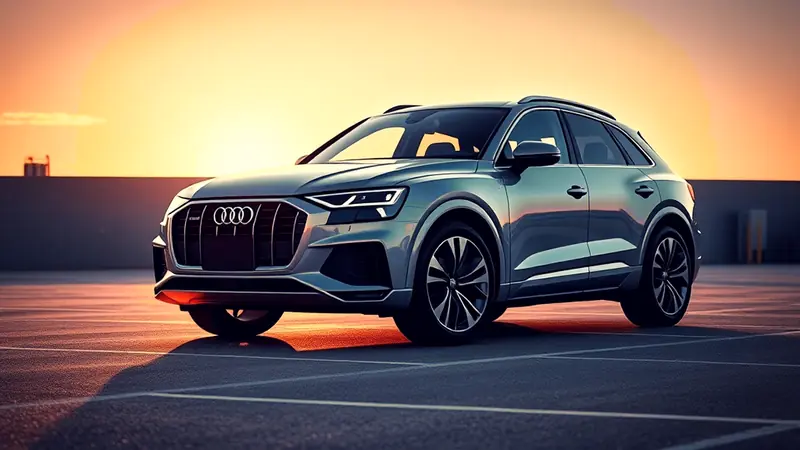
Audi's Q6 e-tron is currently the only premium SUV in its class to clear the threshold set by ADEME. The result stems from a deliberate reorganisation of production: batteries manufactured in Europe, assembly concentrated in Ingolstadt, and carbon-neutral production sites. For the French market, Audi engineered specific variants of the model, calibrated to optimise its environmental score.
BMW's iX3 fell short of the same outcome. The technical decision to push for a WLTP range beyond 800 km required larger battery packs, and the environmental impact of producing them dragged down the vehicle's overall score. A specification built around range translated directly into a fiscal disadvantage on the French market.
German manufacturers respond
The loss of competitiveness in France's premium segment has pushed BMW, Mercedes and other manufacturers to rethink their product strategies. Localising production and cutting the carbon footprint of individual models have become design variables in their own right, no longer just talking points.
The German tax framework
In Germany, company car taxation follows a different path. For 2026, the reduced rate of 0.25% of the list price for electric vehicles below a set price threshold remains confirmed, while plug-in hybrids stay at 0.5%. Petrol and diesel vehicles continue to be taxed according to engine size and CO₂ emissions under a tiered system.
Electric vehicles registered up to 2030 remain exempt from the Kfz-Steuer until 2035. The SPD has proposed raising taxation on combustion vehicles based on emissions, a sign that Berlin, too, sees fiscal policy as a tool for steering fleet decisions.
Outlook
Competition among Germany's premium manufacturers is shifting onto new ground: carbon footprint and supply chain localisation are becoming as decisive as performance figures. How each manufacturer responds to these criteria will shape market share across upcoming product cycles.