Key Takeaways
- Installed capacity: The He Dreiht offshore wind farm, located 110 km off Heligoland, reaches 960 megawatts with 64 turbines and a total investment of 2.4 billion euros.
- Technology deployed: Vestas V236-15MW turbines with 236-meter rotor diameters, mounted on 1,350-tonne monopile foundations driven to a depth of 40 meters.
- Financing model: EnBW's project receives no state subsidies and is sustained through long-term power purchase agreements with Google, Amazon, and BASF.
First Power Delivered to the Grid
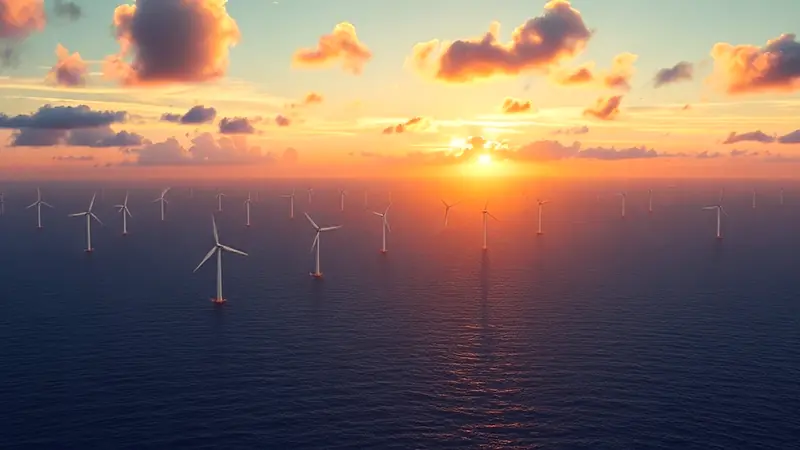
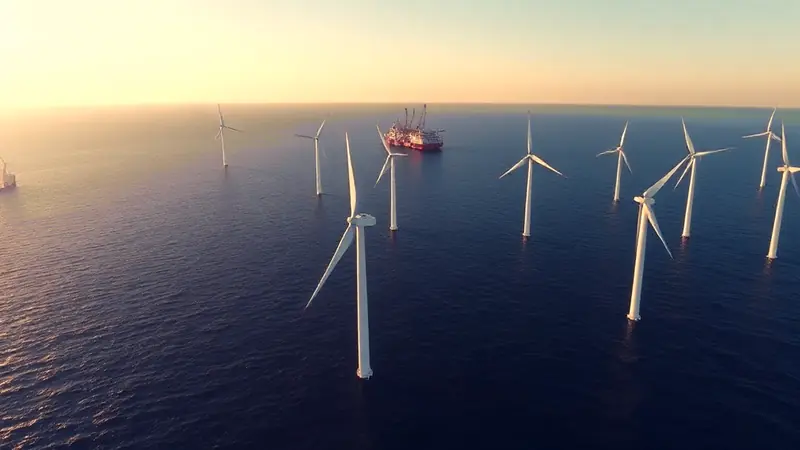
110 kilometers west of Heligoland, in the North Sea, the He Dreiht offshore wind farm began feeding electricity into the German grid in November 2025, following the startup of the first of 64 planned turbines. The project, developed by EnBW alongside a consortium holding a 49.9% stake made up of Allianz Capital Partners, AIP Management, and Norges Bank Investment Management, is targeting full operational status by summer 2026. The installed capacity of 960 megawatts is sized to cover the annual consumption of roughly 1.1 million households.
The Scale of the Installation
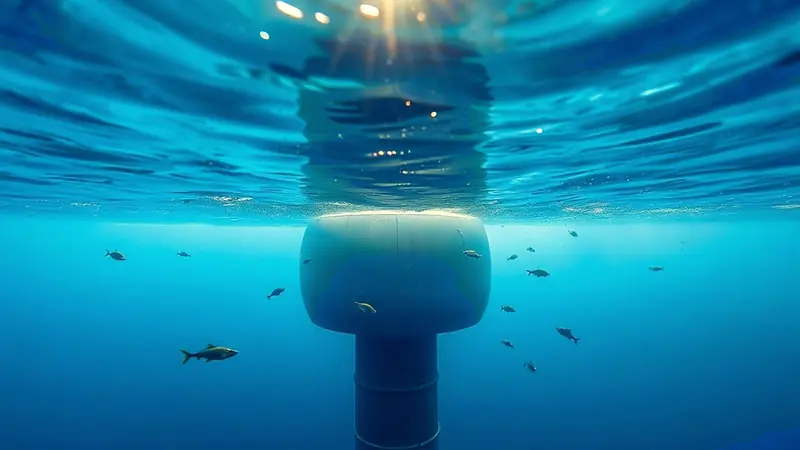
The 64 turbines installed are Vestas V236-15MW models, each rated at 15 megawatts. The rotor spans 236 meters in diameter, sweeping an area of 43,742 square meters with every rotation. The blades measure 115.5 meters, and hub height reaches 142 meters. The foundations are steel monopiles measuring 70 meters in length and weighing 1,350 tonnes, driven into the seabed at a depth of 40 meters using the floating crane vessel Thialf.
A Project Without Subsidies
He Dreiht was awarded in 2017 through a zero-bid auction and receives no direct state support. Output is underpinned by a network of long-term power purchase agreements: Google for 100 MW, BASF for 186 MW, Amazon for 350 MW, along with Covestro, the REWE group, and Deutsche Bahn. This contractual structure places the entire output outside the scope of public subsidies.
Grid Connection
The power generated is routed to the BorWin epsilon offshore platform, operated by TenneT, where alternating current is converted to direct current. Transmission runs through a 110-kilometer subsea cable to the coast, followed by an onshore section leading to the Garrel converter station near Cloppenburg.
The German Sector Landscape
At the start of 2026, Germany had approximately 9.7 gigawatts of installed offshore wind capacity, against a government target of 30 GW by 2030 and 70 GW by 2045. In 2025, only 0.5 GW of additional capacity was connected to the grid. He Dreiht joins Ørsted's 913 MW Borkum Riffgrund 3 wind farm, also nearing completion during 2026. Already under development are Vattenfall's Nordlicht cluster, with over 1.6 GW planned for 2028, and RWE's Nordseecluster, comprising 104 turbines of 15 MW each with commercial operation expected between 2027 and 2029.
Challenges in the Auction System
Germany's offshore wind auction in August 2025 received no bids at all, signaling risks tied to grid connection delays and competition among projects. The government of Friedrich Merz has launched a reform of the auction mechanism, introducing Contracts for Difference aimed at providing greater certainty to investors in upcoming tenders.
Peter Heydecker, a member of EnBW's executive board, described the start of production as "a significant milestone" for the company. Full commissioning of all 64 turbines, expected during the summer of 2026, remains the first real test of whether the pace of Germany's offshore wind expansion can align with the targets set for 2030.