Key Takeaways
- Investment: Chinese investments in Morocco's automotive sector have surpassed $6 billion since 2020.
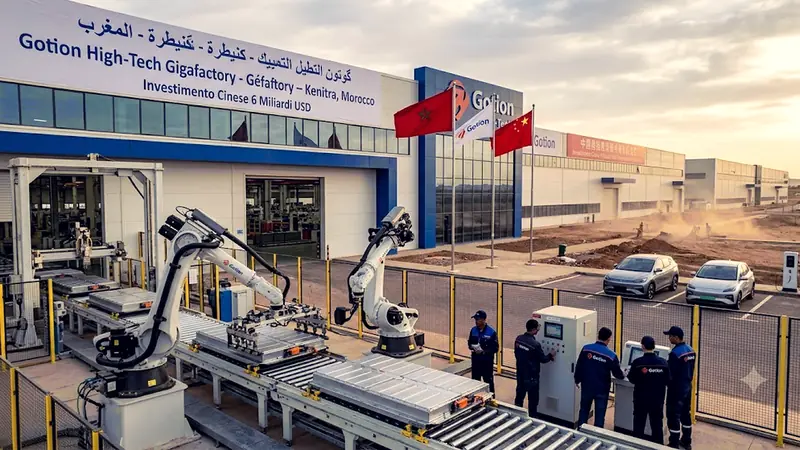
- Technology: Gotion High-Tech's battery gigafactory in Kenitra, valued at $1.3 billion, is expandable up to $6.5 billion.
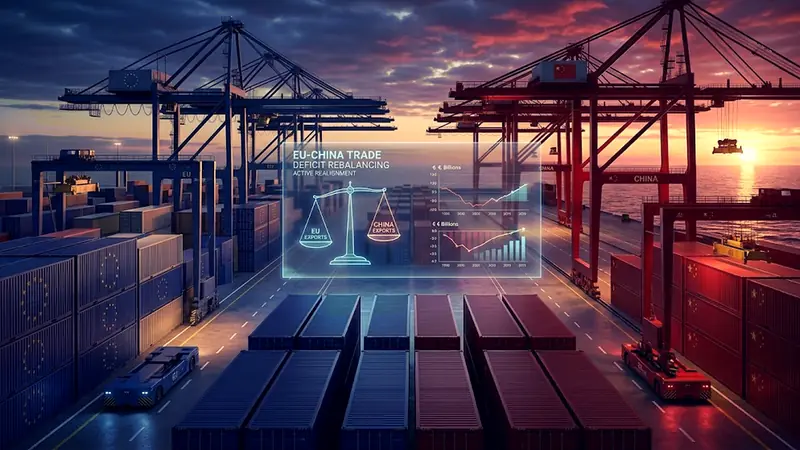
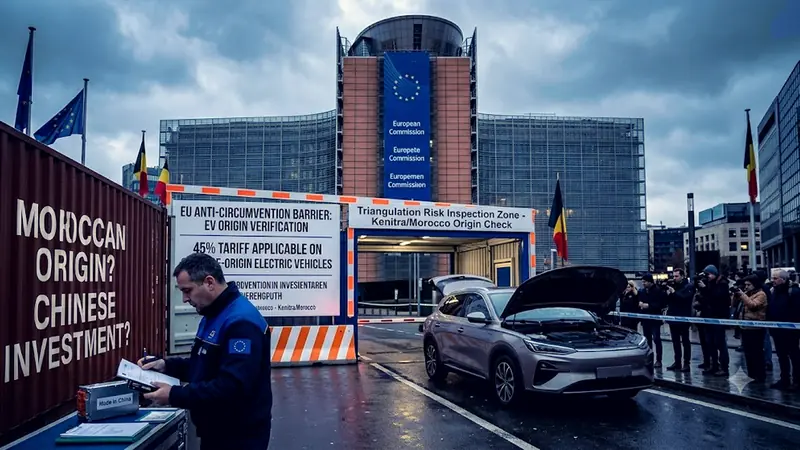
- Market Impact: Brussels is weighing a tariff investigation, fearing that the 45% duty on Chinese electric vehicles could be circumvented through Moroccan triangulation.
Kenitra, the New Battery Hub
Morocco is accelerating its push into electric mobility. The Gotion High-Tech gigafactory project in Kenitra is set to enter production in August 2026, with 85% of its output capacity earmarked for the European market. Rabat is aiming to build an integrated supply chain capable of supporting the production of 500,000 electric vehicles per year, cementing its strategic position as a manufacturing hub for the continent.
Brussels Sounds the Alarm
The speed of this industrial expansion has not gone unnoticed by European institutions. The concern, made explicit by Trade Commissioner Maroš Šefčovič, is that Beijing could use Moroccan territory as a distribution platform for its own production overcapacity, thereby sidestepping the EU's 45% tariff on directly imported Chinese electric vehicles. The theory under scrutiny involves minimal processing of components—just enough to formally certify local origin before entry into the single market.
Rabat's Defense and Beijing's Move
Morocco's Industry Minister, Ryad Mezzour, has flatly rejected the accusations of circumvention, pointing to strict rules of origin and substantial local value addition in production. Against the backdrop of these tensions, China has meanwhile formalized a request for a bilateral free trade agreement with the Moroccan kingdom—a move that could reshape the region's trade dynamics and further complicate dialogue with the European Union.