Key Takeaways
- One UI 9 Rollout: Samsung begins deployment on the Galaxy S26 in South Korea starting September 16, built on Android 17, featuring AI functions like My FanCam and Security Brief.
- The NPU Race: Qualcomm unveils the new Hexagon with Element Accelerator and 50% faster INT4 prefill speed; MediaTek launches the 2nm Dimensity 9600 Pro with a 51% boost in prompt processing.
- Massive On-Device Models: Huawei's Mate XT 2 integrates a 300-billion-parameter AI model directly on the device, signaling a shift of computational load from the cloud to local hardware.
Samsung Redefines the Interface with One UI 9
Samsung has officially begun rolling out One UI 9, built on Android 17, starting with the Galaxy S26 series in South Korea on September 16, with a progressive expansion to global markets. The update introduces My FanCam, a feature that automatically tracks a selected subject in videos, keeping them centered in frame without manual intervention. Now Brief gains Make My Card, which generates personalized cards with health, weather, and video content data.
Now Nudge analyzes device usage patterns to suggest contextual functions, such as recalling booking information while organizing plans via text message. Creative Studio offers image generation ideas anchored to relevant dates, like birthdays. Interpreter introduces a Thread View to check the flow of previous conversations, alongside an increase in translation speed during conversation mode.

On the security front, Security Brief periodically aggregates detected privacy issues, including malicious apps and unnecessary permissions, with direct links to corrective actions. An on-device AI-based alert system flags attempts to access sensitive permissions in real time. The alert for suspicious voice phishing calls, capable of detecting AI-generated voice alteration, expands to Japan, Canada, and India.
Google Pushes Security Directly Onto the Keyboard
The September 2026 Pixel Drop brings Scam Detection to Gboard, for Pixel 6 and later models. The system analyzes, entirely on-device, text typed in response to a suspicious message in real time, displaying a "Likely a scam" warning above the keyboard. The feature expands to nine new countries — Australia, Canada, France, Germany, India, Japan, Mexico, Singapore, and the United Kingdom — and six new languages.
Pause Point, already present on the Pixel 11, is being backported to Pixel 6 and later. The feature introduces a deliberate delay before opening apps identified as distracting, creating an explicit decision point within the usage flow.
Qualcomm and MediaTek: The NPU as Critical Architecture
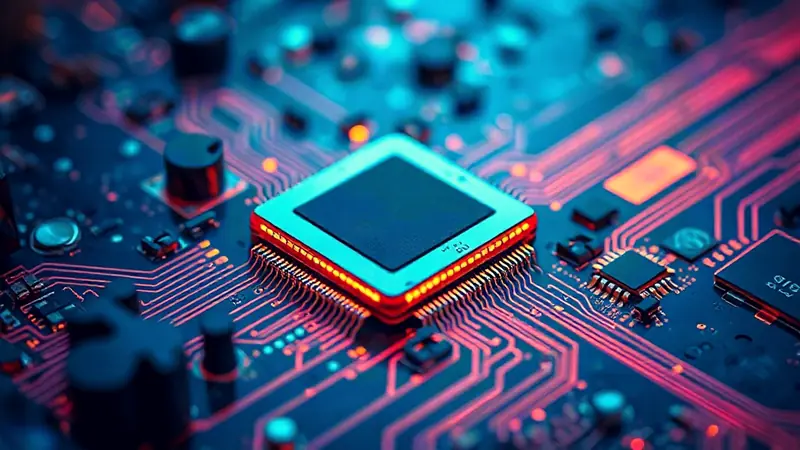
Qualcomm has unveiled the new Hexagon NPU destined for the next premium Snapdragon platform. The architecture integrates a dedicated Element Accelerator for transformer operations, a 50% increase in local shared memory, and native support for INT2, INT4, INT8, FP8, and FP16 formats. Qualcomm claims a gain of up to 50% in prefill speed for INT4 models, citing as reference a 30-billion-parameter Mixture-of-Experts model that activates approximately 3 billion parameters per token. The design is aimed at supporting local AI agents capable of processing context, routing tasks, and invoking tools autonomously. Full technical details will be released at the Snapdragon Summit, scheduled for September 22-24, 2026.
MediaTek responds with the Dimensity 9600 Pro, the first mobile processor built on TSMC's 2nm process, alongside the 3nm Dimensity 9600M. The 9600 Pro's NPU is stated to handle complex generative AI applications directly on the device, with a 51% improvement in prompt processing compared to the previous generation. The first smartphones equipped with both chips are expected in the current quarter.
Huawei and Xiaomi Bet on Large-Scale On-Device Models
Huawei has unveiled the Mate XT 2, the company's third tri-fold model, equipped with the Kirin 9050 Pro chip and HarmonyOS 7. According to CEO Richard Yu, the device runs a 300-billion-parameter AI model entirely on-device, with overall performance 42% higher than the previous generation.

Xiaomi has launched the 18 Fold, the first device to simultaneously integrate three proprietary technologies: the XRING O3 processor, the HyperOS 4 operating system, and the MiMo on-device model.
Structural Implications
The convergence of these announcements defines a clear trajectory: AI ceases to be an application layer and becomes an architectural principle around which silicon, operating systems, and user interaction are redesigned. NPUs with dedicated memory and specialized accelerators for transformer architectures indicate that competition is shifting toward the ability to execute complex computational workloads locally, reducing dependence on cloud infrastructure. Counterpoint Research frames 2026 as the transition year for the smartphone, moving from a passive tool to an agent capable of autonomous action.