Key Takeaways
- Physical facility confirmed: Anthropic runs a wet lab in the San Francisco Bay Area for real biological experiments, as revealed by Reuters.
- Vertical biotech ecosystem: the company acquired Coefficient Bio for roughly $400 million, launched Claude Science, and introduced the Model Hardware Standard for robotic lab control.
- Tension with biosecurity: the same company activated ASL-3 safeguards on Claude Opus 4 after blocking attempts to use its models for bioweapons.
The Hidden Laboratory
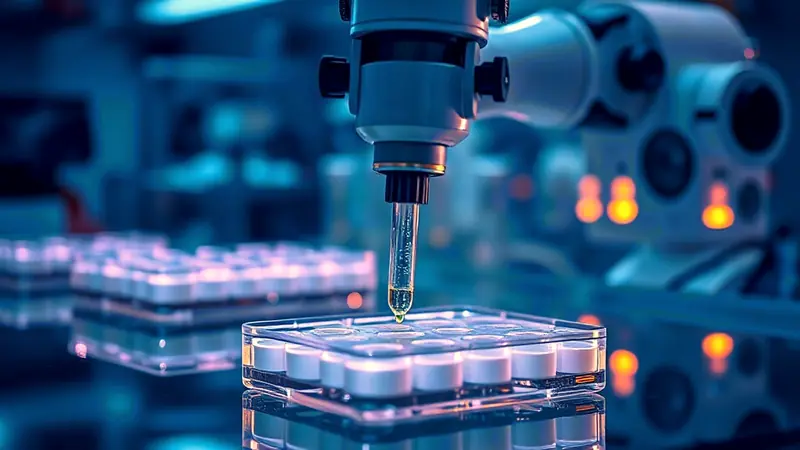
Anthropic has set up a wet lab, a physical facility where real biological experiments are conducted, in the San Francisco Bay Area. The news, reported by Reuters, marks the company's shift from computational simulation to direct experimentation. Eric Kauderer-Abrams, Anthropic's head of Life Sciences, confirmed the facility's existence: "We believe that to do biology, the final proof is doing work in a real lab. And we are absolutely doing that today."
A company spokesperson clarified that the lab was not built for drug discovery, without providing further details. The facility's size, staffing, opening date, and biosafety level have not been disclosed.
A Strategy Built in Stages
The wet lab caps off a biological offensive planned over months. In April 2026, Anthropic acquired Coefficient Bio, a biotech startup with fewer than ten employees, for roughly $400 million in stock. That same month, Vas Narasimhan, CEO of Novartis, joined the board through the Long-Term Benefit Trust.
On June 30, Claude Science arrived, a workbench with over 60 tools and connectors dedicated to genomics and structural biology, built for lab researchers. On September 16, Novo Nordisk announced a partnership to test Claude Science within its own R&D workflows. Genentech and Bristol Myers Squibb are already customers.
On August 27, Anthropic unveiled the Model Hardware Standard, a specification enabling AI agents to control lab instrumentation — microscopes, liquid handlers, robotic arms — cutting hardware integration time from weeks to minutes. Sources cited by Reuters indicate the goal is to have Claude drive robotic units capable of running experiments with limited human intervention. Kauderer-Abrams admits that automation of lab work is at "the very earliest stages."

The Biosecurity Knot
Anthropic is the same company that recently reported blocking scientists who used its models in attempts to develop biological weapons, and that activated ASL-3 safeguards on Claude Opus 4 after internal evaluations could no longer rule out the possibility that the system might elevate people with basic scientific knowledge to a level capable of contributing to bioweapon development. CEO Dario Amodei has called for slowing the development of advanced AI to reduce the risk of losing control over frontier systems.
The company argues that experimenting with AI in a real laboratory is the only way to measure models' actual capabilities beyond theoretical quizzes. The same principle drives its biorisk research program, which includes trials with real participants to test whether Claude can elevate non-experts to specialist-level tasks.
What's Still Missing
Anthropic does not run clinical trials, partly to avoid conflicts with pharmaceutical clients who fear it might draw insights from competitors' programs. Target diseases and concrete progress remain undisclosed. Isomorphic Labs, Alphabet's similar drug-discovery unit, has worked for years toward clinical testing and has pushed its target to late 2026.
Life sciences is now among Anthropic's largest investment areas in terms of staff and resources, with open job listings for a procurement lead and a specialist in protein and nucleic acid characterization, as the company prepares for a possible public listing.
A Narrowing Boundary
Anthropic is building a vertical scientific arm that produces software for researchers, tools for lab robots, biotech acquisitions, and now its own physical facility. The boundary between a model that reasons about science and a system that executes it is narrowing. The definitive answer on AI's real lab capabilities, the company promises, will come only from the final test: the one conducted in the field.