Key Takeaways
- Prototype delivery: Deep Fission has completed the full-scale reactor vessel at its Parsons, Kansas site, passing hydrostatic pressure and fabrication testing.
- Technology: The Gravity Nuclear Reactor™, a 15 MWe pressurized water reactor running on low-enriched uranium, will be installed at a depth of 1 mile (1.6 km), harnessing natural hydrostatic pressure.
- Institutional backing: The project is part of the U.S. Department of Energy's Reactor Pilot Program, with letters of intent covering a potential capacity of 18.5 GW.
Deep Fission, a California-based company, announced on July 7, 2026, the delivery of its underground nuclear reactor prototype at the Parsons, Kansas site. The metal vessel, fully factory-built and produced at full scale, passed fabrication checks and hydrostatic pressure testing. The structure is now ready to move into non-nuclear testing. The company marked the milestone by ringing the Nasdaq closing bell.
How the Gravity Reactor Works
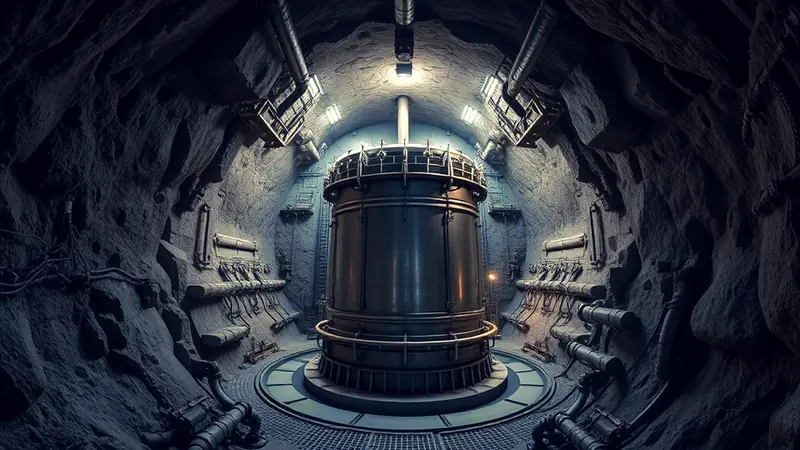
At the core of Deep Fission's technology is the Gravity Nuclear Reactor™, a small pressurized water reactor (PWR) fueled by low-enriched uranium (LEU), capable of generating 15 MWe per unit. What sets the design apart is where it sits: the reactor will be lowered into a borehole roughly a mile deep, or 1.6 km below the surface.
The depth is far from incidental. A mile-long column of water surrounds the reactor, naturally producing the 160 atmospheres of pressure the system requires, eliminating the need for pressurized containment structures built above ground. Heat generated by the core is carried through a closed loop to an underground heat exchanger. A second loop then brings the heat back to the surface, where it drives electric generators. The concept closely echoes the mechanics behind modern geothermal systems.
Safety, Footprint and Industry Outlook
According to its designers, the underground placement provides passive shielding and natural containment in the event of an incident, thanks to the surrounding rock. Removing the surface pressure vessels typical of conventional reactors could cut operational costs by as much as 80%, the company estimates. The land footprint is also compact: a single site could theoretically host 100 reactors, for a combined capacity of 1.5 GWe.
The project has secured tangible political support, having been selected for the U.S. Department of Energy's Reactor Pilot Program, established under Executive Order 14301. Deep Fission has already signed non-binding letters of intent with data centers and industrial partners, covering a combined potential capacity of 18.5 GW.
What Remains Unresolved
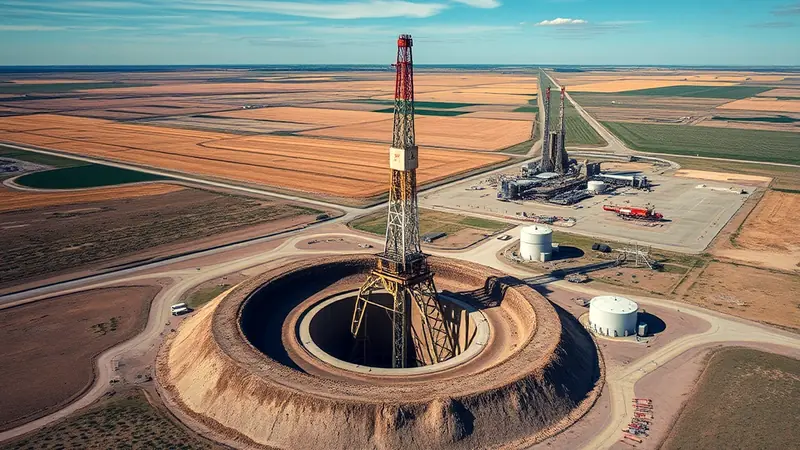
More cautious observers point to the risks of fast-tracking technology that has not yet been proven at commercial scale. The project remains in its early stages: Deep Fission still needs to demonstrate the feasibility of large-diameter borehole drilling and the reliability of operations at a mile underground. A commercial license from the Nuclear Regulatory Commission (NRC) is also still pending, expected in the first half of 2027.
Founded in 2023 by Elizabeth and Richard Muller, the company aims to have its first commercial reactor operational by 2029. The prototype delivered at Parsons marks the first concrete proof point for a model that moves nuclear infrastructure beneath the earth's surface, rather than above it.