Key Takeaways
- Lab record: the National Ignition Facility produced 8.6 MJ of fusion energy from a 2.05 MJ laser pulse, with ignition repeated for the eleventh time in June 2026.
- The real yield: net facility gain remains below 1%, since the lasers require between 300 and 400 MJ of electrical energy to generate the 2 MJ of light needed.
- Geopolitical race: the US Department of Energy published a roadmap with 10 actions for commercialization, while China targets commercial power by 2050 with its BEST reactor.
The milestone reached and its limit
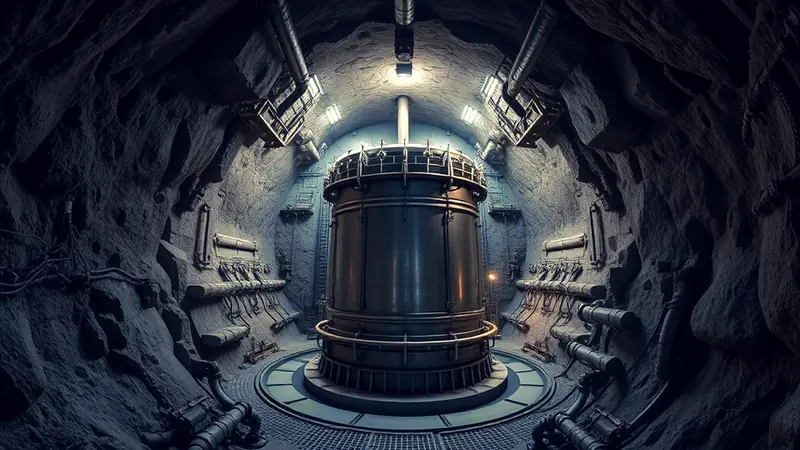
On December 5, 2022, the National Ignition Facility at Lawrence Livermore achieved the first controlled experiment in history in which a fusion reaction produced more energy than it received: 3.15 megajoules from 2.05 megajoules of laser input. On April 8, 2025, the pulse yielded a record gain of 8.6 MJ, with a target gain exceeding 4. In June 2026, ignition was repeated for the eleventh time, producing 7.9 MJ.
Between the NIF's diamond target and a working power plant lies an enormous gap. It is not a matter of physics, but of engineering, logistics and capital.
The detail the headlines missed
The "net energy gain" cited in press releases refers only to the laser energy that strikes the target. Tony Roulstone, a nuclear energy expert at the University of Cambridge, clarified that the 2 MJ of laser light require between 300 and 400 MJ of electrical energy to produce. The overall efficiency of the facility remains below 1%.
A power plant based on the NIF model would need to go from one shot a day to roughly 10 per second, producing, positioning and detonating a million capsules daily. One critic summed it up: "400 megajoules of energy to produce 3.15 is not a gain: it's a colossal 99% loss."
Even magnetic confinement tokamaks, the other main approach, face similar obstacles: materials capable of withstanding 14 MeV neutrons for years, unstable plasma management, industrial-scale tritium production.
The geopolitical race
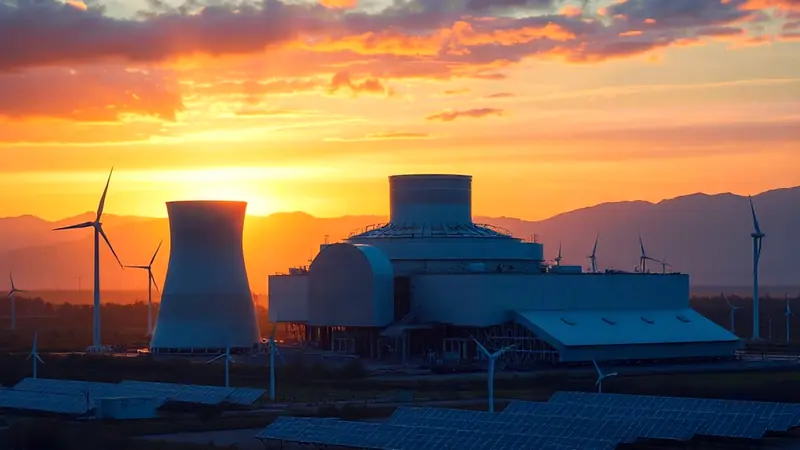
In June 2026, the US Department of Energy published a final roadmap with 10 key actions to accelerate commercialization, aimed at cost-competitive power plants. The plan includes stellarators, liquid metal walls, inertial fusion and alternatives to traditional tokamaks.
China follows a linear timeline: scientific breakeven with its BEST reactor around 2030, an engineering demonstrator (CFEDR) in the 2030s, commercial power by 2050. Fusion has been elevated to a "future industry" in China's 15th Five-Year Plan.
Dozens of private startups are raising capital on a multi-billion-dollar scale. Hyperscaler data centers, seeking low-emission energy, are becoming potential first buyers through long-term supply agreements designed to make the first demonstration plants financeable.
The capital wall
Building a first demonstration plant, the so-called FOAK (First-of-a-Kind), requires double-digit billion-dollar investments, with no guarantee of commercial returns until the first NOAK fleets bring costs down through modular, standardized components.
Capital must learn to finance an industry that does not yet exist: few regulatory guarantees, no insurance precedent, a lithium-tritium supply chain still to be built from scratch.
The 2035-2050 horizon
Physics has given way; engineering has not. Fusion is no longer "impossible" — it has become "difficult and expensive." The most credible estimates place the first grid demonstrators around 2035, with a significant commercial contribution between 2040 and 2050.
The question that remains open is not whether fusion will work, but how quickly engineering and capital can catch up to the physics already proven in the lab.