Key Takeaways
- Reserves and output: Vietnam holds 3.5 million tonnes of rare earth deposits, the world's sixth-largest, yet produced just 150 tonnes in 2025 compared to China's 270,000 tonnes.
- Vietnam-Australia agreement: In Canberra, To Lam and Anthony Albanese signed a joint declaration on supply chains for critical minerals, semiconductors and clean energy.
- Companies involved: Australian Strategic Materials, Blackstone Minerals and EQ Resources Limited are negotiating access to the Dong Pao deposits and the Dubbo project.
A deposit Vietnam no longer wants to sell raw
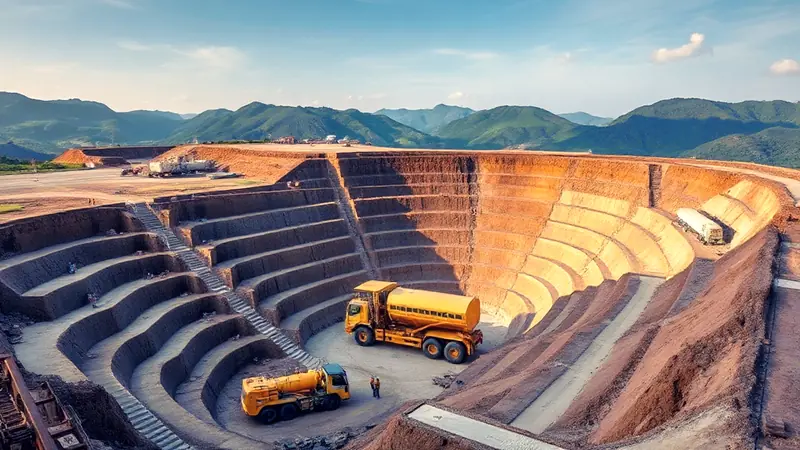
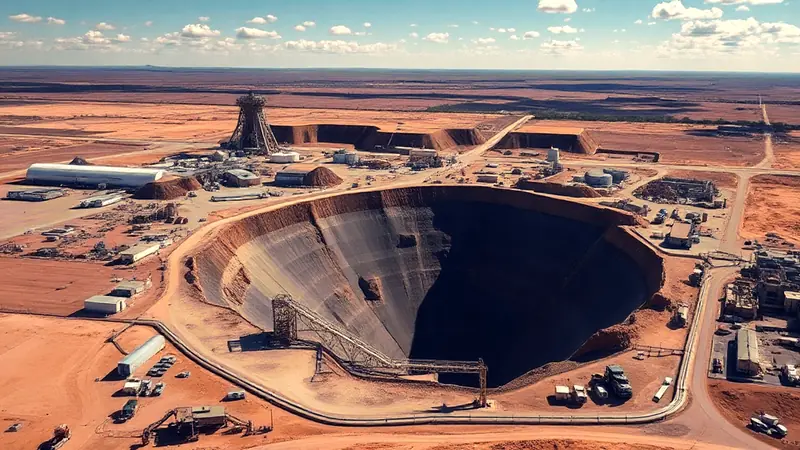
Hanoi has banned the export of unprocessed rare earth minerals. The ban follows a stark mismatch between national reserves — estimated at 3.5 million tonnes, concentrated at the Dong Pao mine in Lai Chau province, with over 5 million tonnes of oxides — and actual output of just 150 tonnes in 2025. The Vietnamese government is now targeting domestic refining, moving away from its role as a mere raw material supplier.
To Lam's visit and the signing in Canberra
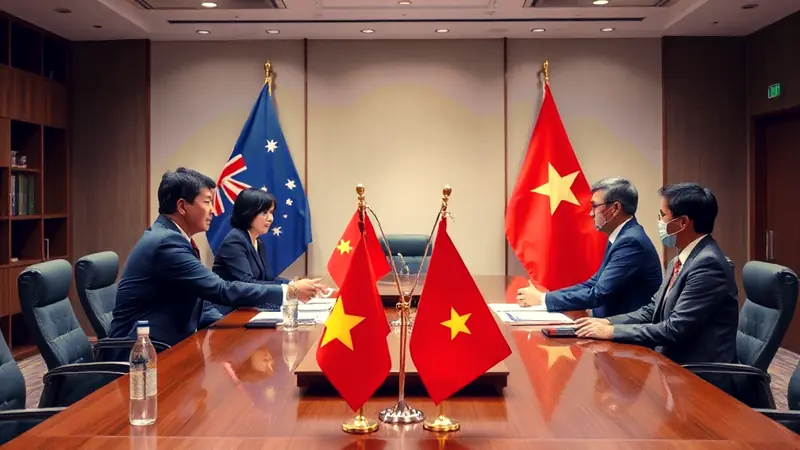
In August 2026, during the first official visit to Australia by Vietnamese Communist Party General Secretary To Lam, the two governments formalized a commitment on supply chains for critical minerals, semiconductors and clean energy. The agreement builds on the path set in March 2024, when relations were elevated to a Comprehensive Strategic Partnership and a biennial ministerial dialogue on critical minerals was established.
Vietnamese technicians on a study mission in Australia
The political channel followed technical groundwork already underway. In August 2025, a delegation from Vietnam's Ministry of Agriculture and Environment, led by Deputy Minister Tran Quy Kien, visited Perth, Sydney and Melbourne to examine Australian methods of extracting and processing strategic minerals. The meeting with Australian Strategic Materials focused on the Dubbo project, a polymetallic deposit containing light and heavy rare earths, zirconium, niobium and hafnium. The delegation explicitly requested access to ASM's expertise in ion-adsorption rare earth processing, a technology relevant to Vietnam's own deposits.
Australian companies stepping in
Blackstone Minerals and other Australian investors have expressed interest in mining rights at Dong Pao. During his visit to Canberra, To Lam held separate talks with EQ Resources Limited, discussing expanded cooperation on advanced processing and refining technologies. Australia is also considering the use of Export Finance Australia for financing tools and risk mitigation instruments to support joint mining and refining projects.
The broader supply chain context
China controls roughly 70% of global rare earth production and introduced new export controls in 2025, extending restrictions even to products made elsewhere using Chinese technology. Multiple governments are now seeking alternative supply sources. Vietnam is positioning itself as a refining partner, but it needs the technology and know-how that Australia has developed within its own mining sector.
Technical complementarity between the two deposits
Vietnam's deposits are of the ion-adsorption type, with lower radioactivity levels than Australia's hard-rock deposits. Shifting part of the light rare earth refining process to Vietnam would allow Australia to focus its infrastructure on heavy rare earths, while Hanoi moves up the industrial value chain.
Infrastructure hurdles and timelines
Governance capacity in Vietnam's mining sector remains limited, with ongoing investigations into corruption and mineral smuggling. Logistics infrastructure in the mountainous northwest, where the deposits are concentrated, remains inadequate. Hanoi has begun building highways and rail links to eastern ports, with completion targeted for 2030.
The outcome of the partnership will hinge on both countries' ability to turn the agreements signed in Canberra into operational infrastructure before the decade is out. The coordinates of the main mining basin, in the mountains of Lai Chau (21.0285, 105.8542), remain the geographic anchor point around which this industrial contest will play out.