Key Takeaways
- Instant infrastructure saturation: Moonshot AI's Kimi K3 model, launched on July 17, 2026, forced a suspension of new subscriptions within 72 hours due to overwhelming computational demand.
- Unprecedented scale architecture: This is the world's first open-weight model in the 2.8 trillion parameter class, built on a Mixture-of-Experts design with 896 experts and a KDA mechanism.
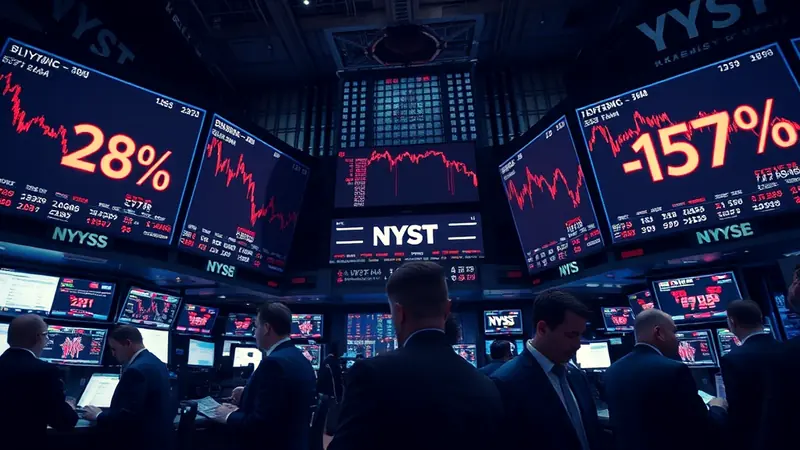
- Quantified market shock: Over three trading sessions, global tech stocks shed $470 billion in market capitalization, with sharp drops for Zhipu AI (-27%) and MiniMax (-16%).
A Release That Overwhelmed Its Own Infrastructure
On July 17, 2026, Moonshot AI released Kimi K3, an open-weight model with 2.8 trillion parameters. Demand saturated available computing capacity in under three days, forcing the company to suspend new subscriptions. Elon Musk's terse comment on X, "Impressive," amplified media coverage of an event analysts are already calling a technical inflection point.
Architectural Specifications: Computational Density Pushed to the Limit
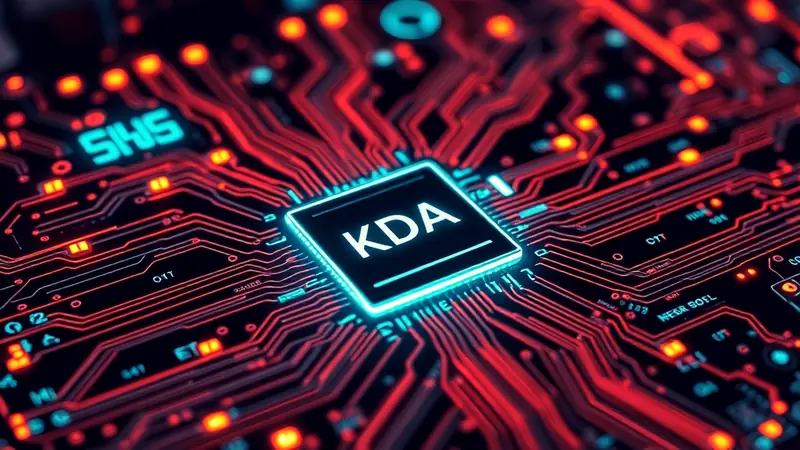
Kimi K3 is the first open-weight model in the 3-trillion-parameter class. Its Mixture-of-Experts architecture distributes workload across 896 experts, while the KDA (Kimi Dynamic Attention) mechanism optimizes long-horizon reasoning and knowledge-work tasks. The native context window reaches 1 million tokens, with built-in support for visual comprehension. In internal testing, the model demonstrated the ability to self-optimize GPU kernels, autonomously build a GPU compiler, and design a chip tailored to its own architecture.
Standing in Independent Benchmarks
Artificial Analysis gives K3 a score of 57 on its Intelligence Index, placing it third globally behind Claude Fable 5 and GPT-5.6 Sol. The most striking figure comes from the Frontend Code Arena, where K3 scores 1,679 points versus 1,631 for Claude Fable 5 and 1,618 for GPT-5.6 Sol. On the Program Bench, K3 records 77.8, edging out GPT-5.6 Sol's 77.6. Across three independent metrics, the model matches or exceeds the current state of the art in at least two categories.

A Structural Difference From the Previous "DeepSeek Moment"
Comparisons to DeepSeek R1's January 2025 debut hold up only in terms of media impact. DeepSeek showed that frontier-level performance could be achieved with a training cost of $5.6 million. K3 follows the opposite trajectory: a single inference run requires roughly 1.4 TB of memory even after quantization, an infrastructure requirement that rules out any narrative of radical efficiency. The API cost, priced at 100 yuan per million output tokens, runs more than 16 times higher than DeepSeek V4-Pro's 6 yuan, though it remains roughly half the cost of GPT-5.6 Sol and a third the cost of Claude Fable 5.
Shockwaves Through Stock Markets
Market reaction was immediate and measurable. Zhipu AI and MiniMax fell 27% and 16%, respectively, in Hong Kong trading. The Nasdaq shed roughly 1%, with selling concentrated in Nvidia and Intel. Aggregate losses across three trading sessions point to a $470 billion reduction in market capitalization across global tech stocks. Bernstein called the event "a home run," while Morgan Stanley notes that Chinese open models are now keeping pace with the industry's most advanced systems. Ion Stoica of UC Berkeley quantifies the narrowing technology gap: down from 6-9 months to just 2-3 months behind the global state of the art.
Computing Capacity Remains the Bottleneck
K3's operational scalability remains constrained by available computing infrastructure, the same factor that already forced the subscription suspension. Pandaily's analysis sums up the current state of affairs: the breakthrough moment is visible but has not yet solidified into a business model that can be replicated at scale. The decisive variable over coming quarters won't be the model's technical competitiveness, already proven on benchmarks, but whether this achievement can be translated into stable, monetizable service infrastructure.