Key Takeaways
- Energy reduction: MOF-based chillers require roughly 10% of the electricity consumed by traditional cooling systems delivering equivalent capacity.
- Enabling technology: Metal-Organic Frameworks (MOFs), materials honored with the 2025 Nobel Prize in Chemistry, allow adsorption chillers to activate at temperatures as low as 35 degrees Celsius.
- Measured performance: The MIL-101Cr material achieved a Coefficient of Performance (COP) of 0.649 and an exergetic efficiency of 78.1% under laboratory conditions.
The thermal paradox of servers
Modern server chips generate waste heat within a specific thermal band, typically between 30 and 45 degrees Celsius in liquid-cooled systems. This range is too low to feed district heating networks, yet too high to discard without consequence for infrastructure economics. Engineers call this band the "thermodynamic valley of death": a zone where energy is technically present but chemically inert for classic adsorption materials like silica gel and zeolites, which require thermal activation above 60 degrees.

The solution to this engineering bottleneck lies in Metal-Organic Frameworks (MOFs), crystalline structures whose architecture combines metal ions and organic molecules to create nanometer-scale porous cavities. The chemical property being exploited is the ability to selectively adsorb water vapor even in the presence of low-intensity heat flows, bypassing the physical ceiling of earlier materials.
Low-temperature adsorption mechanics
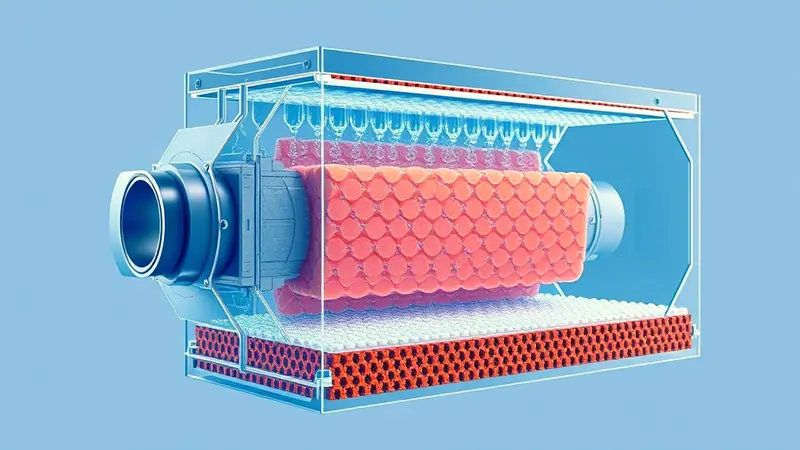
Adsorption chillers operate without a compressor, eliminating the noise typically associated with standard compression-based systems. Introducing MOFs into this architecture enables activation using waste heat starting at just 35 degrees Celsius, as demonstrated by prototypes from Belgian company Exora. The company has completed testing on a 3 kW unit and has scheduled development of a 100 kW module by 2028, with the goal of reaching megawatt scale by 2030.
Laboratory data confirm the robustness of this approach. A study published in Energy Conversion and Management isolated the performance of a MOF known as MIL-101Cr: at an activation temperature of 53 degrees, the material generated a cooling capacity of 22.9 kW, with a scaling law estimating an output of 0.42 kW per kilogram of material used.
Production and scalability
Industrial feasibility hinges on making synthesis more efficient at scale. The University of Kiel developed the MOF known as CAU-10-H, integrating it with conductive carbon structures to triple cooling capacity compared to standard silica gel. The research group produced roughly 30 kg of material in a pilot facility, marking a major step toward large-scale manufacturing.
A similar trajectory applies to AirJoule, a U.S. company that partnered with BASF to dramatically streamline the manufacturing process for its MOF material. This breakthrough has made the material commercially viable for extracting water from air, tapping into the same server waste heat: a single AirJoule module can collect up to 1,000 liters of distilled water per day, which is fed back into the data center's cooling cycle.
Implications for infrastructure energy load
Cooling currently accounts for between 30 and 50% of a data center's total energy consumption. Integrating MOFs into adsorption chillers doesn't eliminate this consumption category, but it restructures it fundamentally, shifting the load away from direct electricity draw and toward recovery of waste heat already present in the system. Research from Stanford University on using MOFs in fluidized beds for evaporative cooling confirms that the sector is converging on a single technical direction: turning residual heat into a circular resource rather than an output to be dissipated.

The period between 2026 and 2030 marks the window in which industrial prototypes from Exora and AirJoule will need to prove their resilience at megawatt scale, testing whether laboratory-grade performance, such as the 0.649 COP measured on MIL-101Cr, can be replicated in uncontrolled operating environments.