Key Takeaways
- Performance: The new Sensor Fusion Processor delivers 160 TOPS in INT8 and 80 TFLOPS in FP16, with a TDP under 75 watts.
- Technology: An ASIC chip manufactured by TSMC at 5 nanometers, featuring a proprietary carTPU, a dual-core RISC-V CPU, and 64 MB of on-chip SRAM.
- Impact: Waymo reduces its reliance on Nvidia and AMD, strengthening the vertical integration of the sixth generation Waymo Driver, fitted to the Zeekr Ojai vehicle.
A Chip to Pre-Process Sensor Data
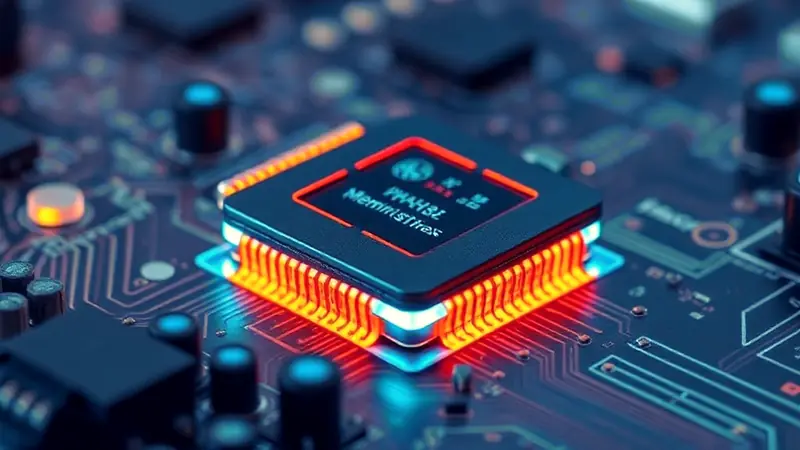
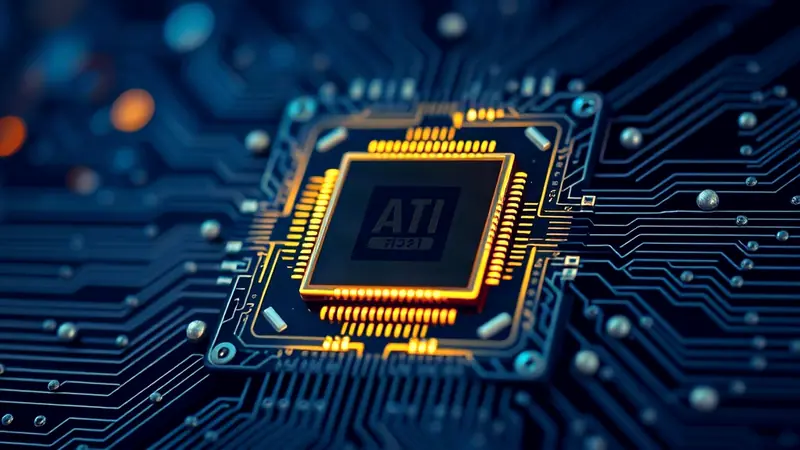
Waymo has announced the development of an in-house designed ASIC chip, already in production on the sixth generation of its Waymo Driver. The component, called the Sensor Fusion Processor, sits upstream of the vehicle's main computer and pre-processes raw data streams coming from lidar, radar, cameras, and microphones.
The chip filters, encodes, and fuses sensory information in real time, cutting perceptual latency from the first incoming pixel all the way to the final embedding. This reduction in reaction time becomes critical in complex urban scenarios, where the system must respond to pedestrians or vehicles crossing into the lane within a minimal time window.
Technical Specs Presented at Hot Chips 2026
The chip's features were unveiled during the Hot Chips 2026 conference. The component is built on TSMC's 5-nanometer process (N5 node), occupies an area of 208 mm², and is housed in a 45x45 mm FCBGA package.
The in-package LPDDR5x memory delivers 273 GB/s of bandwidth, while the interface with the host system runs through PCIe Gen5 x8 and a 25 Gbps Ethernet connection. Power consumption stays under a 75-watt TDP, against a computing capacity of 160 TOPS in INT8 and 80 TFLOPS in FP16, backed by 64 MB of on-chip SRAM.
Internal Architecture and a Compiler-First Approach
The chip integrates the carTPU, a neural accelerator designed by Waymo, alongside two third-party GPUs, three ISP blocks, and a MIPI pathway for direct sensor ingestion. Control is handled by dual-core RISC-V CPUs with vector extensions, a choice that underscores the company's architectural independence.
The carTPU dynamically reconfigures between a maximum-concurrency mode, with separate camera and radar backbones, and a low-latency mode, with a unified fusion backbone. On the software side, Waymo compiles the sensor fusion model ahead of time into an optimized mega-kernel designed to leverage on-chip SRAM, reducing external memory accesses. On workloads like the Sensor Backbone, the chip proves up to 14 times more efficient than an equivalent off-the-shelf solution.
Vertical Integration and Market Position
Waymo currently operates in San Francisco, Phoenix, Los Angeles, and Atlanta, with a fleet that has driven nearly 200 million miles fully autonomously. The company recently raised a round of $16 billion, pushing its valuation past $126 billion.
The sixth generation Waymo Driver will equip the Zeekr Ojai vehicle, produced by the Geely group. The system reduces the number of cameras compared to the previous generation while maintaining superior performance, thanks to 17-megapixel sensors and processing offloaded to custom silicon. Waymo has also stated that the chip operates under extreme conditions, including Phoenix's summer heat with coolant reaching 60°C.

Competitive Landscape
Tesla continues to push its own robotaxi, Uber has signed a $1.25 billion partnership with Rivian for 50,000 autonomous vehicles, while Baidu Apollo and Pony.AI expand their services. None of these players, however, have reached a level of vertical integration comparable to this, spanning sensors, silicon, and AI models.
The chip completes Waymo's full-stack strategy, which includes proprietary lidar, imaging radar, HDR cameras, and a dedicated Foundation Model for autonomous driving. The combination of dedicated hardware and co-designed software aims to turn robotaxi scalability into a matter of industrial production rather than experimental research.