Key Takeaways
- Design: a 7.8-inch internal display in a 4:3 format, a 5.5-inch external screen, and a thickness of 4.5 mm when unfolded.
- Technology: a 2-nanometer A20 Pro chip, 12 GB of RAM, a liquid metal alloy hinge, a titanium frame, and Touch ID in place of Face ID.
- Market: an estimated price between $2,000 and $2,500 in the United States, limited initial production, and a possible staggered rollout.
The First Foldable with a 4:3 Display
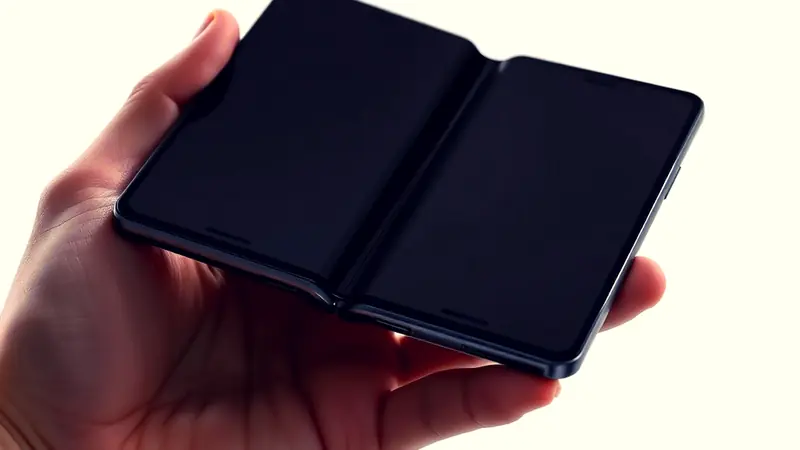
Apple is preparing to unveil its first foldable smartphone in September, alongside the iPhone 18 Pro and 18 Pro Max. The most widely accepted name is iPhone Ultra, though alternative labels such as iPhone Fold or iPhone Flip are also circulating. The device adopts a book-style folding design similar to rival foldables, but sets itself apart with an internal display aspect ratio fixed at 4:3, much like an iPad, spanning a diagonal between 7.76 and 7.8 inches. When closed, a 5.5-inch external display handles everyday tasks.

Materials and the "Crease-Free" Goal
The main technical challenge lies in the central crease, the Achilles' heel of current foldable devices. Apple reportedly developed a liquid metal alloy hinge paired with a titanium frame, aiming for a surface that appears visually free of any fold line. The stated thickness is 4.5 mm when open and roughly 9.5 mm when closed, with a weight under 250 grams — figures that would make it the thinnest iPhone ever built.

A20 Pro Chip and a Trimmed Camera System
The device is expected to run on the A20 Pro chip, built by TSMC on a 2-nanometer process, paired with 12 GB of RAM and running iOS 27, which will introduce split-screen multitasking features designed for the internal display. On the camera front, Apple is said to have opted for just two rear sensors at 48 megapixels each — wide and ultra-wide — with no telephoto lens. Due to thickness constraints, Face ID is replaced by a Touch ID sensor built into the side button.
Steep Pricing and Limited Production
Estimates point to a price between $2,000 and $2,500 in the United States, while in China reports suggest a starting price around 14,999 yuan. This would make it the most expensive product Apple has ever sold. Initial availability is expected to be limited due to the complexity of assembly and Apple's strict internal quality controls. Some sources suggest a staggered rollout, prioritizing the U.S. market, along with a possible gray market where prices could climb above $5,000 during the first few months.

An Already Competitive Market
The arrival of the iPhone Ultra coincides with the expansion of Samsung's Galaxy Z Fold lineup. Apple is betting on the 4:3 format and software built specifically to take advantage of it, but it will need to contend with the pricing challenge and the risk of production delays, with some reports not ruling out a slip to 2027. The device sits somewhere between a smartphone and a tablet — a category Apple is attempting to define from the ground up.